

2 shillings – Southern Rhodesia
Add to wishlist
Zimbabwe
Context
Year: 1954
Country: Zimbabwe
Issuer: Southern Rhodesia
Ruler: Elizabeth II
Currency:
(1932—1955)
Demonetization: 1 June 1965
Total mintage: 300,020
Material
Diameter: 28.52 mm
Weight: 11.31 g
Shape: Round
Composition: Copper-nickel
Technique: Milled
Alignment: Medal alignment
flip
References
KM: #
Numista: #20966
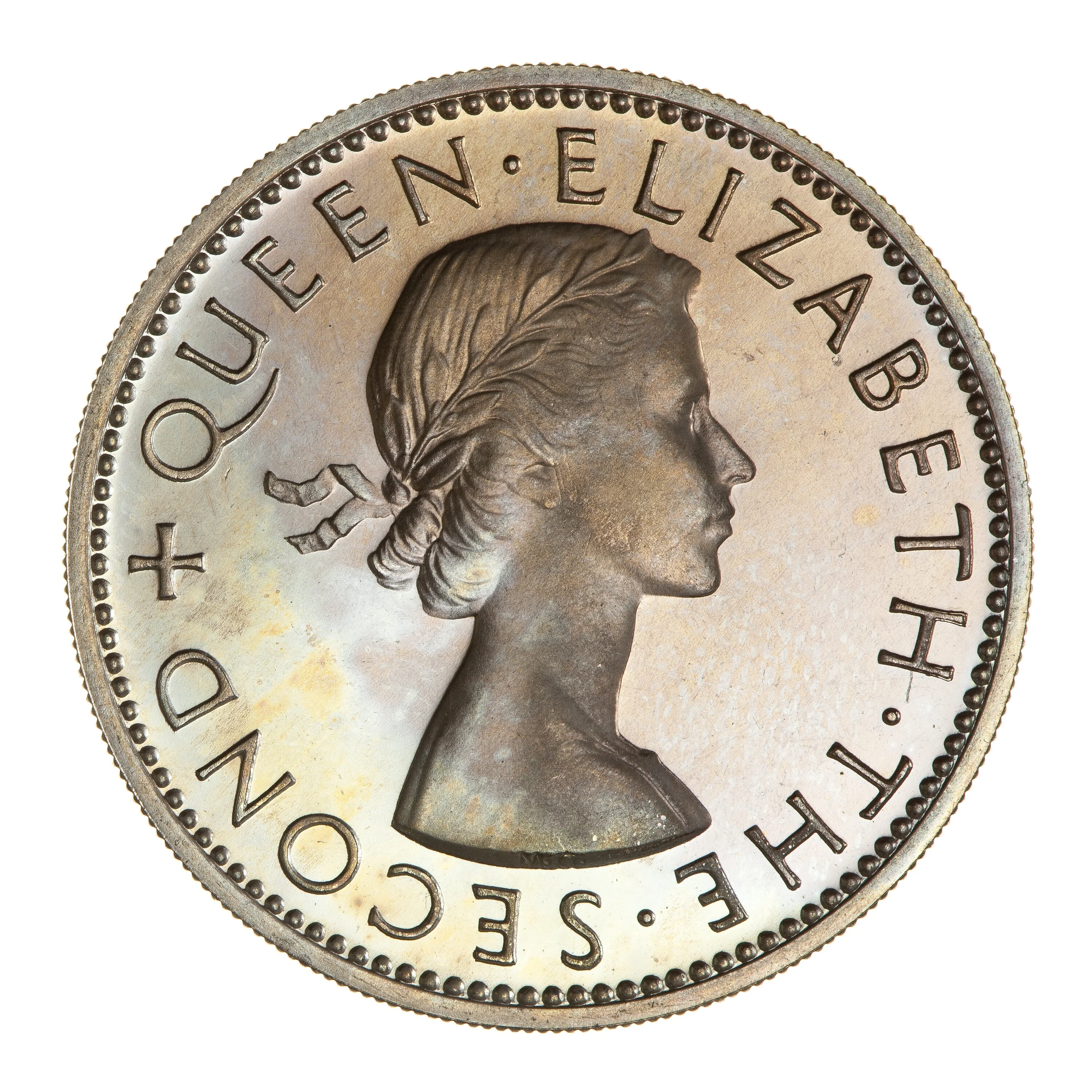
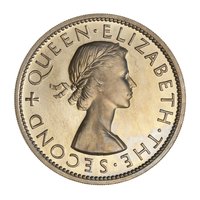
Obverse
Description:
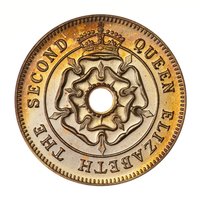
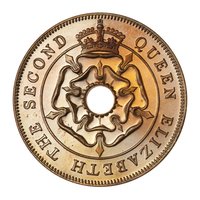
Queen Elizabeth bust right, surrounded by inscription.
Inscription:
+ QUEEN·ELIZABETH·THE·SECOND
M.G.
M.G.
Script: Latin
Engraver: Mary Gillick
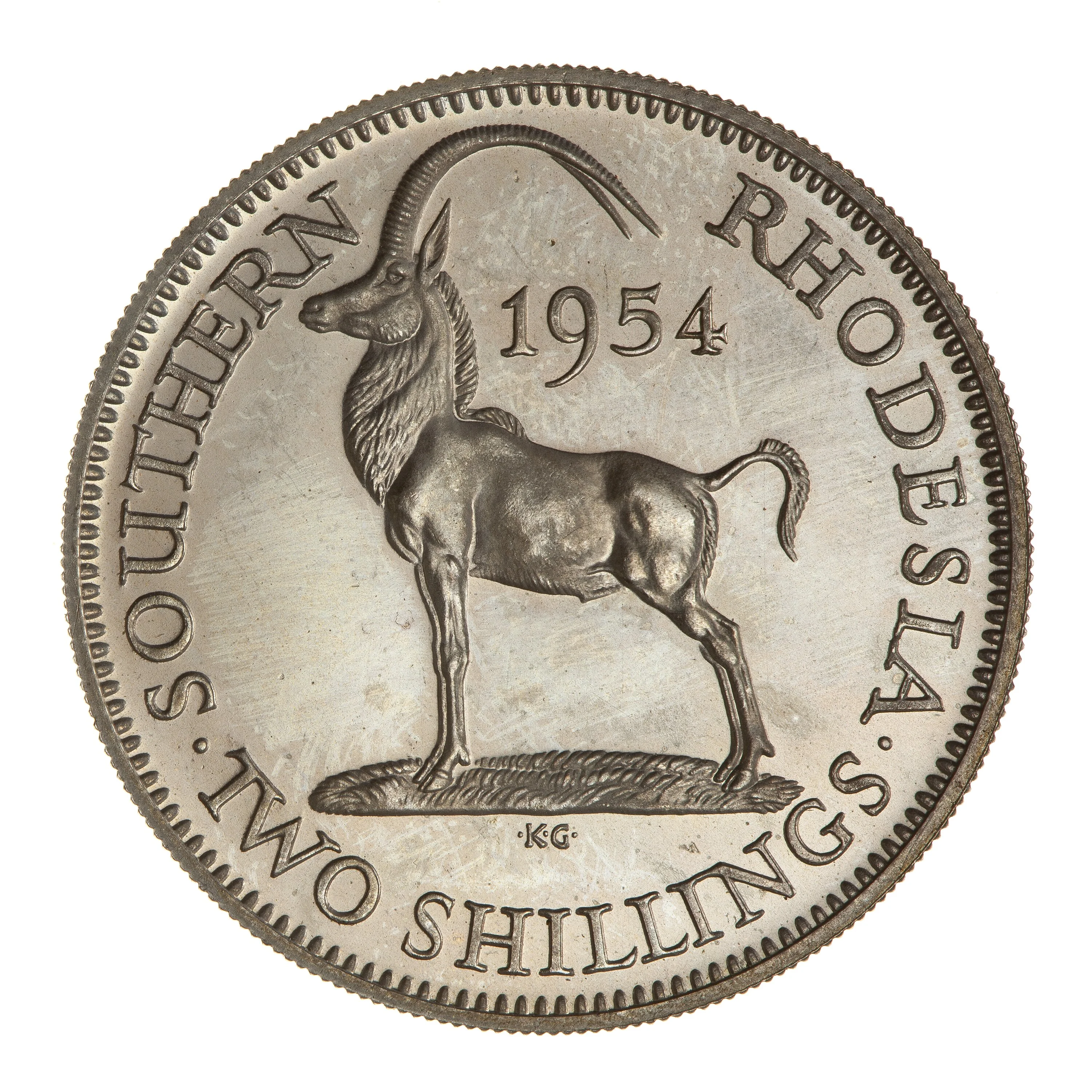
Reverse
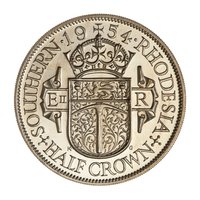
Description:
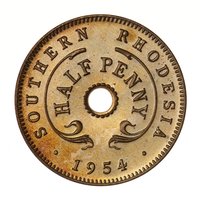
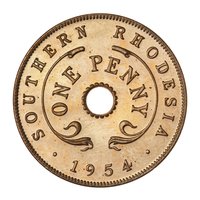
Sable Antelope (Hippotragus niger) facing left, with name and denomination.
Inscription:
SOUTHERN RHODESIA
1954
KG
·TWO SHILLINGS·
1954
KG
·TWO SHILLINGS·
Script: Latin
Engraver: George Kruger Gray
Edge
Reeded
Mints
| Name | Mark |
|---|---|
| Royal Mint (Tower Hill) | — |
Mintings
| Year | Mint Mark | Mintage | Quality | Collection |
|---|---|---|---|---|
| 1954 | — | 300,000 | ||
| 1954 | — | 20 | Proof |
Historical background
In 1954, the currency situation in Southern Rhodesia was one of formal integration within the broader Sterling Area and the specific monetary system of the Federation of Rhodesia and Nyasaland, established just the year prior. The territory used the Southern Rhodesian pound, which was pegged at par with the British pound sterling. This meant its value was directly guaranteed by the Bank of England, and reserves were held in London, ensuring stability and free convertibility with sterling. This arrangement facilitated trade and capital flows with Britain, the dominant economic partner, and reflected the colony's deep economic and political ties to the United Kingdom.
The creation of the Central African Federation in 1953 introduced a new layer of monetary coordination, though a unified central bank would not be established until 1956. In 1954, the currency remained under the de facto management of the Southern Rhodesia Currency Board, but with an eye toward federal financial integration. The system was effectively a currency board, limiting local monetary policy autonomy but providing low inflation and credibility. Economically, the period was one of post-war boom, driven by high prices for tobacco and mineral exports, which bolstered the currency's backing and supported public investment.
However, this stable picture existed within the context of the settler-colonial economy. The benefits of this sound currency and economic growth were overwhelmingly concentrated within the white minority population and the expanding commercial agricultural and mining sectors. The system was designed to serve the interests of export-oriented settler capitalism and integration with global (primarily British) markets, rather than fostering broad-based internal development for the African majority. This financial stability, therefore, underpinned and reinforced the profound socio-economic inequalities that characterized the colony.
The creation of the Central African Federation in 1953 introduced a new layer of monetary coordination, though a unified central bank would not be established until 1956. In 1954, the currency remained under the de facto management of the Southern Rhodesia Currency Board, but with an eye toward federal financial integration. The system was effectively a currency board, limiting local monetary policy autonomy but providing low inflation and credibility. Economically, the period was one of post-war boom, driven by high prices for tobacco and mineral exports, which bolstered the currency's backing and supported public investment.
However, this stable picture existed within the context of the settler-colonial economy. The benefits of this sound currency and economic growth were overwhelmingly concentrated within the white minority population and the expanding commercial agricultural and mining sectors. The system was designed to serve the interests of export-oriented settler capitalism and integration with global (primarily British) markets, rather than fostering broad-based internal development for the African majority. This financial stability, therefore, underpinned and reinforced the profound socio-economic inequalities that characterized the colony.
⭐ Rare