

25 Pyas – Myanmar
Circulating commemorative coins
Commemoration: F.A.O.
Myanmar

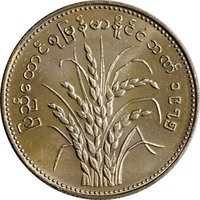
Obverse
Description:
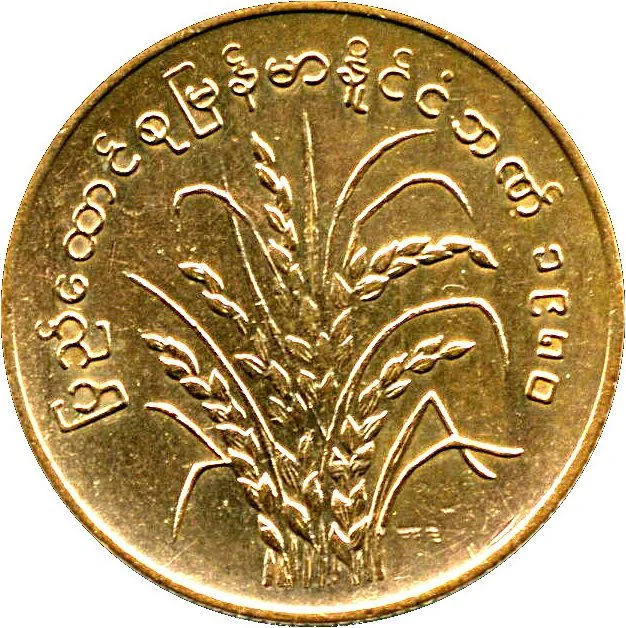
Rice plant, dated.
Inscription:
ပြည်ထောင်စုမြန်မာနိုင်ငံဘဏ် ၁၉၈၀
Translation:
Union of Myanmar Bank 1980
Language: Burmese
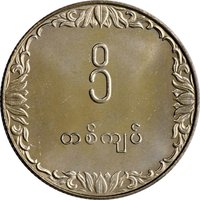
Reverse
Description:
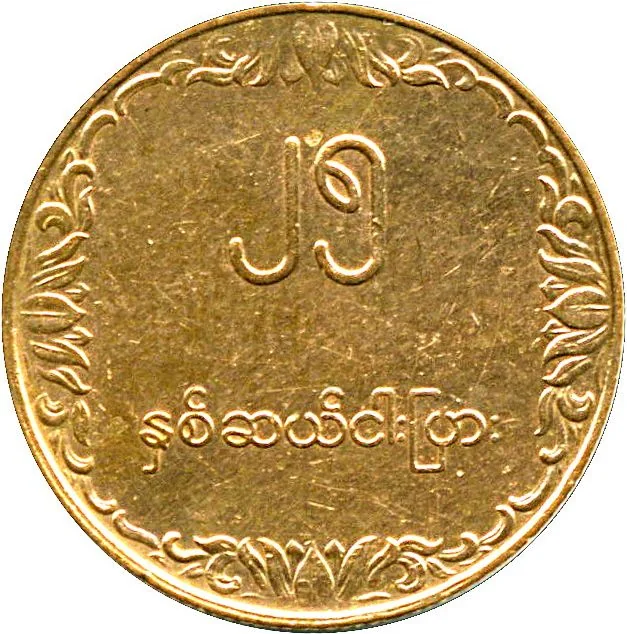
Central square's border defines its denomination.
Inscription:
၂၅
နှစ်ဆယ်ငါးပြား
နှစ်ဆယ်ငါးပြား
Translation:
Twenty-five pyas.
Language: Burmese
Edge
Milled
Categories
| Organization> FAO |
Mintings
| Year | Mint Mark | Mintage | Quality | Collection |
|---|---|---|---|---|
| 1980 | — | — |
Historical background
In the early 1980s, Myanmar's currency situation was characterized by a rigid, state-controlled system under the socialist rule of the Burma Socialist Programme Party (BSPP). The official currency, the kyat, operated within a complex framework of multiple fixed exchange rates set by the government, which bore little relation to its actual market value. The official rate was significantly overvalued, creating a vast disparity with the thriving black market rate, where the kyat traded for a fraction of its official value against hard currencies like the US dollar. This dual system was a direct result of the state's isolationist "Burmese Way to Socialism" policies, which included strict import substitution and a rejection of foreign investment.
The economic consequences of this monetary policy were severe. The overvalued official kyat crippled legal exports, as foreign buyers were unwilling to pay the inflated prices, while making imports artificially cheap for those with access to official channels, draining foreign reserves. This encouraged widespread smuggling and corruption, as the lucrative black market for foreign exchange became essential for financing both legitimate trade and illicit activities. Most ordinary citizens and businesses were forced to navigate the black market to obtain foreign currency for any international transaction, embedding a shadow economy deeply within the formal system.
By 1985, the inherent instability of this system would lead to a dramatic crisis. In a sudden and poorly planned move, the government demonetized certain high-value kyat notes (25-, 35-, and 75-kyat denominations) without compensation, officially to combat black marketeering but effectively wiping out the savings of many citizens and further eroding public trust in the financial system. This event set the stage for even more severe demonetizations in 1987, underscoring how the currency regime of the early 1980s was unsustainable, contributing to economic stagnation and setting the groundwork for the social unrest that would erupt later in the decade.
The economic consequences of this monetary policy were severe. The overvalued official kyat crippled legal exports, as foreign buyers were unwilling to pay the inflated prices, while making imports artificially cheap for those with access to official channels, draining foreign reserves. This encouraged widespread smuggling and corruption, as the lucrative black market for foreign exchange became essential for financing both legitimate trade and illicit activities. Most ordinary citizens and businesses were forced to navigate the black market to obtain foreign currency for any international transaction, embedding a shadow economy deeply within the formal system.
By 1985, the inherent instability of this system would lead to a dramatic crisis. In a sudden and poorly planned move, the government demonetized certain high-value kyat notes (25-, 35-, and 75-kyat denominations) without compensation, officially to combat black marketeering but effectively wiping out the savings of many citizens and further eroding public trust in the financial system. This event set the stage for even more severe demonetizations in 1987, underscoring how the currency regime of the early 1980s was unsustainable, contributing to economic stagnation and setting the groundwork for the social unrest that would erupt later in the decade.
🌱 Very Common