

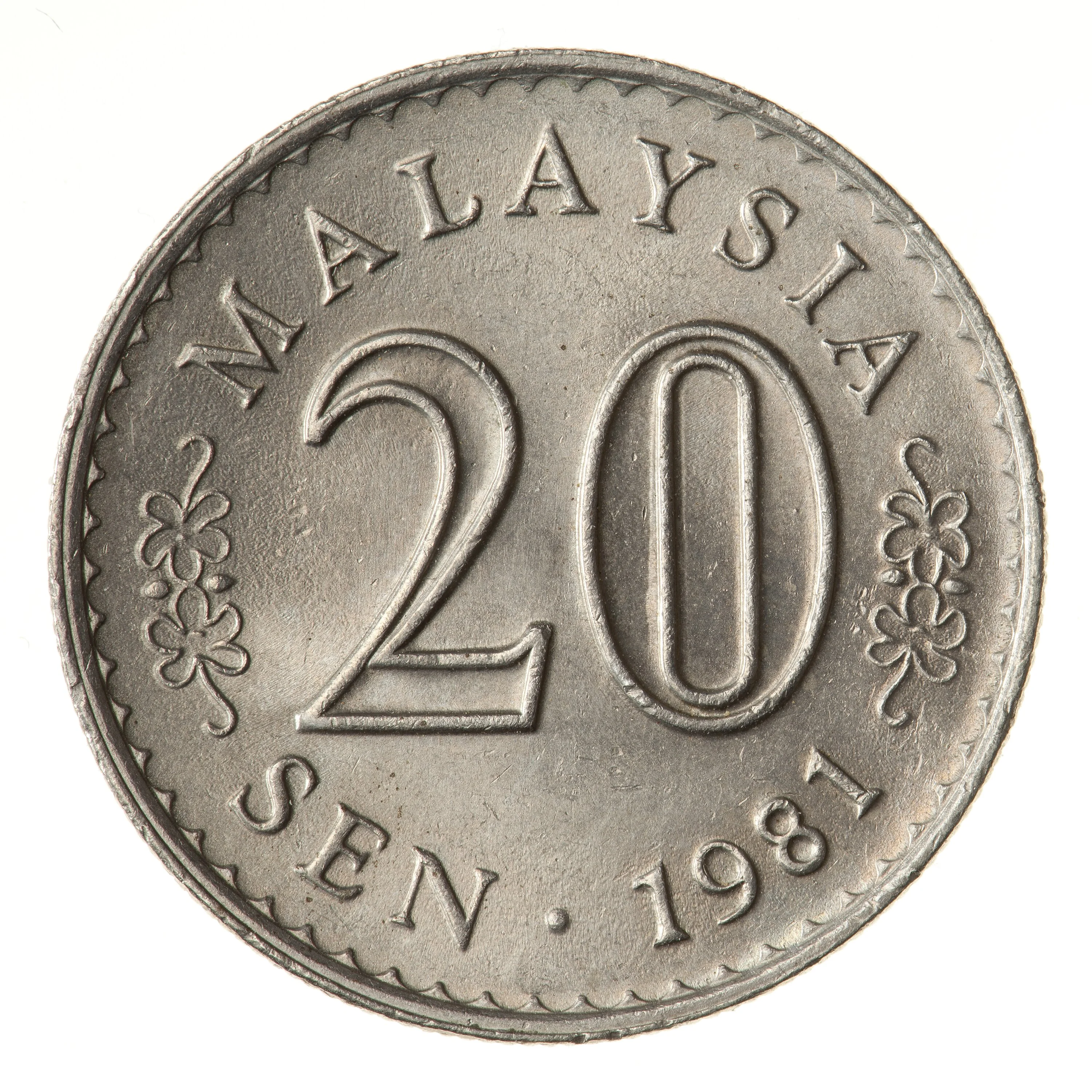
20 sen – Malaysia
Add to wishlist
Malaysia
Context
Years: 1967–1988
Issuer: Malaysia
Issuing organization: Central Bank of Malaysia
Period:
(since 1963)
Currency:
(since 1967)
Total mintage: 738,136,851
Material
References
KM: #
Numista: #2089
Value
Exchange value: 0.20 MYR
Obverse
Description:
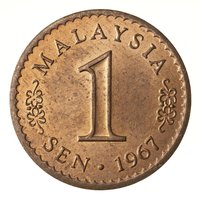
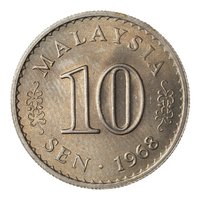
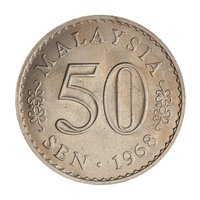
Value above, date below, centered numerals.
Inscription:
MALAYSIA
20
SEN · 1988
20
SEN · 1988
Translation:
MALAYSIA
20
CENTS · 1988
20
CENTS · 1988
Script: Latin
Engraver: Geoffrey Colley
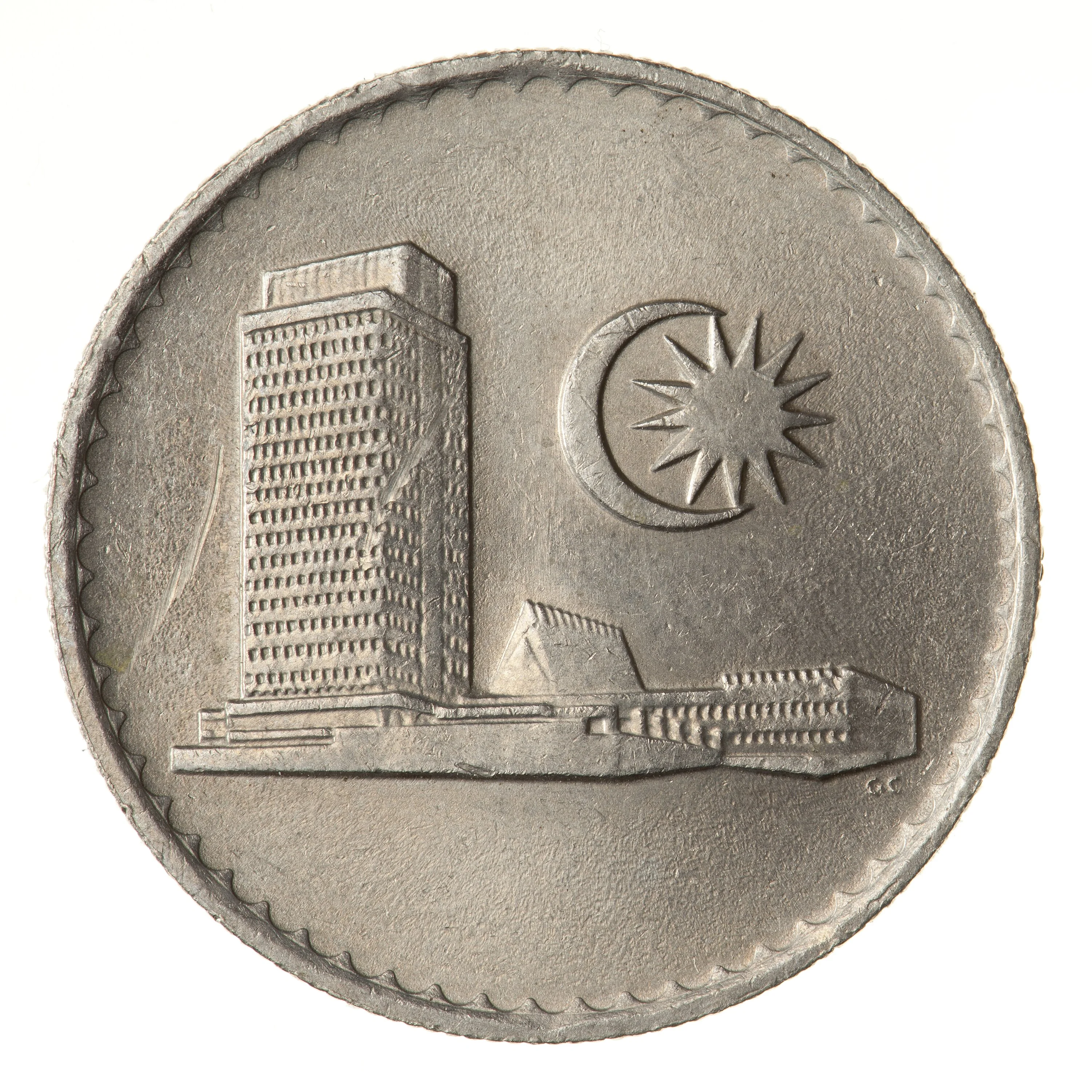
Reverse
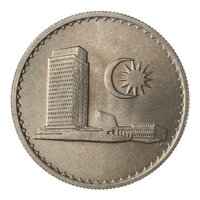
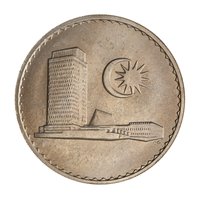
Description:
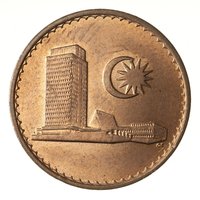
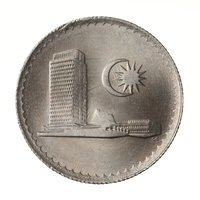
Australia's federal parliament building.
Inscription:
GC
Script: Latin
Engraver: Geoffrey Colley
Edge
Reeded
Mints
| Name | Mark |
|---|---|
| Royal Mint (Tower Hill) | — |
| Shah Alam | — |
| Franklin Mint | FM |
Mintings
| Year | Mint Mark | Mintage | Quality | Collection |
|---|---|---|---|---|
| 1967 | — | 49,560,000 | ||
| 1967 | — | 500 | Proof | |
| 1968 | — | 40,440,000 | ||
| 1969 | — | 15,000,000 | ||
| 1970 | — | 1,054,000 | ||
| 1971 | — | 9,958,419 | ||
| 1973 | — | 116,075,286 | ||
| 1976 | — | 47,396,373 | ||
| 1977 | — | 66,139,363 | ||
| 1978 | — | 6,847,062 | ||
| 1979 | — | 17,345,888 | ||
| 1980 | FM | 6,628 | Proof | |
| 1980 | — | 32,837,339 | ||
| 1981 | — | 144,127,993 | ||
| 1981 | FM | — | Proof | |
| 1982 | — | 97,905,000 | ||
| 1987 | — | 26,225,000 | ||
| 1988 | — | 67,218,000 |
Historical background
In 1967, Malaysia underwent a significant monetary transition with the introduction of the Malaysian dollar (ringgit), which replaced the shared Malaya and British Borneo dollar. This change was a direct consequence of political evolution; following the separation of Singapore from Malaysia in 1965, the existing currency union became untenable. The new currency, issued by Bank Negara Malaysia, symbolized the nation's consolidated sovereignty and economic independence, marking a clear break from the previous multi-territory currency board system.
The transition was carefully managed to ensure stability. For a brief period, the old currency remained legal tender, allowing for a smooth public exchange. However, the new Malaysian dollar was not interchangeable with the Singapore dollar, which was introduced simultaneously by the island republic. This formalized the monetary split, creating two distinct currencies and central banks where one integrated system had existed before. The designs of the new notes and coins prominently featured Malaysian national symbols, reinforcing the currency's role as an emblem of nationhood.
Economically, the move established Bank Negara Malaysia's full control over the country's monetary policy, a crucial step for a developing nation. While the currency remained pegged to the British pound sterling, the 1967 reform laid the essential institutional foundation for future financial management. This decisive break, born from political separation, ultimately provided Malaysia with the autonomous tools to steer its own economic destiny in the decades to come.
The transition was carefully managed to ensure stability. For a brief period, the old currency remained legal tender, allowing for a smooth public exchange. However, the new Malaysian dollar was not interchangeable with the Singapore dollar, which was introduced simultaneously by the island republic. This formalized the monetary split, creating two distinct currencies and central banks where one integrated system had existed before. The designs of the new notes and coins prominently featured Malaysian national symbols, reinforcing the currency's role as an emblem of nationhood.
Economically, the move established Bank Negara Malaysia's full control over the country's monetary policy, a crucial step for a developing nation. While the currency remained pegged to the British pound sterling, the 1967 reform laid the essential institutional foundation for future financial management. This decisive break, born from political separation, ultimately provided Malaysia with the autonomous tools to steer its own economic destiny in the decades to come.
Series: 1967 Malaysia circulation coins
🌱 Very Common