

Mints
| Name | Mark |
|---|---|
| Monnaie de Paris | — |
Mintings
| Year | Mint Mark | Mintage | Quality | Collection |
|---|---|---|---|---|
| 1897 | — | 174,284 | ||
| 1898 | — | 516,869 | ||
| 1899 | — | 159,629 | ||
| 1900 | — | 224,571 | ||
| 1901 | — | 231,074 |
Historical background
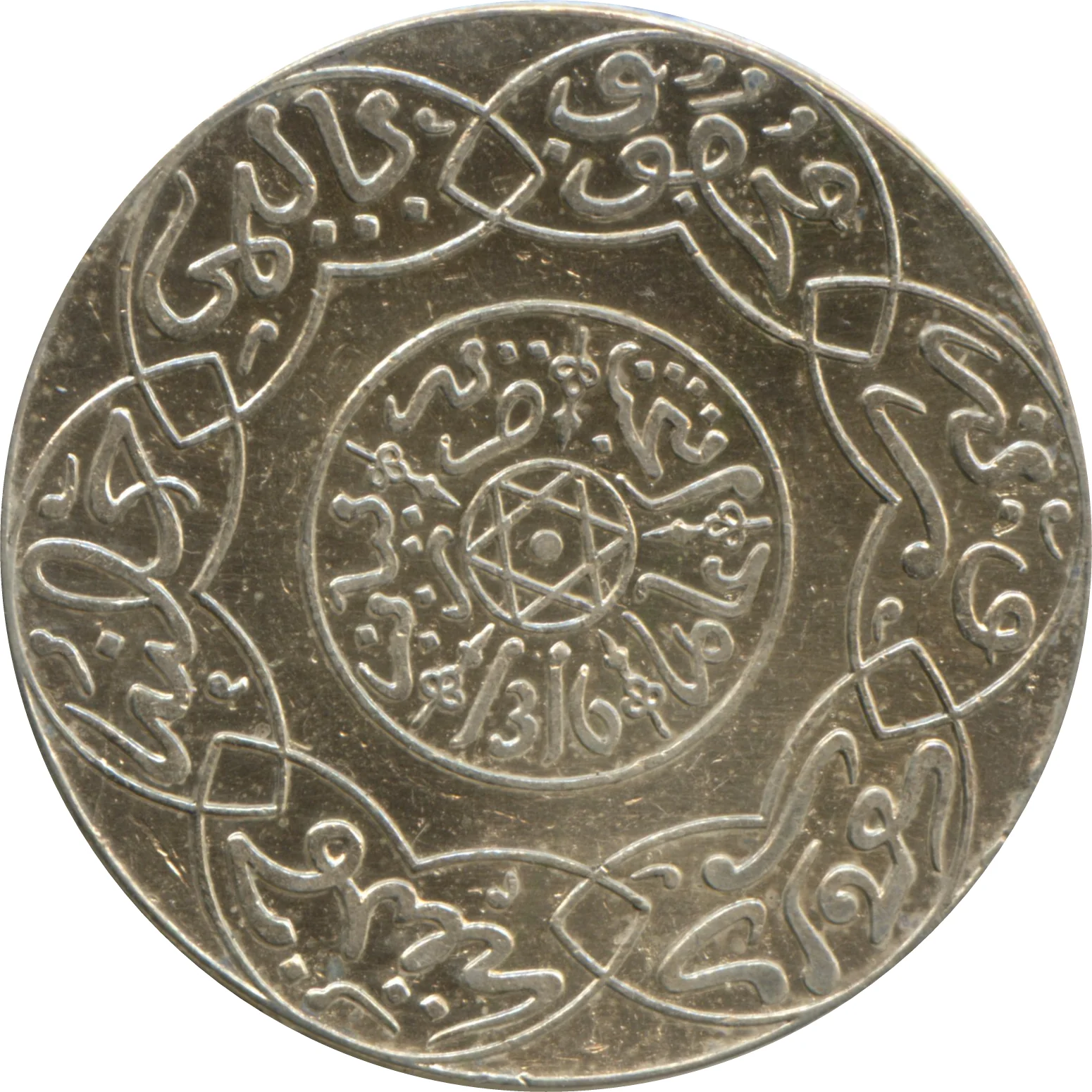
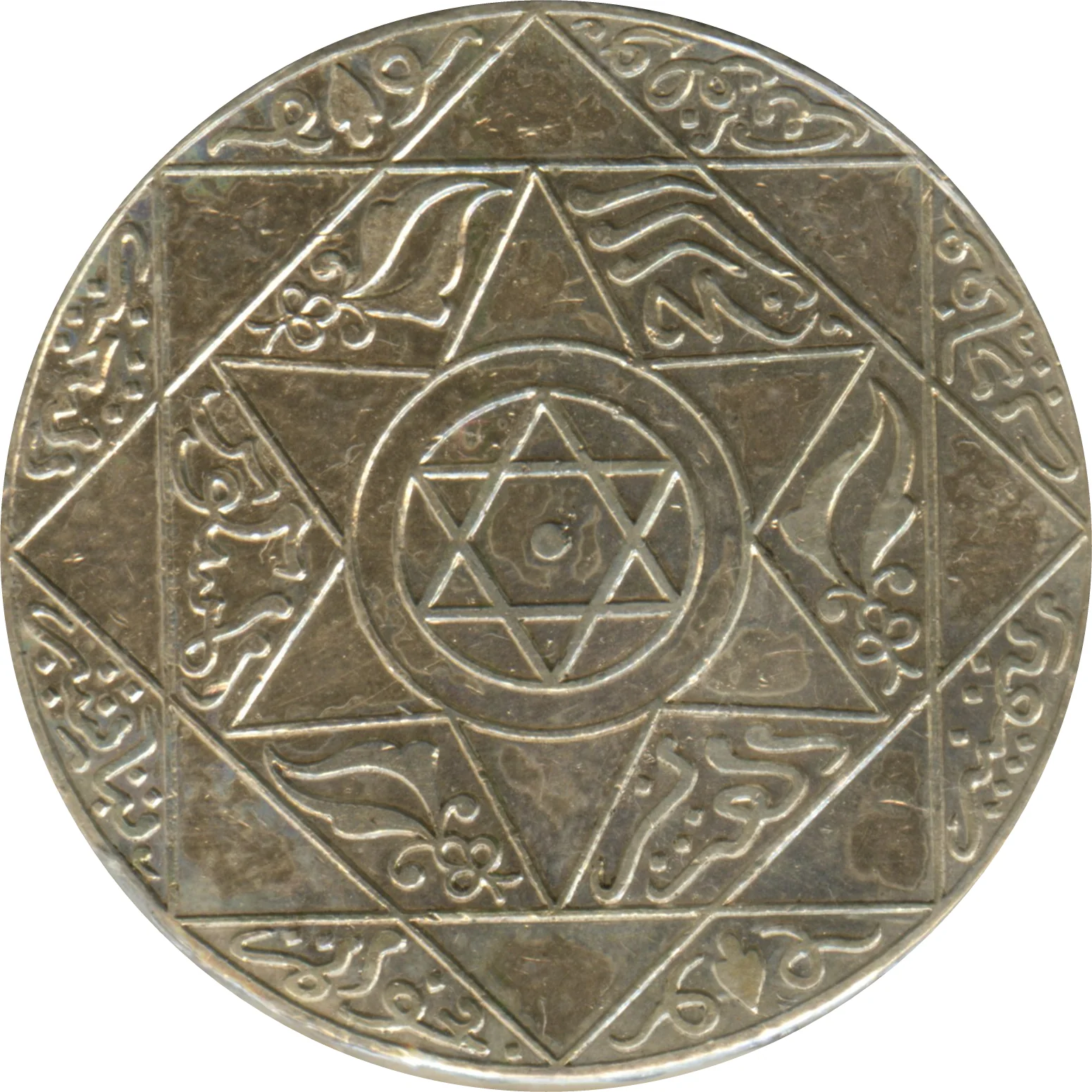
In 1897, Morocco's currency situation was a complex and unstable reflection of the country's deepening political and financial crisis. The nation operated on a bimetallic system, theoretically based on both silver (the dirham) and gold (the benduqi), but in practice, it was flooded with a chaotic variety of coins. Alongside official Moroccan mintings, Spanish duros, French francs, British sovereigns, and other foreign currencies circulated freely, their value fluctuating wildly based on weight, metal content, and local demand. This monetary anarchy severely hampered trade and state revenue, as the Sultan's government in Marrakesh struggled to control the money supply or assert a uniform standard of value across its territories.
This disarray was exacerbated by a global economic shift: the late 19th century saw a dramatic fall in the value of silver relative to gold. Since much of Morocco's currency was silver-based, its international purchasing power plummeted, leading to a drain of gold from the country and worsening trade deficits. The state's response—debasement of coinage by reducing the silver content—further eroded public trust and fueled inflation. This financial weakness was acutely exploited by European powers, whose merchants and diplomats increasingly demanded payments in stable gold-backed currencies, drawing Morocco deeper into a cycle of debt.
Consequently, the monetary chaos of 1897 was a key symptom of Morocco's fading sovereignty. European powers, particularly France and Spain, used the pretext of financial instability to extend their economic and political influence, setting the stage for future loans backed by foreign control of customs revenues. The currency crisis thus became a critical pressure point, highlighting the Makhzen's inability to modernize its fiscal systems and making the country increasingly vulnerable to the "peaceful penetration" that would culminate in the establishment of French and Spanish protectorates in 1912.
This disarray was exacerbated by a global economic shift: the late 19th century saw a dramatic fall in the value of silver relative to gold. Since much of Morocco's currency was silver-based, its international purchasing power plummeted, leading to a drain of gold from the country and worsening trade deficits. The state's response—debasement of coinage by reducing the silver content—further eroded public trust and fueled inflation. This financial weakness was acutely exploited by European powers, whose merchants and diplomats increasingly demanded payments in stable gold-backed currencies, drawing Morocco deeper into a cycle of debt.
Consequently, the monetary chaos of 1897 was a key symptom of Morocco's fading sovereignty. European powers, particularly France and Spain, used the pretext of financial instability to extend their economic and political influence, setting the stage for future loans backed by foreign control of customs revenues. The currency crisis thus became a critical pressure point, highlighting the Makhzen's inability to modernize its fiscal systems and making the country increasingly vulnerable to the "peaceful penetration" that would culminate in the establishment of French and Spanish protectorates in 1912.
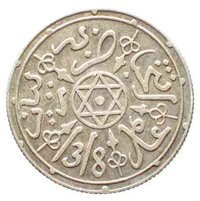
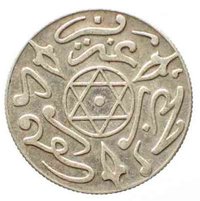
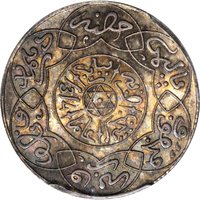
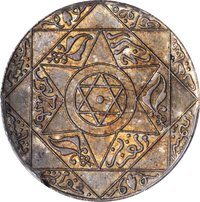
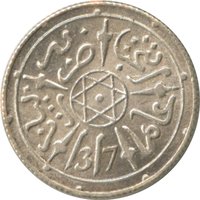
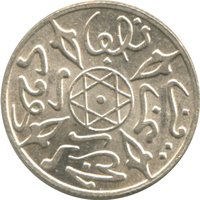
Series: 1897 Morocco circulation coins
⭐ Rare