

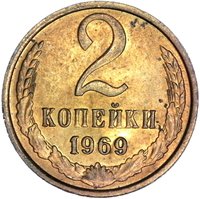
2 Kopecks – Soviet Union
Russia
Context
Years: 1961–1991
Country: Russia 
Issuer: Soviet Union 
Period:
(1922—1991)
Currency:
(1961—1991)
Demonetization: 1991
Material
References
Y: #Click to copy to clipboard127a
Numista: #2085
Value
Exchange value: 0.02 SUR
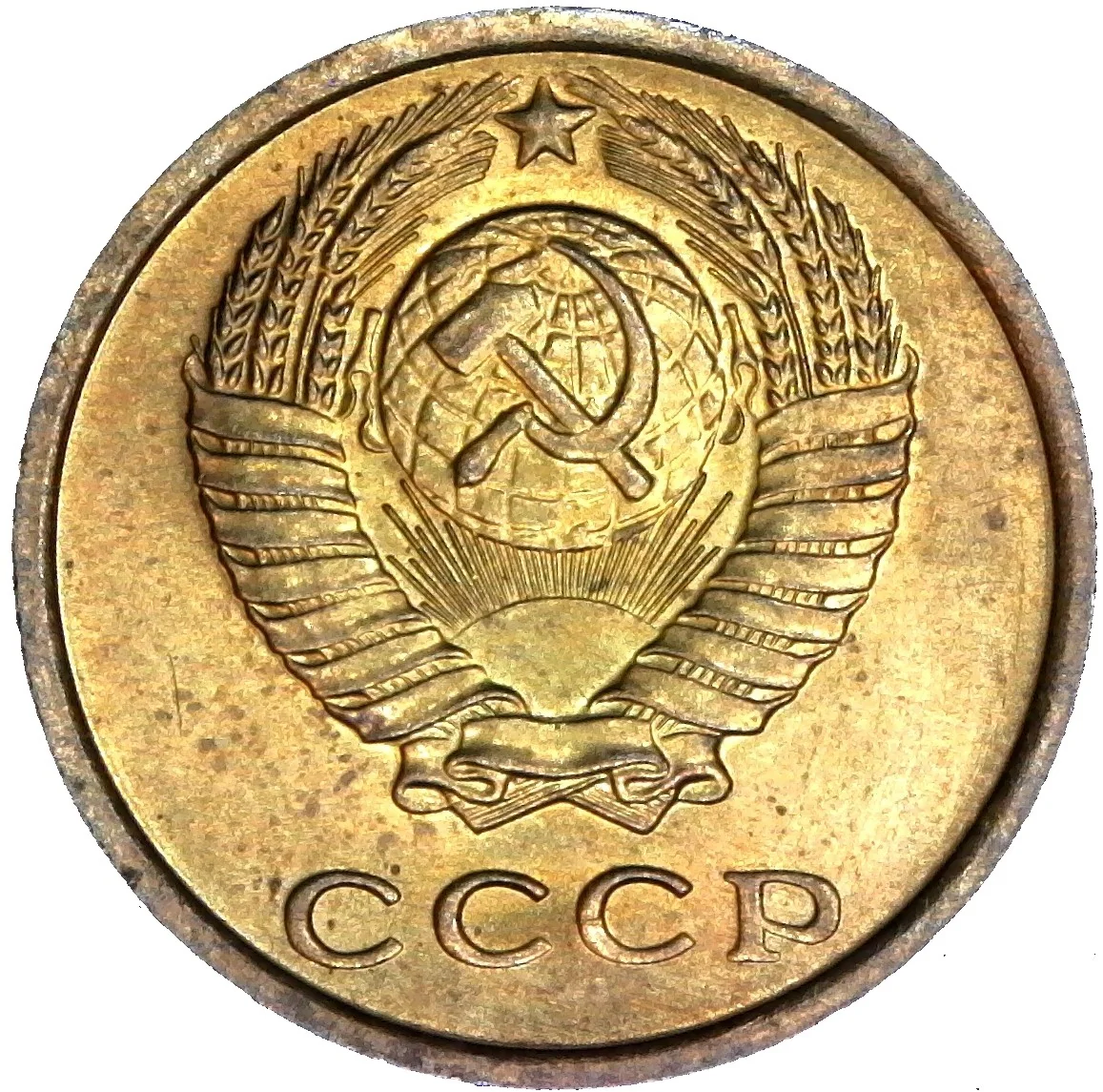
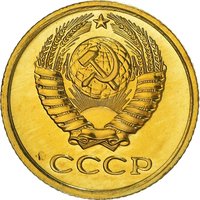
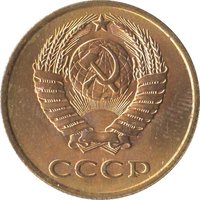
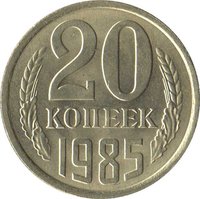
Obverse
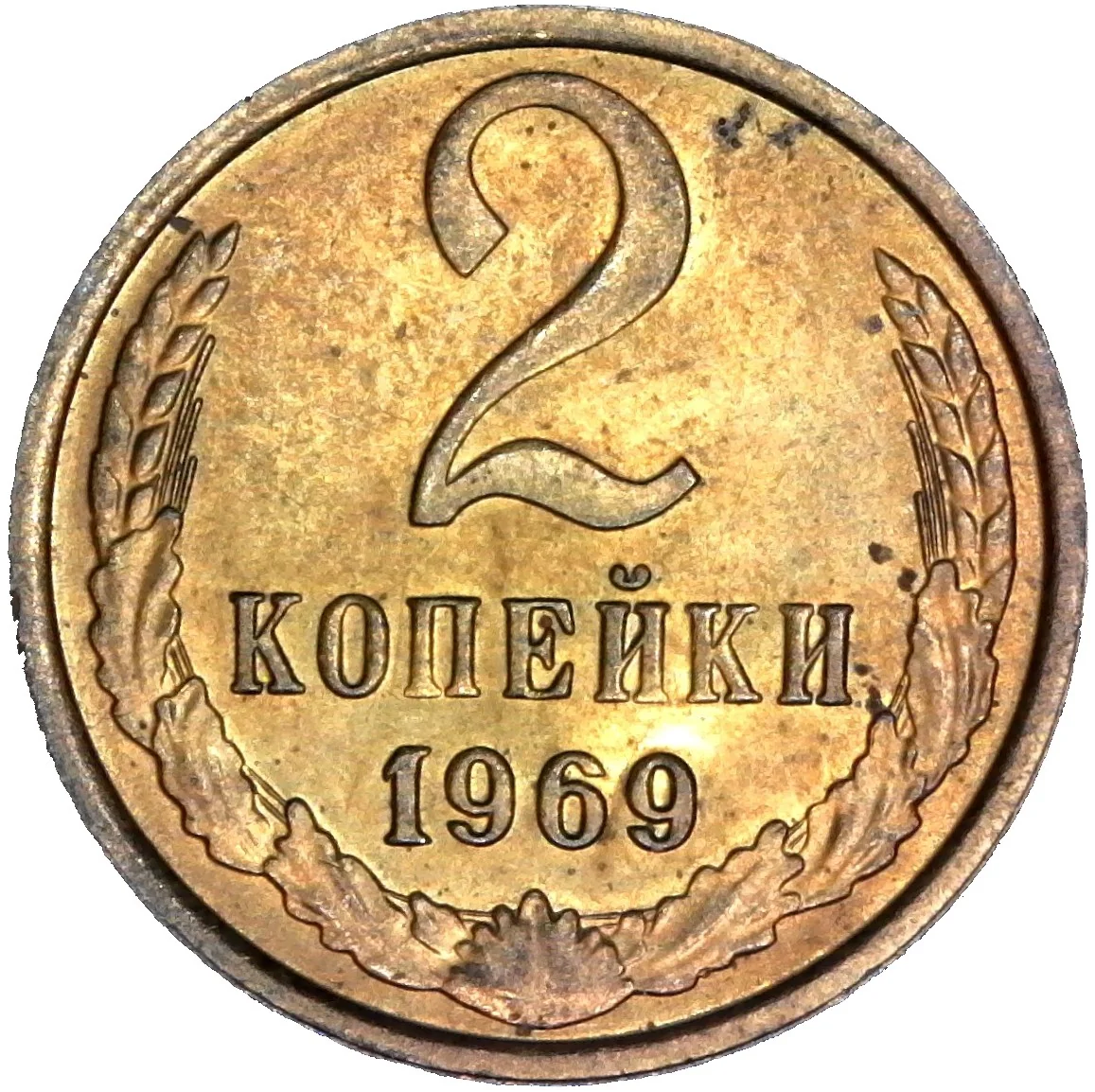
Reverse
Edge
Reeded
Categories
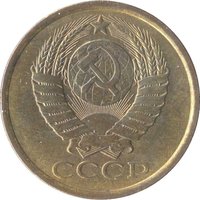
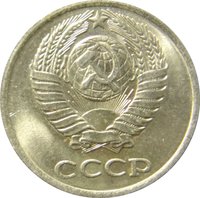
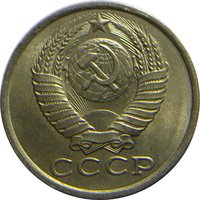
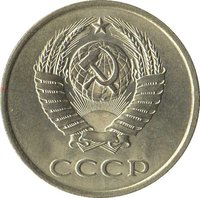
| Symbols> Coat of Arms |
| Symbol> Hammer and sickle |
| Symbol> Wreath |
Mints
| Name | Mark |
|---|---|
| Saint Petersburg | (Л) |
| Moscow Mint | (М) |
Mintings
| Year | Mint Mark | Mintage | Quality | Collection |
|---|---|---|---|---|
| 1961 | — | — | ||
| 1962 | — | — | ||
| 1963 | — | — | ||
| 1964 | — | — | ||
| 1965 | — | — | ||
| 1966 | — | — | ||
| 1967 | — | — | ||
| 1968 | — | — | ||
| 1969 | — | — | ||
| 1970 | — | — | ||
| 1971 | — | — | ||
| 1972 | — | — | ||
| 1973 | — | — | ||
| 1974 | — | — | ||
| 1975 | — | — | ||
| 1976 | — | — | ||
| 1977 | — | — | ||
| 1978 | — | — | ||
| 1979 | — | — | ||
| 1980 | — | — | ||
| 1981 | — | — | ||
| 1982 | — | — | ||
| 1983 | — | — | ||
| 1984 | — | — | ||
| 1985 | — | — | ||
| 1986 | — | — | ||
| 1987 | — | — | ||
| 1988 | — | — | ||
| 1989 | — | — | ||
| 1990 | — | — | ||
| 1991 | M | — | ||
| 1991 | Л | — |
Historical background
The 1961 currency reform in the Soviet Union was a significant, state-managed monetary event designed to address both practical and ideological concerns. By the late 1950s, the wartime inflation and a vast shadow economy had severely devalued the ruble, undermining its domestic purchasing power and international prestige. The reform, masterminded under Nikita Khrushchev, aimed to create a "heavy," trustworthy ruble, simplify accounting, and project an image of Soviet economic strength. It was presented not as a confiscatory measure like the harsh 1947 reform, but as a straightforward redenomination to boost confidence in the national currency.
On January 1, 1961, old rubles were exchanged for new ones at a rate of 10:1, with wages, prices, and savings all adjusted accordingly. Crucially, the gold peg of the ruble was increased tenfold, officially redefining it from 0.222168 grams of gold to 0.987412 grams—a move that ostensibly made it stronger than the US dollar. In reality, this was a purely accounting fiction, as the ruble remained non-convertible and its value was set by the state, not the market. The simultaneous adjustment of all internal prices, however, did bring a temporary, perceived stability for ordinary citizens.
The reform's long-term effects were mixed. It successfully simplified financial calculations and, for a time, restored public confidence in the currency. However, it failed to address the core inefficiencies of the command economy or the disconnect between the ruble's artificial official rate and its real value. The adjusted gold peg became a permanent feature, forming the basis of the USSR's exchange rate until its dissolution. Ultimately, the 1961 reform was a cosmetic recalibration that stabilized the monetary system in the short term but did nothing to cure the underlying economic weaknesses that would plague the Soviet Union in the decades to come.
On January 1, 1961, old rubles were exchanged for new ones at a rate of 10:1, with wages, prices, and savings all adjusted accordingly. Crucially, the gold peg of the ruble was increased tenfold, officially redefining it from 0.222168 grams of gold to 0.987412 grams—a move that ostensibly made it stronger than the US dollar. In reality, this was a purely accounting fiction, as the ruble remained non-convertible and its value was set by the state, not the market. The simultaneous adjustment of all internal prices, however, did bring a temporary, perceived stability for ordinary citizens.
The reform's long-term effects were mixed. It successfully simplified financial calculations and, for a time, restored public confidence in the currency. However, it failed to address the core inefficiencies of the command economy or the disconnect between the ruble's artificial official rate and its real value. The adjusted gold peg became a permanent feature, forming the basis of the USSR's exchange rate until its dissolution. Ultimately, the 1961 reform was a cosmetic recalibration that stabilized the monetary system in the short term but did nothing to cure the underlying economic weaknesses that would plague the Soviet Union in the decades to come.
🌱 Very Common