

1 kopeck – German Occupied Territories
Add to wishlist
Germany
Context
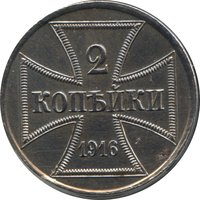
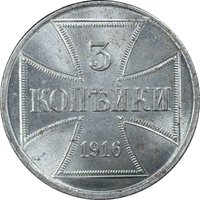
Year: 1916
Country: Germany
Issuer: German Occupied Territories
Currency:
(since 1916)
Demonetization: 1916
Total mintage: 19,624,046
Material
References
KM: #
Numista: #2081
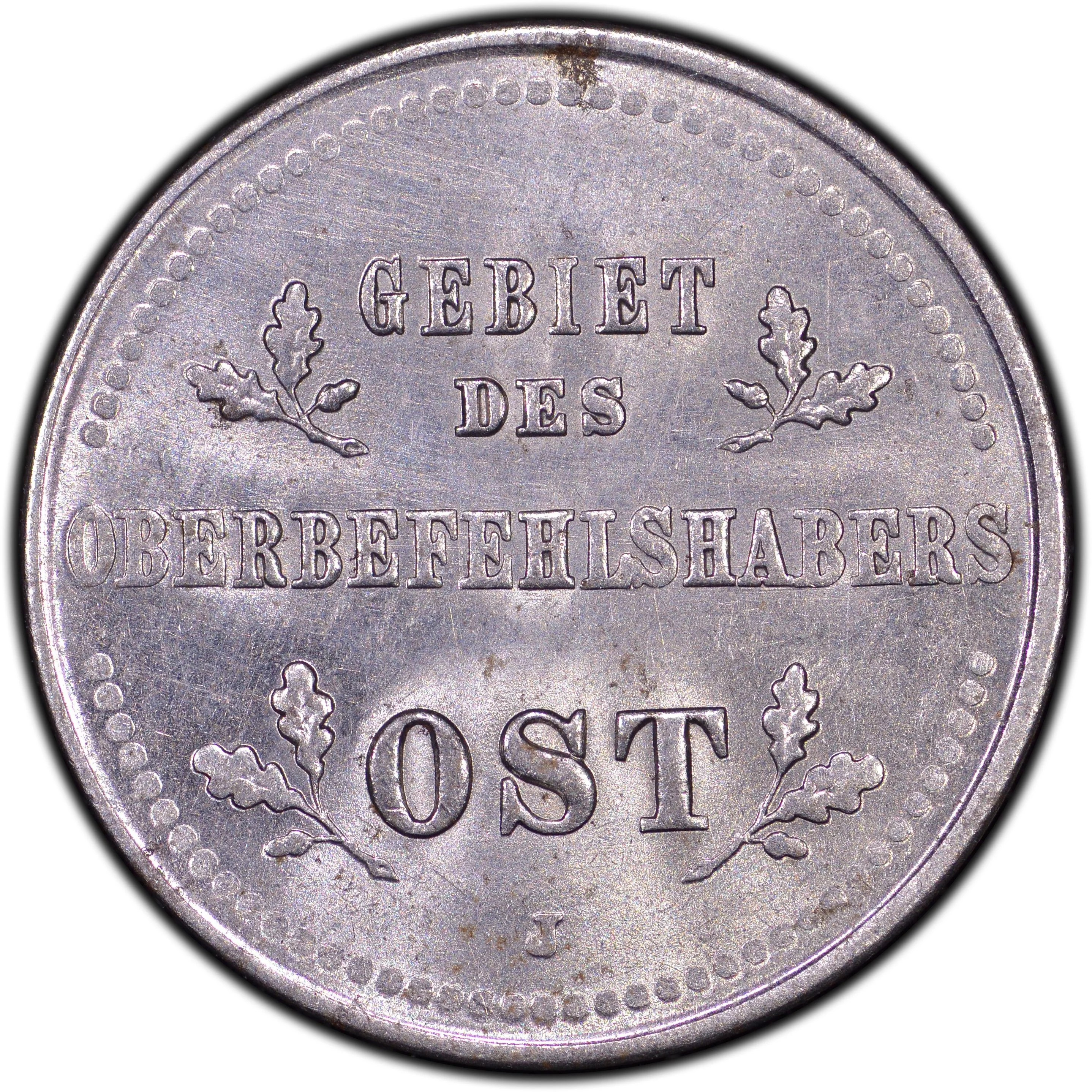
Obverse
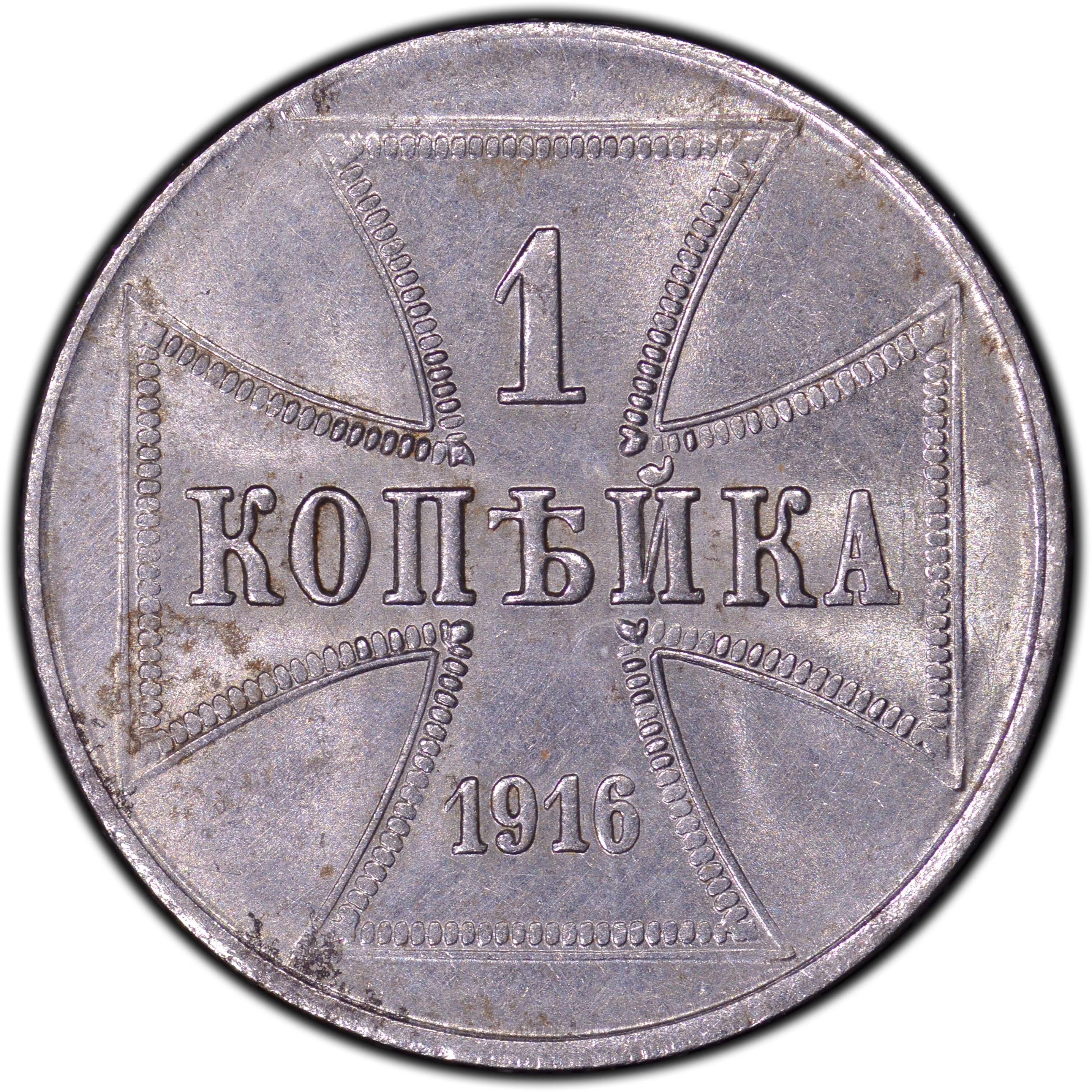
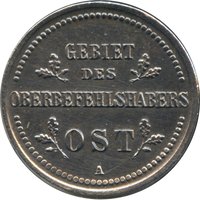
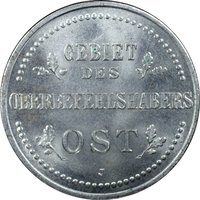
Reverse
Edge
Plain
Mints
| Name | Mark |
|---|---|
| Berlin | A |
| Hamburgische Münze | J |
Mintings
Historical background
By 1916, the currency situation in German-occupied territories across Europe was a complex and deteriorating system of financial exploitation. The German Empire, facing severe strain from the protracted war, financed its occupation regimes not through its own treasury but primarily through the economies of the conquered lands. The central mechanism was the issuance of occupation currency, such as the Darlehenskassenscheine (loan office notes), which were decreed legal tender. These notes were not backed by German gold or reserves but were forced upon local populations in exchange for requisitioned goods, raw materials, and to pay for the costs of the occupying army, effectively imposing a massive, compulsory loan on the subjugated nations.
This policy led to rampant inflation and economic distortion, particularly in areas like Belgium and Northern France, where the pre-war Belgian franc and French franc remained in circulation but were heavily manipulated. German authorities often set artificially favorable exchange rates between the Mark and local currencies, enabling them to purchase goods and resources cheaply. The simultaneous flood of unbacked occupation notes and the systematic stripping of industrial and agricultural output caused prices to soar, leading to scarcity, a thriving black market, and severe hardship for civilians. The financial plunder was both a pragmatic war measure and a deliberate strategy to weaken rival economies.
The consequences were profound, eroding the wealth of occupied nations and sowing deep resentment. Local populations viewed the occupation money as illegitimate, a symbol of subjugation and economic predation. This unstable monetary environment, characterized by multiple circulating currencies with arbitrary values, disrupted all normal commerce and placed the true cost of the war squarely on the occupied territories. The system established in 1916 thus not only served Germany's immediate logistical needs but also laid the groundwork for post-war economic instability and reparations debates, as the occupied states were left with hollowed-out economies and currencies in disarray.
This policy led to rampant inflation and economic distortion, particularly in areas like Belgium and Northern France, where the pre-war Belgian franc and French franc remained in circulation but were heavily manipulated. German authorities often set artificially favorable exchange rates between the Mark and local currencies, enabling them to purchase goods and resources cheaply. The simultaneous flood of unbacked occupation notes and the systematic stripping of industrial and agricultural output caused prices to soar, leading to scarcity, a thriving black market, and severe hardship for civilians. The financial plunder was both a pragmatic war measure and a deliberate strategy to weaken rival economies.
The consequences were profound, eroding the wealth of occupied nations and sowing deep resentment. Local populations viewed the occupation money as illegitimate, a symbol of subjugation and economic predation. This unstable monetary environment, characterized by multiple circulating currencies with arbitrary values, disrupted all normal commerce and placed the true cost of the war squarely on the occupied territories. The system established in 1916 thus not only served Germany's immediate logistical needs but also laid the groundwork for post-war economic instability and reparations debates, as the occupied states were left with hollowed-out economies and currencies in disarray.
🌱 Common