

20 dinars – Yugoslavia
Add to wishlist
Context
Year: 1925
Issuer: Yugoslavia
Ruler: Alexander I
Currency:
(1918—1941)
Demonetization: 1931
Total mintage: 50,000
Material
References
KM: #
Numista: #20801
Value
Bullion value: $895.44
Obverse
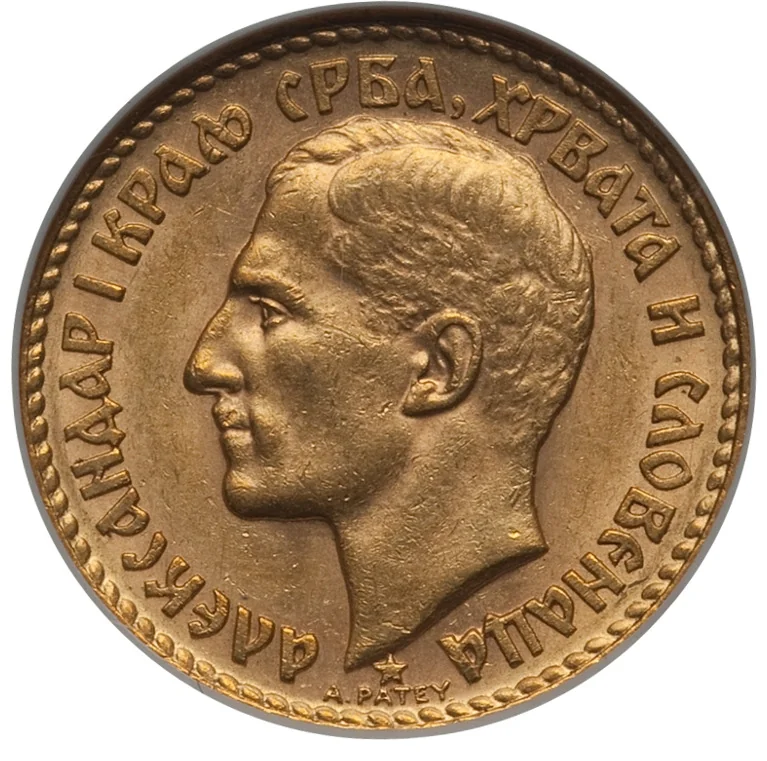
Description:
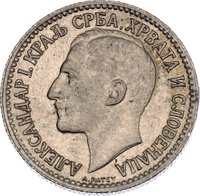
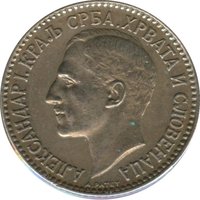
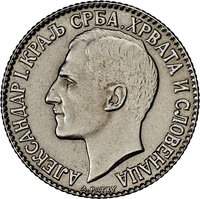
King Alexander, left profile.
Inscription:
Александар краљ Срба, Хрвата и Словенаца
Translation:
Alexander, King of the Serbs, Croats, and Slovenes
Language: Serbian
Engraver: Henri-Auguste Patey
Reverse
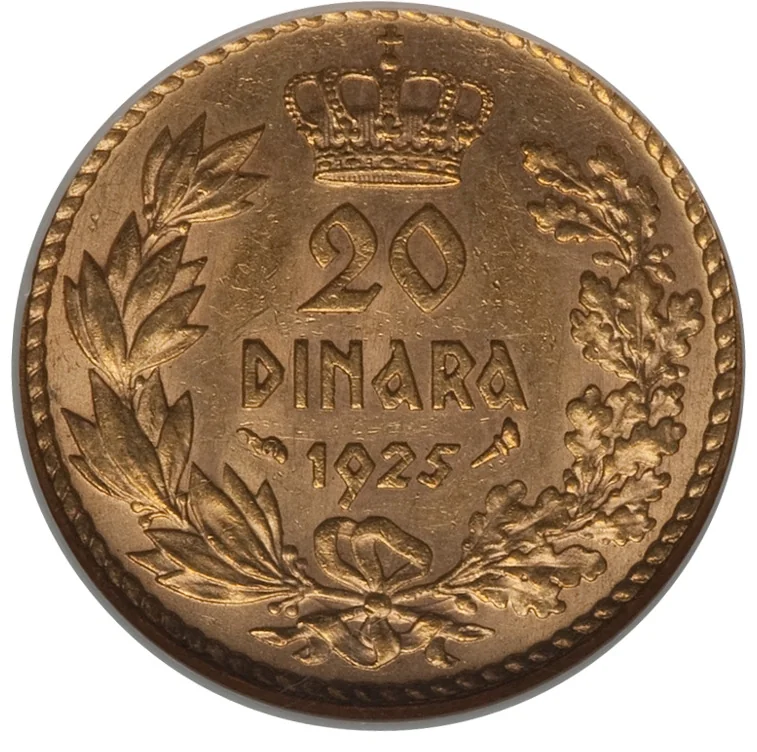
Description:
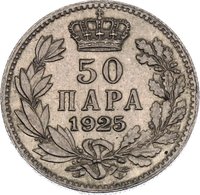
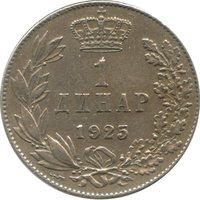
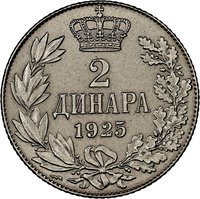
Crowned wreath enclosing denomination and date.
Inscription:
20 DINARA 1925
Script: Latin
Edge
Reeded
Mints
| Name | Mark |
|---|---|
| Monnaie de Paris | — |
Mintings
| Year | Mint Mark | Mintage | Quality | Collection |
|---|---|---|---|---|
| 1925 | — | 50,000 | ||
| 1925 | — | — | Proof |
Historical background
In 1925, the Kingdom of Serbs, Croats and Slovenes (soon to be renamed Yugoslavia) was in the midst of a critical monetary and financial crisis. The state, formed after World War I, had inherited a chaotic situation with four different currencies in circulation from its predecessor states, each with varying values and backed by different central banks. Initial attempts at unification, including the 1920 introduction of the Yugoslav krone, failed to bring stability, as the government financed its reconstruction and agrarian reform through rampant money printing, leading to severe hyperinflation that peaked disastrously in the early 1920s.
The turning point came with the Financial Reconstruction Act of 1925, a landmark piece of legislation masterminded by British financial expert Sir Arthur Young and Finance Minister Milan Stojadinović. This act established a new, stable currency, the Yugoslav dinar, which was placed on the gold exchange standard. It was defined as containing 26.5 milligrams of pure gold and was made fully convertible, with its value pegged not only to gold but also to the British pound and the French franc. This move was designed to restore domestic and, crucially, international confidence in the nation's economy.
The immediate effect in 1925 was a period of hard-won stabilization. The new dinar successfully ended the hyperinflation, allowing for predictable pricing and trade. Furthermore, the act led to the creation of the independent National Bank of the Kingdom of Serbs, Croats and Slovenes, which was granted a monopoly on currency issuance and was legally prohibited from financing the government's budget deficits. This institutional reform was intended to prevent a return to inflationary financing. While the stabilization attracted foreign loans and investment, it also imposed a rigid, deflationary discipline on the economy, setting the stage for future political and social tensions as the state grappled with the constraints of the gold standard during the global economic shifts of the late 1920s.
The turning point came with the Financial Reconstruction Act of 1925, a landmark piece of legislation masterminded by British financial expert Sir Arthur Young and Finance Minister Milan Stojadinović. This act established a new, stable currency, the Yugoslav dinar, which was placed on the gold exchange standard. It was defined as containing 26.5 milligrams of pure gold and was made fully convertible, with its value pegged not only to gold but also to the British pound and the French franc. This move was designed to restore domestic and, crucially, international confidence in the nation's economy.
The immediate effect in 1925 was a period of hard-won stabilization. The new dinar successfully ended the hyperinflation, allowing for predictable pricing and trade. Furthermore, the act led to the creation of the independent National Bank of the Kingdom of Serbs, Croats and Slovenes, which was granted a monopoly on currency issuance and was legally prohibited from financing the government's budget deficits. This institutional reform was intended to prevent a return to inflationary financing. While the stabilization attracted foreign loans and investment, it also imposed a rigid, deflationary discipline on the economy, setting the stage for future political and social tensions as the state grappled with the constraints of the gold standard during the global economic shifts of the late 1920s.
⭐ Rare