

1000 escudos (Mercy House) – Portugal
Add to wishlist
Circulating commemorative coins
Commemoration: 500th Anniversary of the Mercy House
Series: System 1981-2001
Portugal
Obverse
Description:
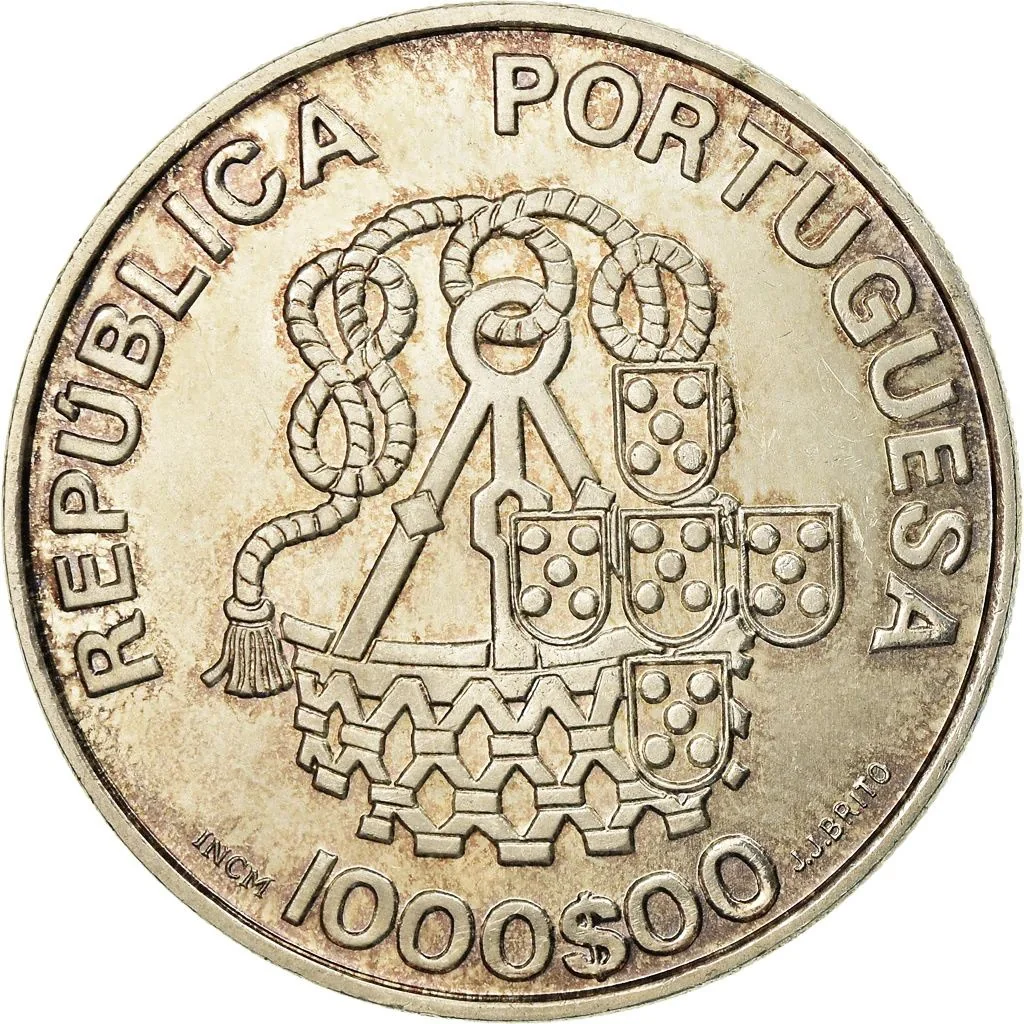
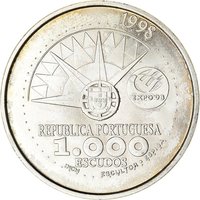
Basket-and-rope design.
Inscription:
REPÚBLICA PORTUGUESA
INCM
1000$00
J.J. BRITO
INCM
1000$00
J.J. BRITO
Translation:
PORTUGUESE REPUBLIC
INCM
1000$00
J.J. BRITO
INCM
1000$00
J.J. BRITO
Script: Latin
Language: Portuguese
Reverse
Description:
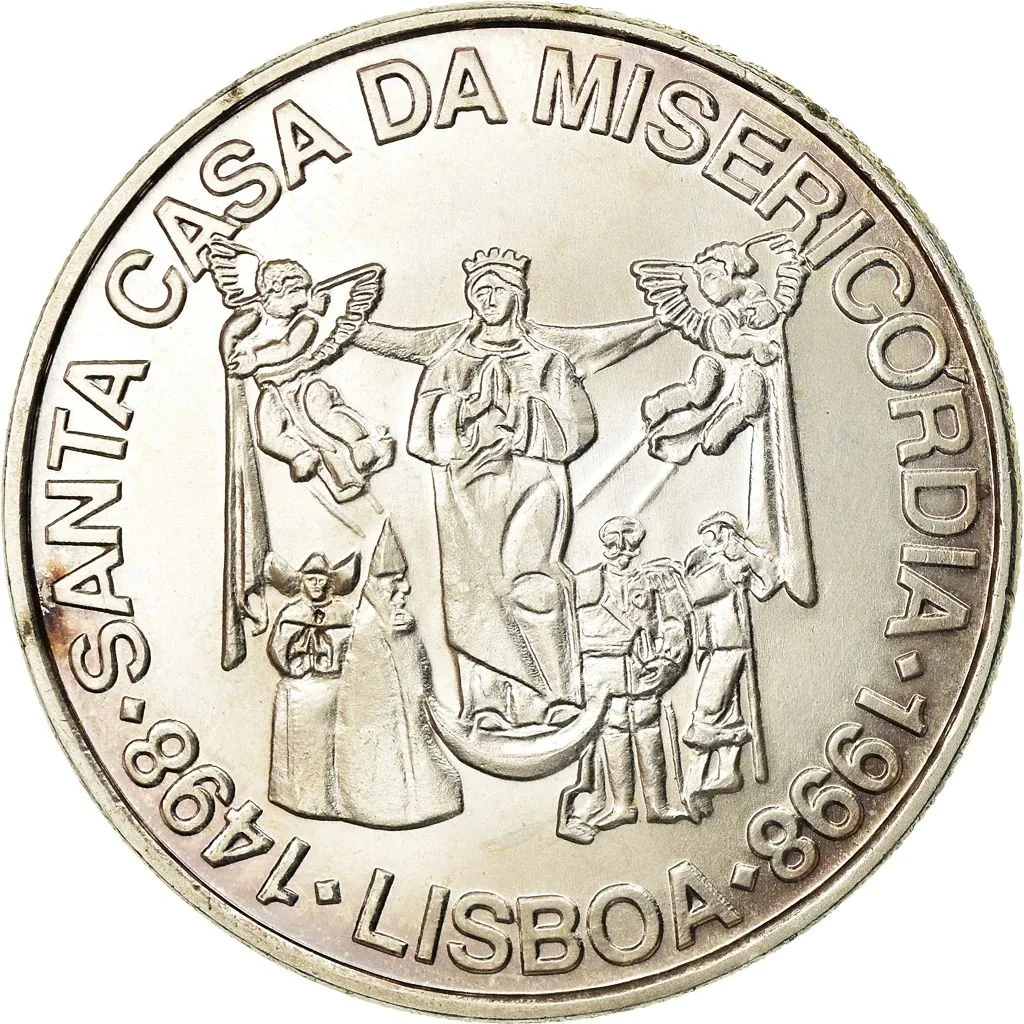
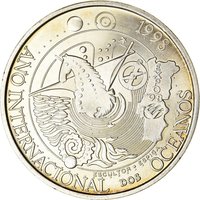
Crowned figure praying, flanked by cherubs below.
Inscription:
1498·SANTA CASA DA MISERICÓRDIA·1998
·LISBOA·
·LISBOA·
Translation:
1498 · HOLY HOUSE OF MERCY · 1998
· LISBON ·
· LISBON ·
Script: Latin
Languages: Latin, Portuguese
Edge
Reeded
Mints
| Name | Mark |
|---|---|
| Imprensa Nacional - Casa da Moeda | INCM |
Mintings
| Year | Mint Mark | Mintage | Quality | Collection |
|---|---|---|---|---|
| 1998 | INCM | 500,000 |
Historical background
In 1998, Portugal's currency situation was defined by its pivotal and final year operating the escudo (PTE) as a national currency before the historic launch of the euro. The country was deeply embedded in the process of European Monetary Union (EMU), having successfully met the strict convergence criteria—including low inflation, sound public finances, and exchange rate stability—to qualify for the first wave of Economic and Monetary Union (EMU) participants. The escudo was irrevocably locked to the new European currency, the euro, at a fixed conversion rate of 200.482 escudos to 1 euro, a parity established in May 1998 that governed all financial transactions and accounting.
This period was one of intense technical and logistical preparation, often termed the "transitional phase." While the escudo remained the physical medium of exchange for the public, all financial and banking systems operated on a "no compulsion, no prohibition" basis, meaning accounting could be done in both euros and escudos. The government, central bank (Banco de Portugal), and financial institutions worked to ensure a smooth changeover, recalibrating systems, minting new euro coins (with Portuguese designs), and printing banknotes in secrecy, while also running public information campaigns to familiarize citizens with the new currency.
The overarching context was one of strategic national and economic alignment with core Europe, symbolizing Portugal's modern integration and stability after decades of isolation under the Estado Novo regime. Adopting the euro was seen as a crowning achievement of this post-1974 democratic period, promising to lower transaction costs, eliminate exchange rate risk with major trading partners, and cement low inflation. Thus, the 1998 currency landscape was fundamentally transitional, characterized by a fixed and stable escudo functioning as a legal subunit of the soon-to-be-physical euro, marking the quiet end of a national monetary history dating back to 1911.
This period was one of intense technical and logistical preparation, often termed the "transitional phase." While the escudo remained the physical medium of exchange for the public, all financial and banking systems operated on a "no compulsion, no prohibition" basis, meaning accounting could be done in both euros and escudos. The government, central bank (Banco de Portugal), and financial institutions worked to ensure a smooth changeover, recalibrating systems, minting new euro coins (with Portuguese designs), and printing banknotes in secrecy, while also running public information campaigns to familiarize citizens with the new currency.
The overarching context was one of strategic national and economic alignment with core Europe, symbolizing Portugal's modern integration and stability after decades of isolation under the Estado Novo regime. Adopting the euro was seen as a crowning achievement of this post-1974 democratic period, promising to lower transaction costs, eliminate exchange rate risk with major trading partners, and cement low inflation. Thus, the 1998 currency landscape was fundamentally transitional, characterized by a fixed and stable escudo functioning as a legal subunit of the soon-to-be-physical euro, marking the quiet end of a national monetary history dating back to 1911.
Series: System 1981-2001
🌱 Common