

10 Lei (Revolution) – Romania
Circulating commemorative coins
Commemoration: Revolution Anniversary
Romania
Context

Material
References
KM: #Click to copy to clipboard108
Numista: #2078
Value
Exchange value: 10 ROL
Inflation-adjusted value: 64785.11 ROL
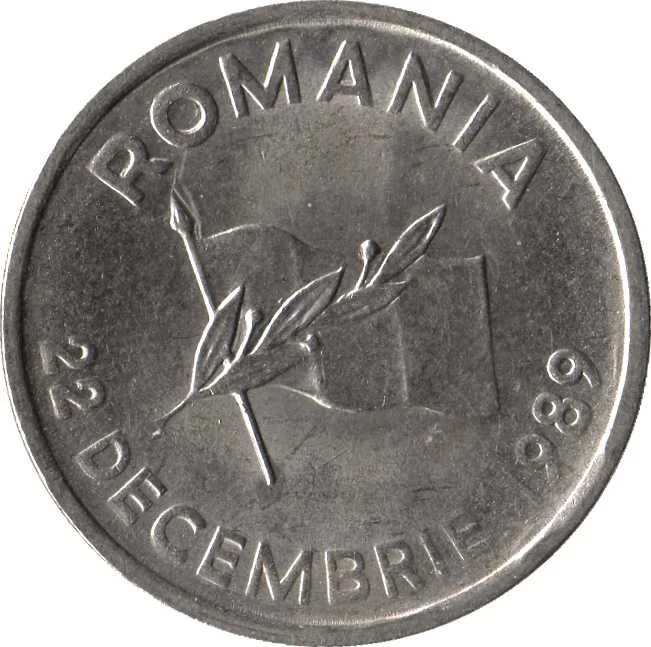
Obverse
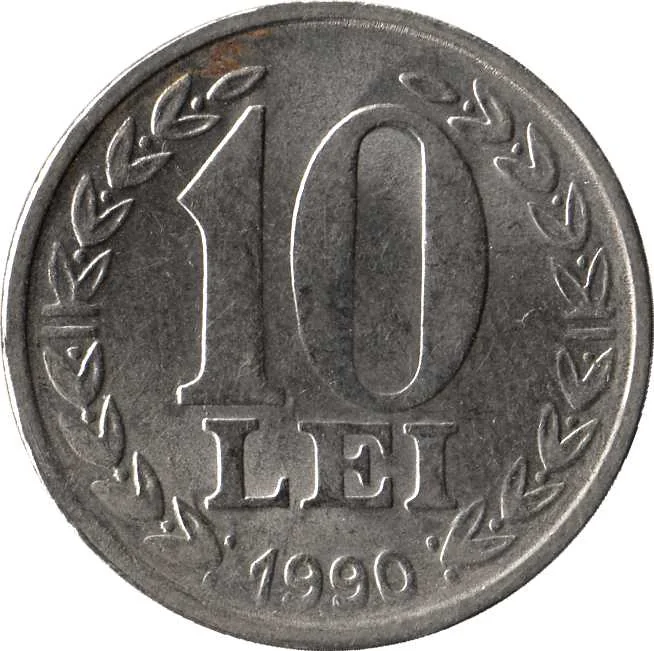
Reverse
Edge
Smooth with wavy lines and dots
Mints
| Name | Mark |
|---|---|
| State Mint | — |
Mintings
| Year | Mint Mark | Mintage | Quality | Collection |
|---|---|---|---|---|
| 1990 | — | 30,000,000 | ||
| 1991 | — | 31,303,000 | ||
| 1992 | — | 60,000,000 |
Historical background
In 1990, Romania inherited a catastrophic economic situation from the Ceaușescu regime, characterized by massive foreign debt, severe shortages of consumer goods, and a heavily centralized and inefficient industrial sector. The national currency, the leu (ROL), was essentially non-convertible on international markets and its official exchange rate, set by the state, bore little relation to its actual value. This created a vast black market for foreign currency, particularly US dollars and German marks, where the leu traded at a fraction of its official rate, reflecting the severe lack of confidence in the economy and the currency itself.
The new post-revolutionary government, under the National Salvation Front, faced the immense challenge of transitioning to a market economy while maintaining social stability. In the immediate aftermath, there was no major currency reform; instead, the authorities grappled with hyperinflation, which began to accelerate as price controls were partially lifted and pent-up demand flooded the under-supplied market. The leu entered a period of rapid devaluation, and the disparity between the official exchange rate and the black-market rate widened further, undermining all formal economic planning and fostering widespread corruption.
This unstable currency environment was a defining feature of Romania's early transition period, preceding the more structured reforms of the later 1990s. The situation underscored the profound structural problems of the economy and the limitations of the state's control. The weak and volatile leu acted as a brake on foreign investment and trade, forcing the population to rely on hard currency savings or barter, and setting the stage for the austerity measures and eventual currency stabilizations that would follow later in the decade.
The new post-revolutionary government, under the National Salvation Front, faced the immense challenge of transitioning to a market economy while maintaining social stability. In the immediate aftermath, there was no major currency reform; instead, the authorities grappled with hyperinflation, which began to accelerate as price controls were partially lifted and pent-up demand flooded the under-supplied market. The leu entered a period of rapid devaluation, and the disparity between the official exchange rate and the black-market rate widened further, undermining all formal economic planning and fostering widespread corruption.
This unstable currency environment was a defining feature of Romania's early transition period, preceding the more structured reforms of the later 1990s. The situation underscored the profound structural problems of the economy and the limitations of the state's control. The weak and volatile leu acted as a brake on foreign investment and trade, forcing the population to rely on hard currency savings or barter, and setting the stage for the austerity measures and eventual currency stabilizations that would follow later in the decade.


🌱 Very Common