

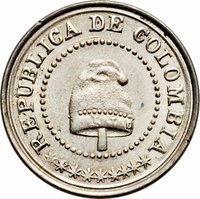
5 Centavos – Colombia
Colombia
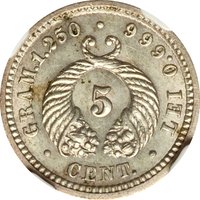
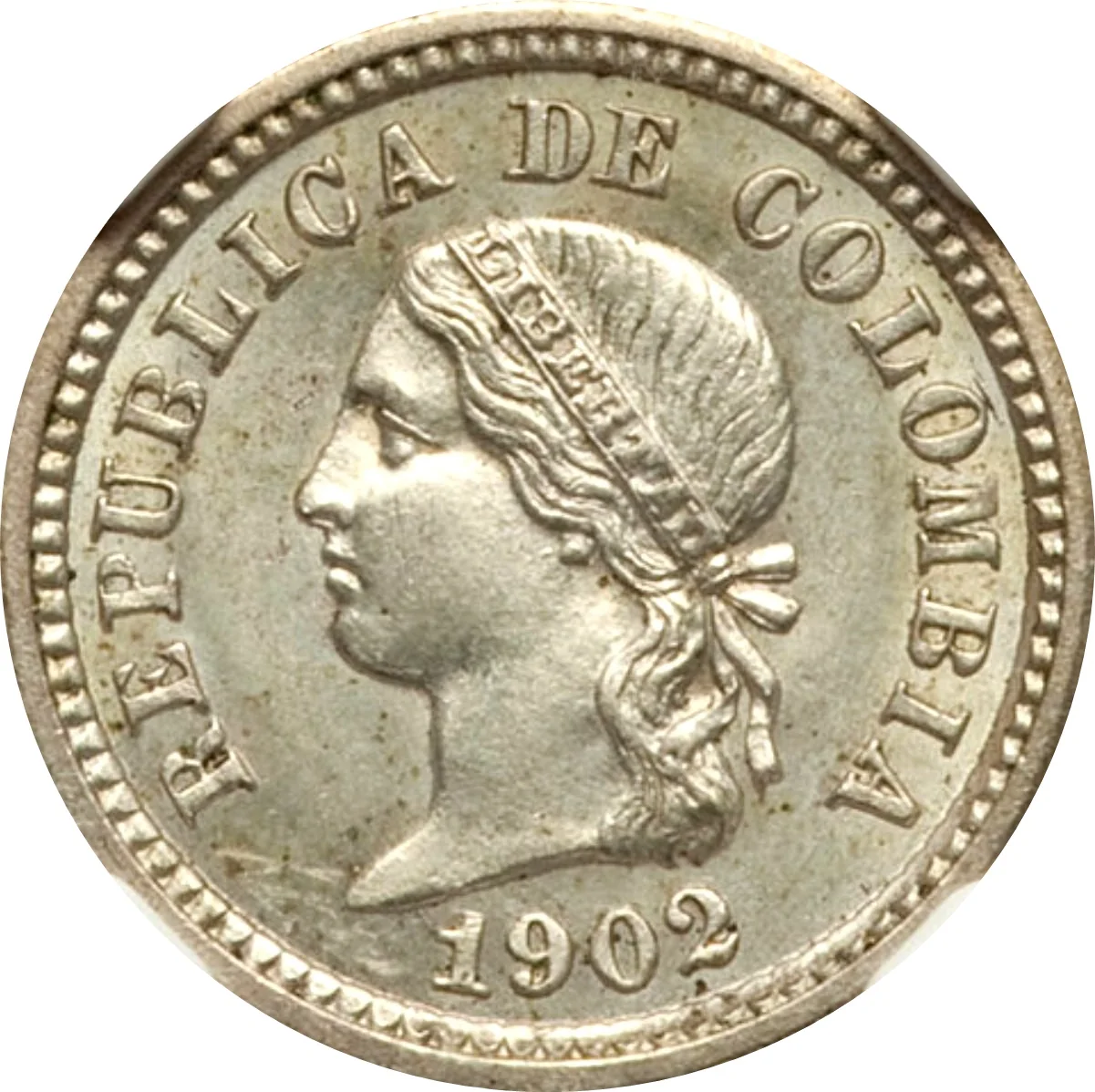
Obverse
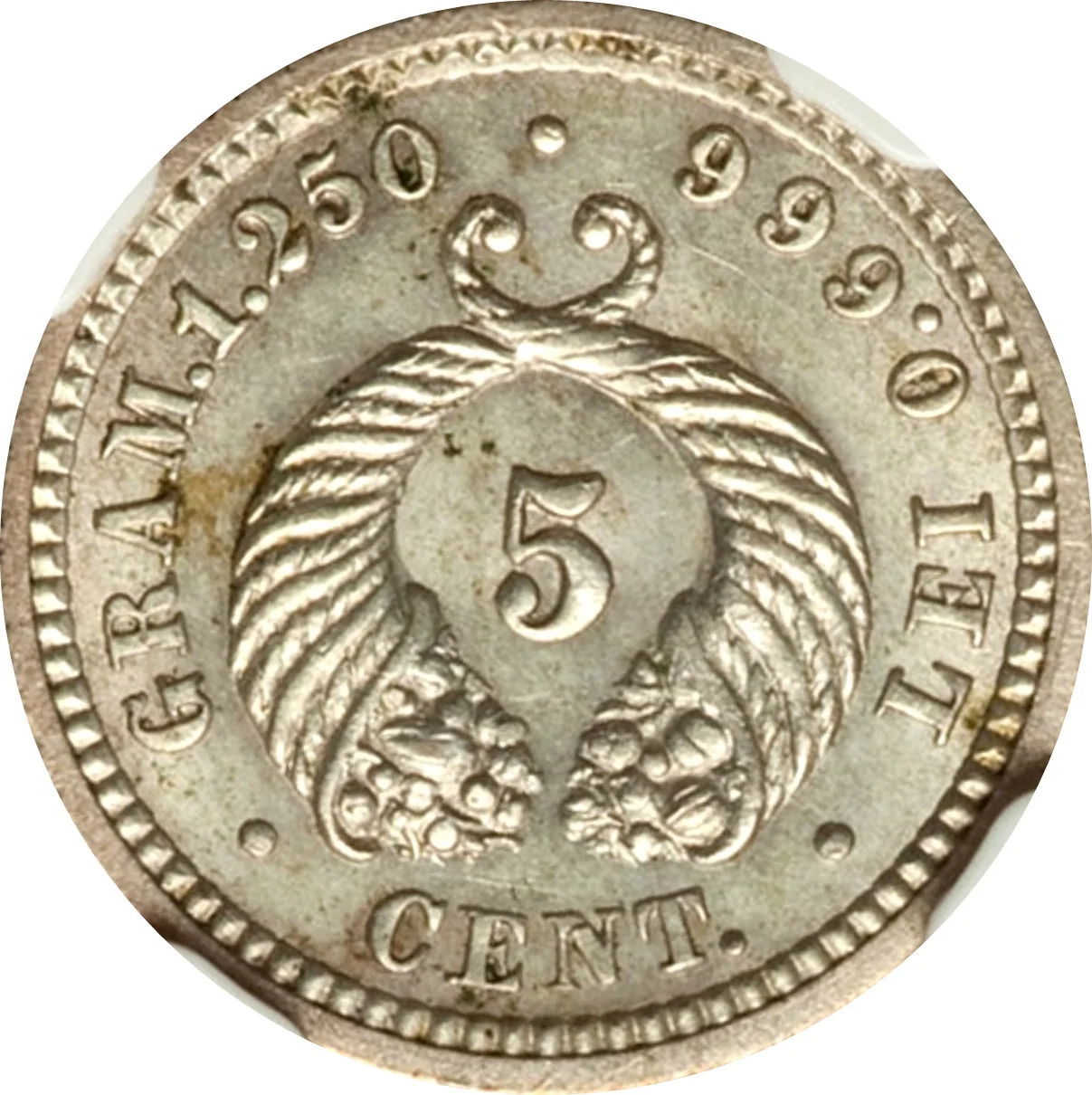
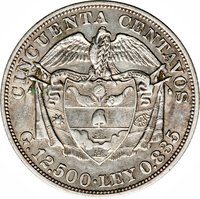
Reverse
Edge
Reeded
Categories
| Symbol> Allegory |
| Symbol> Cornucopia |
Mints
| Name | Mark |
|---|---|
| United States Mint of Philadelphia | — |
Mintings
| Year | Mint Mark | Mintage | Quality | Collection |
|---|---|---|---|---|
| 1902 | — | 400,000 |
Historical background
In 1902, Colombia was in the final, brutal year of the Thousand Days' War (1899-1902), a devastating civil conflict between Liberal and Conservative factions. This context is essential to understanding the nation's monetary chaos. The war had shattered the economy, destroying infrastructure and agricultural production, while the national government in Bogotá, controlled by the Conservatives, lost effective fiscal control over large regions of the country. To finance the war, both sides resorted to printing enormous quantities of paper money with little to no metallic backing, leading to hyperinflation and a catastrophic loss of public confidence in the currency.
The monetary system was a complex and dysfunctional patchwork. The official currency was the Colombian peso, but its value was purely notional. In practice, a multitude of different paper notes circulated, including national government issues, notes from individual states (departamentos), and even notes issued by private banks and wartime generals. These currencies traded at wildly fluctuating and deeply discounted rates against gold and silver. The pre-war standard, the peso fuerte (strong peso) pegged to gold, had been effectively suspended, creating a sharp divide between the depreciating paper money used in daily life and hard currency required for international trade.
By the war's end in late 1902, the currency situation was dire. Hyperinflation had impoverished the population and rendered savings worthless, creating an urgent need for monetary reform. This crisis set the stage for the sweeping reforms of the postwar period, most notably the creation of the Banco de la República in 1923 and the eventual stabilization of the currency on the gold standard. Thus, 1902 represents the nadir of Colombia's monetary order, a low point from which the long process of modern central banking and financial stability would begin.
The monetary system was a complex and dysfunctional patchwork. The official currency was the Colombian peso, but its value was purely notional. In practice, a multitude of different paper notes circulated, including national government issues, notes from individual states (departamentos), and even notes issued by private banks and wartime generals. These currencies traded at wildly fluctuating and deeply discounted rates against gold and silver. The pre-war standard, the peso fuerte (strong peso) pegged to gold, had been effectively suspended, creating a sharp divide between the depreciating paper money used in daily life and hard currency required for international trade.
By the war's end in late 1902, the currency situation was dire. Hyperinflation had impoverished the population and rendered savings worthless, creating an urgent need for monetary reform. This crisis set the stage for the sweeping reforms of the postwar period, most notably the creation of the Banco de la República in 1923 and the eventual stabilization of the currency on the gold standard. Thus, 1902 represents the nadir of Colombia's monetary order, a low point from which the long process of modern central banking and financial stability would begin.
🌟 Limited