

10 centavos – São Tomé and Príncipe
Add to wishlist
Sao Tome and Principe
Context
Year: 1929
Country: Sao Tome and Principe
Issuer: São Tomé and Príncipe
Period:
(1910—1951)
Currency:
(1914—1974)
Demonetized: Yes
Total mintage: 500,000
Material
Diameter: 20 mm
Weight: 2.4 g
Thickness: 1.05 mm
Shape: Round
Composition: Nickel brass
Magnetic: No
Technique: Milled
Alignment: Medal alignment
flip
References
KM: #
Numista: #20760
Obverse
Description:
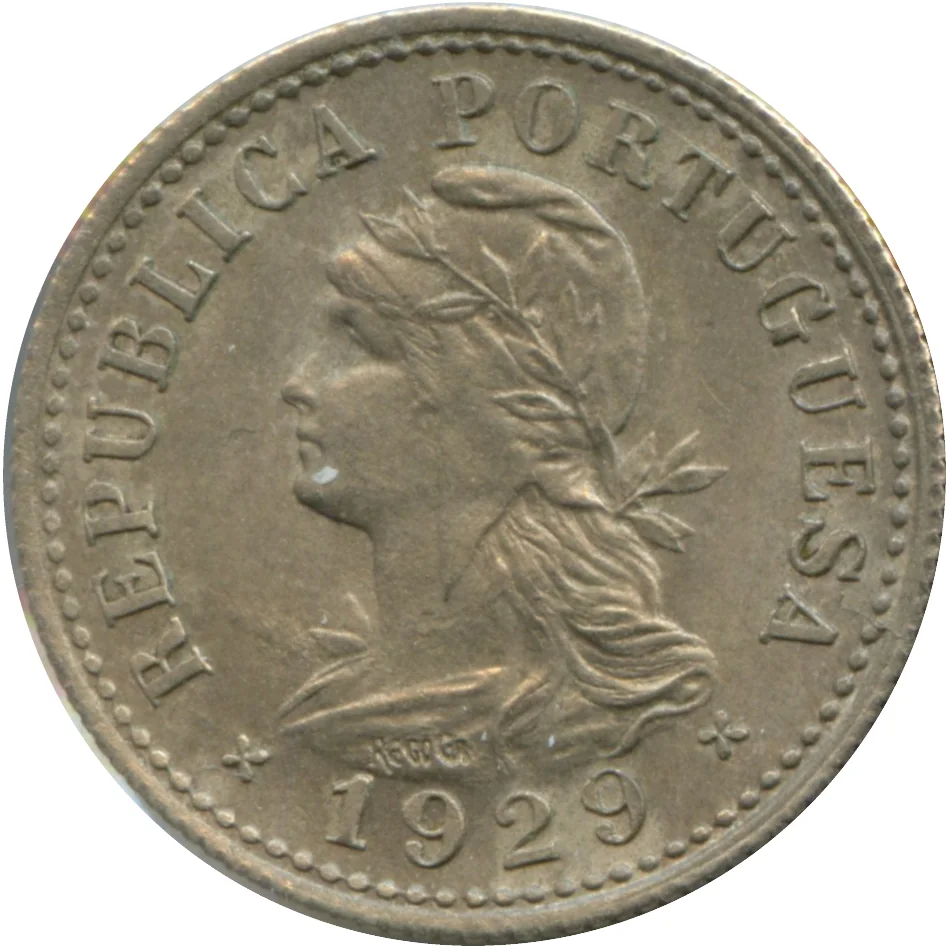
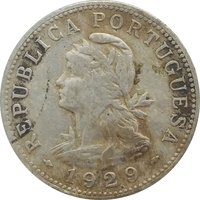
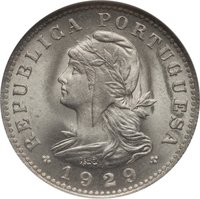
Liberty Head left, encircled by text.
Inscription:
REPUBLICA PORTUGUESA
1929
1929
Translation:
Portuguese Republic
1929
1929
Script: Latin
Language: Portuguese
Reverse
Description:
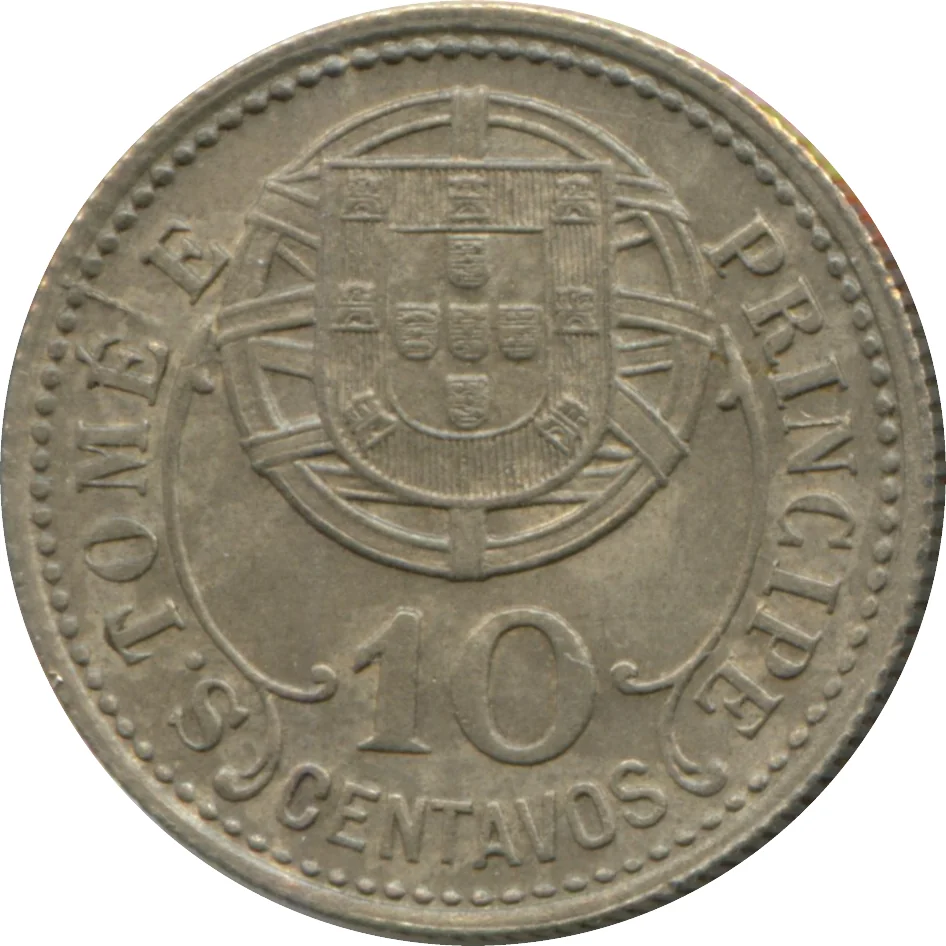
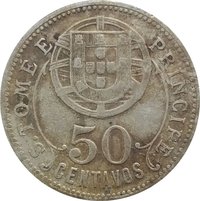
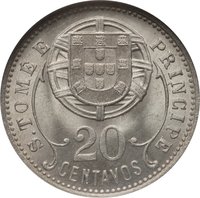
Globe-topped shield.
Inscription:
S. TOMÉ E PRINCIPE
10 CENTAVOS
10 CENTAVOS
Translation:
Saint Thomas and Prince
10 Centavos
10 Centavos
Script: Latin
Language: Portuguese
Edge
Reeded
Categories
| Symbol> Allegory |
| Symbols> Coat of Arms |
| Symbol> Phrygian cap |
| Symbol> Wreath |
Mints
| Name | Mark |
|---|---|
| Imprensa Nacional - Casa da Moeda | — |
Mintings
| Year | Mint Mark | Mintage | Quality | Collection |
|---|---|---|---|---|
| 1929 | — | 500,000 |
Historical background
In 1929, the currency situation in São Tomé and Príncipe, then a Portuguese colony, was defined by its integration into Portugal's monetary system. The official currency was the São Tomé and Príncipe escudo (STPE), which had been introduced in 1929 to replace the real at a rate of 1 escudo = 1000 réis. This change was part of a broader Portuguese monetary reform aimed at standardizing currency across its empire, creating distinct but pegged colonial escudos to replace the older, inflated real system.
Economically, this escudo was pegged at par to the Portuguese metropolitan escudo, meaning its value was entirely derivative and controlled from Lisbon. The colony's monetary policy was not autonomous, and the money supply was directly influenced by the needs of the Portuguese economy and the performance of the colony's dominant export sector: cocoa. By the late 1920s, São Tomé and Príncipe was one of the world's leading cocoa producers, and the currency's stability was thus tied to both Lisbon's decisions and volatile global commodity prices.
The year 1929 itself marked the beginning of the Great Depression, which would soon precipitate a catastrophic collapse in cocoa prices on the world market. While the immediate monetary mechanics in 1929 were stable on paper due to the fixed peg, the underlying economic foundation was about to be severely tested. The colonial escudo system would face immense strain in the coming years as export revenues plummeted, highlighting the vulnerability of a currency and an economy so rigidly linked to a distant colonial power and a single cash crop.
Economically, this escudo was pegged at par to the Portuguese metropolitan escudo, meaning its value was entirely derivative and controlled from Lisbon. The colony's monetary policy was not autonomous, and the money supply was directly influenced by the needs of the Portuguese economy and the performance of the colony's dominant export sector: cocoa. By the late 1920s, São Tomé and Príncipe was one of the world's leading cocoa producers, and the currency's stability was thus tied to both Lisbon's decisions and volatile global commodity prices.
The year 1929 itself marked the beginning of the Great Depression, which would soon precipitate a catastrophic collapse in cocoa prices on the world market. While the immediate monetary mechanics in 1929 were stable on paper due to the fixed peg, the underlying economic foundation was about to be severely tested. The colonial escudo system would face immense strain in the coming years as export revenues plummeted, highlighting the vulnerability of a currency and an economy so rigidly linked to a distant colonial power and a single cash crop.
🌱 Fairly Common