

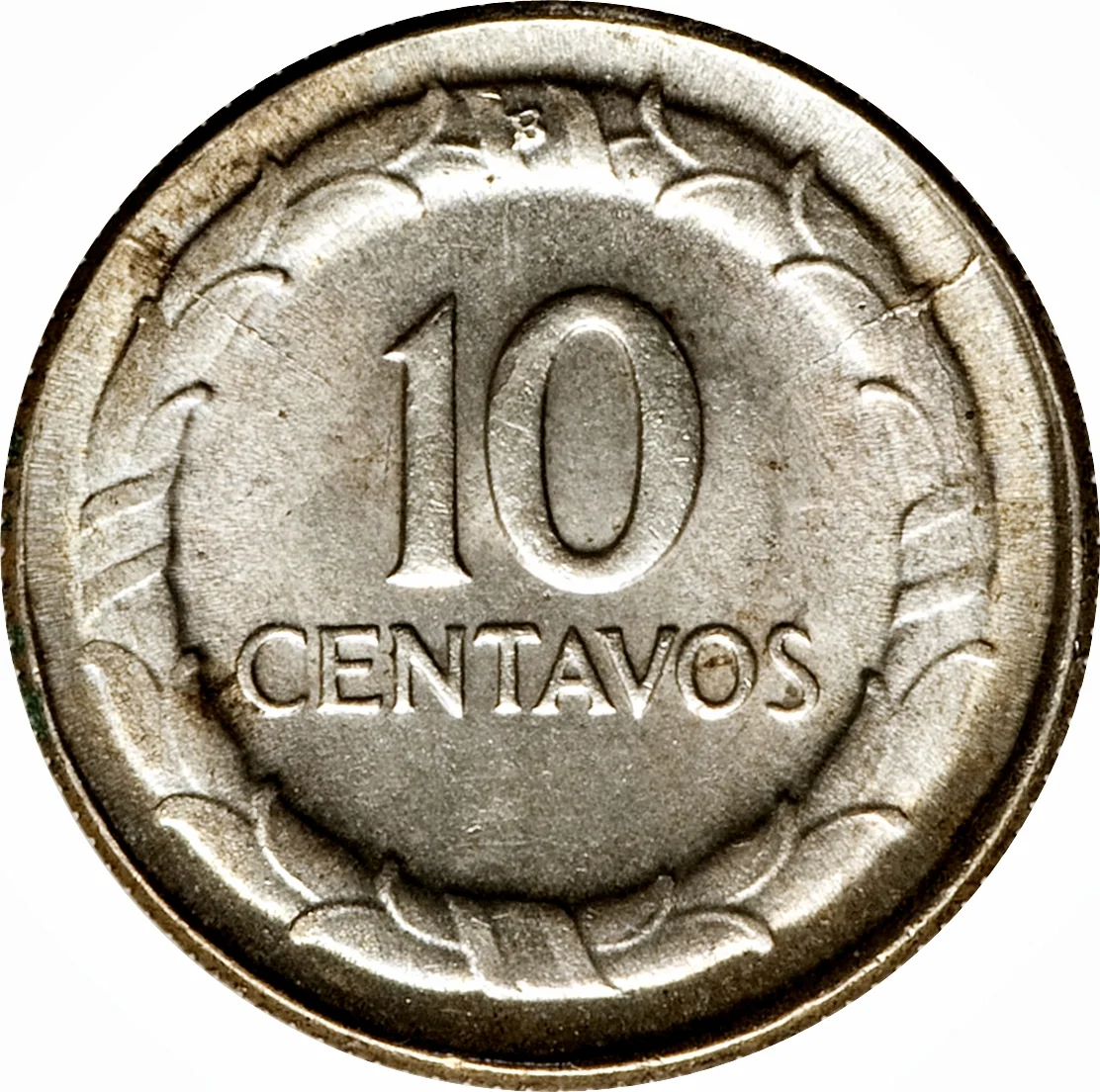
10 Centavos – Colombia
Colombia
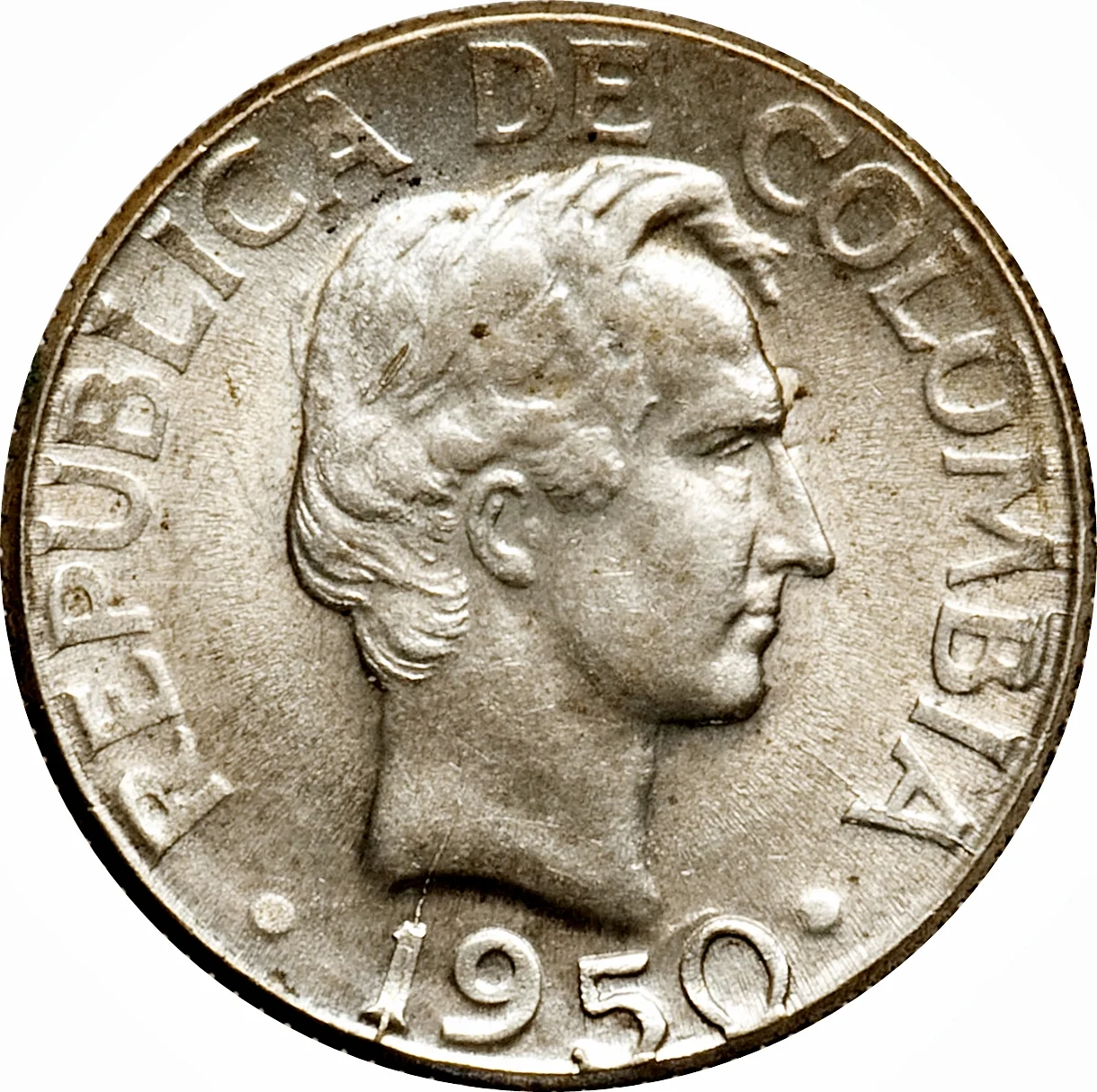
Obverse
Description:
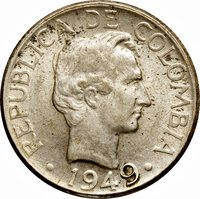
Country, portrait of Francisco de Paula Santander, year.
Inscription:
REPUBLICA DE COLOMBIA
1950
1950
Translation:
REPUBLIC OF COLOMBIA
1950
1950
Script: Latin
Language: Spanish
Engraver: David D'Angers
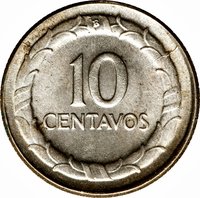
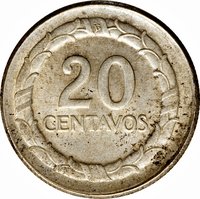
Reverse
Edge
Reeded
Mintings
| Year | Mint Mark | Mintage | Quality | Collection |
|---|---|---|---|---|
| 1945 | B | 4,830,000 | ||
| 1945 | B-B | — | ||
| 1946 | B | — | ||
| 1947 | B | 7,366,000 | ||
| 1948 | B | 3,629,000 | ||
| 1949 | B | 5,923,000 | ||
| 1950 | B | 6,783,000 | ||
| 1951 | B | 5,185,000 | ||
| 1952 | — | 1,060,000 |
Historical background
In 1945, Colombia's currency situation was characterized by relative stability and a managed exchange rate system, largely a legacy of the significant economic reforms enacted a decade earlier. The country operated under the gold exchange standard, with the Colombian peso officially pegged to the United States dollar at a fixed rate of 1.75 pesos per dollar, a parity established in 1935. This stability was underpinned by conservative fiscal management and a growing reserve of gold and foreign exchange, bolstered by Colombia's strategic importance as an exporter of coffee and other commodities to the Allied forces during World War II.
This period of stability, however, existed within a framework of strict exchange controls implemented in 1931 and managed by the newly established Banco de la República, which held a monopoly on foreign exchange transactions. The controls were designed to conserve foreign reserves and prioritize essential imports, a system that created a divergence between the official rate and a less favorable, but tolerated, free market rate for non-essential transactions. While effective in preventing capital flight and inflation during the war, this controlled regime also fostered a nascent black market for dollars and began to mask underlying inflationary pressures.
Looking forward, the stability of 1945 was precarious. The post-war environment would soon test the fixed parity, as pent-up consumer demand, a global shift away from controlled economies, and fluctuations in coffee prices began to exert severe pressure on the peso. The rigid exchange control system, while successful in the wartime context, would prove difficult to maintain, setting the stage for the devaluation and monetary challenges that Colombia would confront in the late 1940s and 1950s.
This period of stability, however, existed within a framework of strict exchange controls implemented in 1931 and managed by the newly established Banco de la República, which held a monopoly on foreign exchange transactions. The controls were designed to conserve foreign reserves and prioritize essential imports, a system that created a divergence between the official rate and a less favorable, but tolerated, free market rate for non-essential transactions. While effective in preventing capital flight and inflation during the war, this controlled regime also fostered a nascent black market for dollars and began to mask underlying inflationary pressures.
Looking forward, the stability of 1945 was precarious. The post-war environment would soon test the fixed parity, as pent-up consumer demand, a global shift away from controlled economies, and fluctuations in coffee prices began to exert severe pressure on the peso. The rigid exchange control system, while successful in the wartime context, would prove difficult to maintain, setting the stage for the devaluation and monetary challenges that Colombia would confront in the late 1940s and 1950s.
🌱 Common