

20 rials (Islamic Revolution) – Iran
Add to wishlist
Circulating commemorative coins
Commemoration: 3rd Anniversary of Islamic Revolution
Iran
Context
Year: 1981
Iranian - Persian Year:: 1360
Issuer: Iran
Period:
(since 1979)
Currency:
(since 1932)
Demonetized: Yes
Material
Diameter: 31 mm
Weight: 8.9 g
Thickness: 1.5 mm
Shape: Round
Composition: Copper-nickel
Technique: Milled
Alignment: Coin alignment
flip
References
KM: #
Numista: #10908
Value
Exchange value: 20 IRR
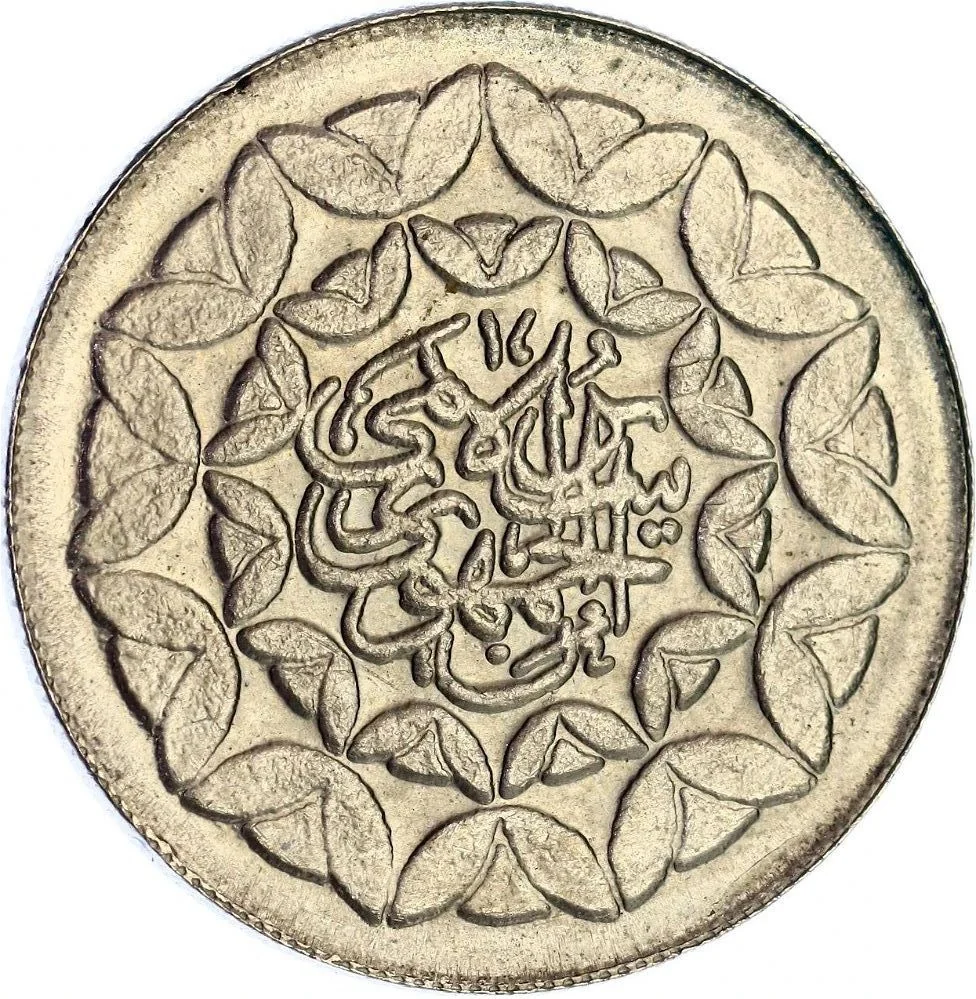
Obverse
Description:
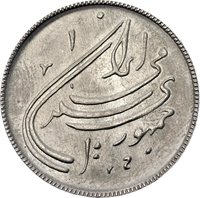
The Islamic Republic of Iran, encircled by twenty-two tulips for 22 Bahman.
Inscription:
جمهوری اسلامی ایران
Translation:
Islamic Republic of Iran
Language: Persian
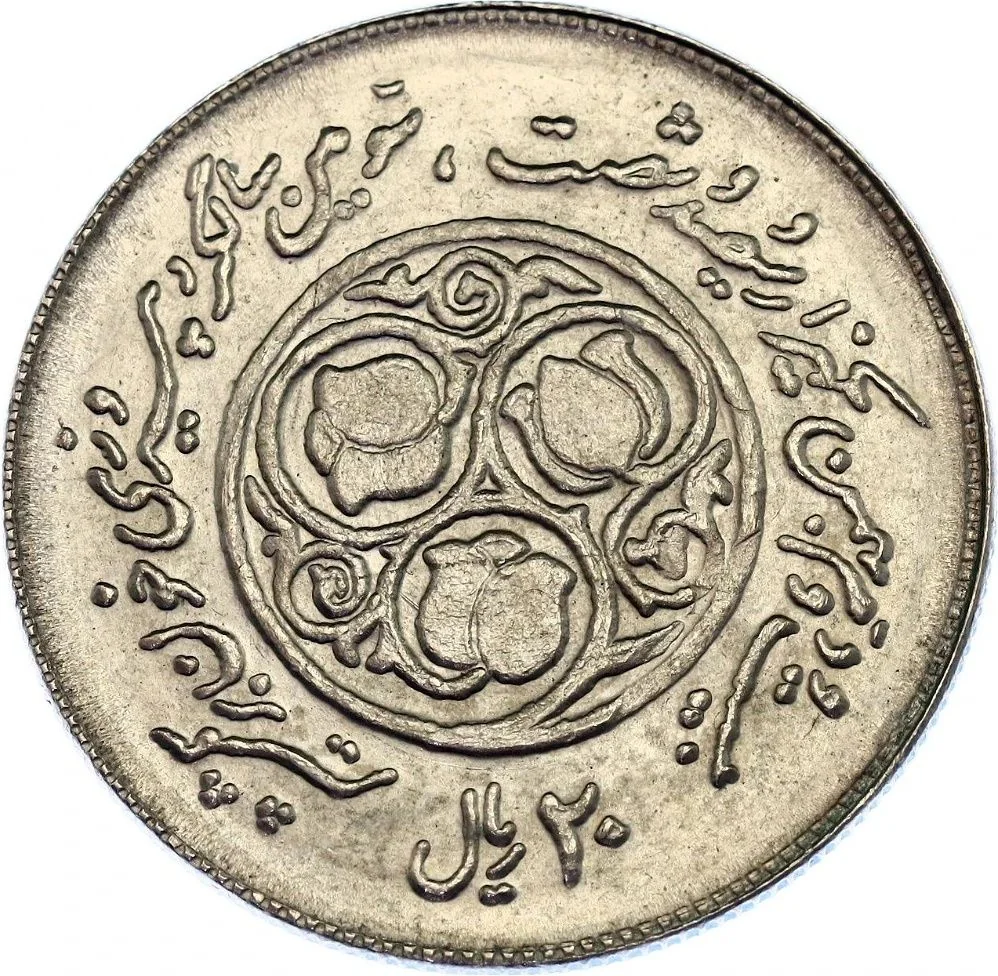
Reverse
Description:
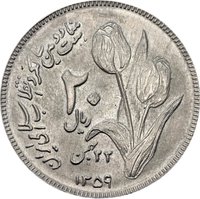
Three tulips in a circle (3rd revolution anniversary memorial).
Inscription:
بیست و دوّم بهمن یکهزار و سیصد و شصت ، سوّمین سالگرد پیروزی خون بر شمشیر
٢٠ ﷼
٢٠ ﷼
Translation:
Twenty-second of Bahman, one thousand three hundred and sixty, the thirtieth anniversary of the victory of blood over the sword.
20 Rials
20 Rials
Script: Persian (nastaliq)
Language: Persian
Edge
Reeded
Categories
| Event> Revolution |
| Plants> Flower |
Mints
| Name | Mark |
|---|---|
| Tehran | — |
Mintings
| Year | Mint Mark | Mintage | Quality | Collection |
|---|---|---|---|---|
| 1981 | — | — |
Historical background
In 1981, Iran’s currency situation was deeply unstable, a direct consequence of the tumultuous 1979 Islamic Revolution and the escalating war with Iraq, which began in September 1980. The revolutionary government had nationalized banks and major industries, leading to capital flight, a collapse in foreign investment, and severe disruptions in oil production—the country's primary source of hard currency. The war compounded this crisis, destroying vital infrastructure like the Abadan refinery and imposing enormous military expenditures, which drained foreign reserves and forced the government to finance deficits through money printing, fueling inflation.
The official currency, the rial, faced significant downward pressure on the black market, though it was artificially propped up by state controls. The government maintained a multi-tiered exchange rate system, with a highly subsidized official rate for essential imports like food and medicine, and a less favorable rate for other transactions. This created a vast gap between the official and black-market rates, fostering a lucrative currency smuggling ring and widespread corruption as those with political connections profited from access to cheap foreign exchange. The economic distortions made it difficult for legitimate businesses to operate and led to frequent shortages of consumer goods.
Overall, the currency instability of 1981 was a symptom of a war economy grappling with revolutionary upheaval. While the government prioritized wartime survival and social welfare through subsidies, its policies—including price controls, import restrictions, and the fixed exchange rate—masked the rial’s true depreciation and stored up severe economic problems for the future. The situation entrenched a dual economy, weakened the private sector, and set the stage for the chronic high inflation and currency devaluations that would plague Iran for decades to come.
The official currency, the rial, faced significant downward pressure on the black market, though it was artificially propped up by state controls. The government maintained a multi-tiered exchange rate system, with a highly subsidized official rate for essential imports like food and medicine, and a less favorable rate for other transactions. This created a vast gap between the official and black-market rates, fostering a lucrative currency smuggling ring and widespread corruption as those with political connections profited from access to cheap foreign exchange. The economic distortions made it difficult for legitimate businesses to operate and led to frequent shortages of consumer goods.
Overall, the currency instability of 1981 was a symptom of a war economy grappling with revolutionary upheaval. While the government prioritized wartime survival and social welfare through subsidies, its policies—including price controls, import restrictions, and the fixed exchange rate—masked the rial’s true depreciation and stored up severe economic problems for the future. The situation entrenched a dual economy, weakened the private sector, and set the stage for the chronic high inflation and currency devaluations that would plague Iran for decades to come.
🌱 Common