

1 dinar – Iraq
Add to wishlist
Non-circulating coins
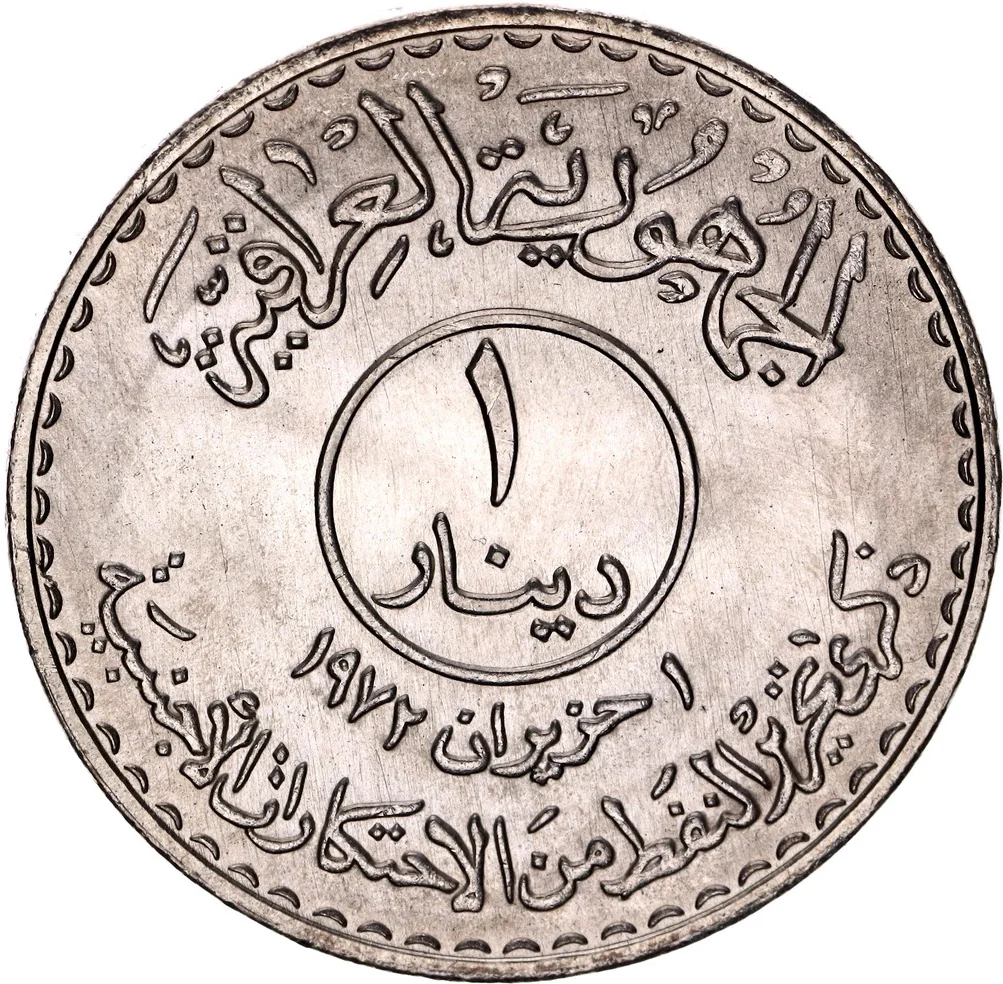
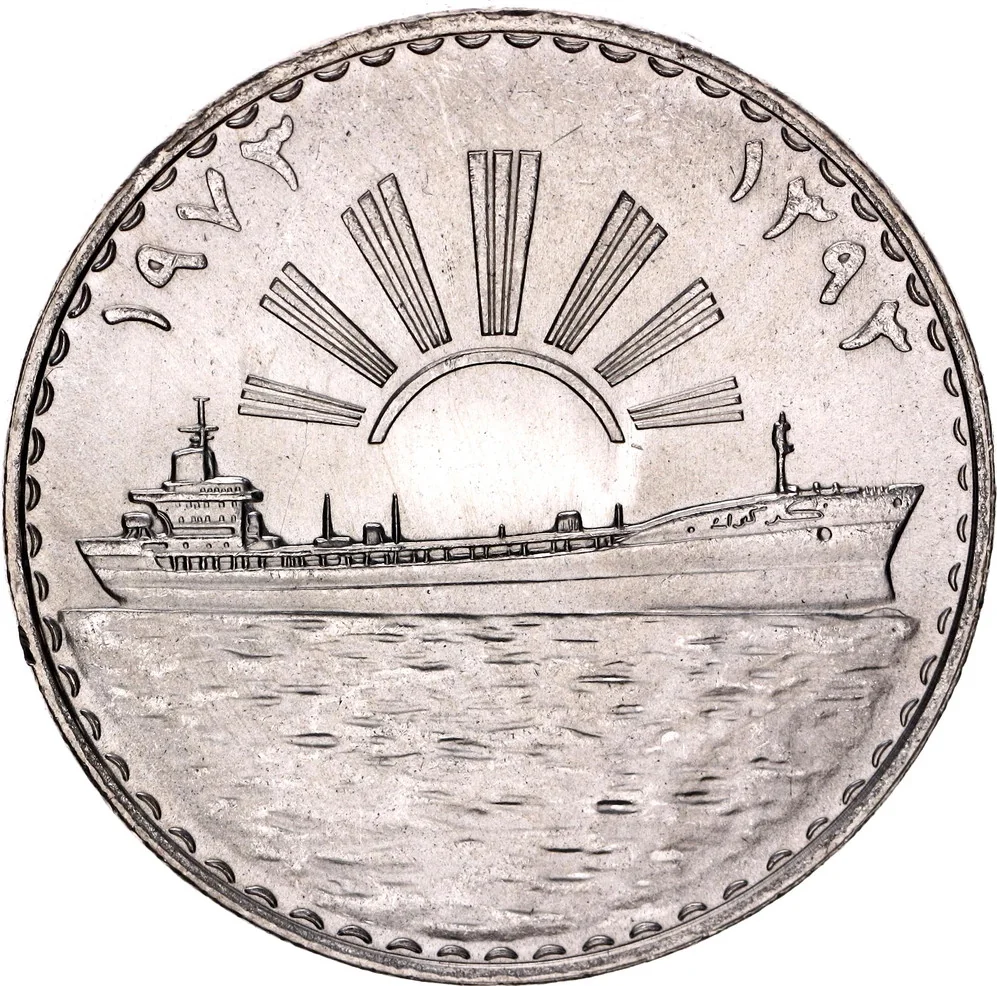
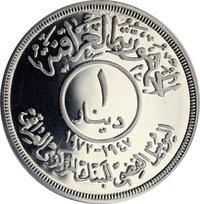
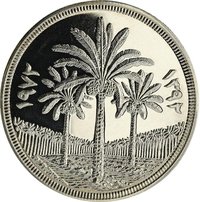
Commemoration: Oil Nationalization
Iraq
Context
Year: 1973
Islamic (Hijri) Year:: 1393
Issuer: Iraq
Period:
(since 1958)
Currency:
(since 1931)
Demonetized: Yes
Total mintage: 65,000
Material
References
KM: #
Numista: #20719
Value
Exchange value: 1 IQD
Bullion value: $38.94
Obverse
Reverse
Edge
Reeded
Categories
| Transportation> Watercraft |
| Symbol> Sun |
Mints
| Name | Mark |
|---|---|
| Royal Mint | — |
Mintings
| Year | Mint Mark | Mintage | Quality | Collection |
|---|---|---|---|---|
| 1973 | — | 60,000 | ||
| 1973 | — | 5,000 | Proof |
Historical background
In 1973, Iraq's currency, the Iraqi dinar, was in a period of relative strength and stability, underpinned by the nation's rapidly expanding oil wealth. Following the nationalization of the Iraq Petroleum Company in 1972, the state assumed full control over its vast hydrocarbon resources. This move, which was fully realized in 1973, funneled soaring oil revenues directly into government coffers, especially after the global oil price shocks later that year. The dinar was pegged to the British pound and, by extension, to the Bretton Woods system, with an official exchange rate of 1 dinar = 2.8 US dollars, a rate that reflected confidence in the oil-backed economy.
This financial stability, however, existed within a context of significant political and economic transformation. The ruling Ba'ath Party, solidified under President Ahmed Hassan al-Bakr (with Saddam Hussein as his powerful deputy), was channeling oil income into ambitious industrialization and infrastructure projects, as well as a large military build-up. The currency's strength facilitated imports of technology and arms, supporting the regime's development and security goals. Economically, the decade marked a shift from an agrarian base to an oil-dominated, state-centric economy.
Despite the dinar's external stability, the domestic economic picture was complex. While public sector growth and urban development were fueled by oil, the benefits were unevenly distributed, and central planning began to create inefficiencies. Furthermore, the government's increasing expenditures and reliance on a single commodity created long-term vulnerabilities. Thus, 1973 stands as a high-water mark for the Iraqi dinar—a strong, internationally recognized currency buoyed by nationalized oil, yet one whose foundations were becoming inextricably and riskily tied to the volatile fortunes of petroleum politics and centralized state control.
This financial stability, however, existed within a context of significant political and economic transformation. The ruling Ba'ath Party, solidified under President Ahmed Hassan al-Bakr (with Saddam Hussein as his powerful deputy), was channeling oil income into ambitious industrialization and infrastructure projects, as well as a large military build-up. The currency's strength facilitated imports of technology and arms, supporting the regime's development and security goals. Economically, the decade marked a shift from an agrarian base to an oil-dominated, state-centric economy.
Despite the dinar's external stability, the domestic economic picture was complex. While public sector growth and urban development were fueled by oil, the benefits were unevenly distributed, and central planning began to create inefficiencies. Furthermore, the government's increasing expenditures and reliance on a single commodity created long-term vulnerabilities. Thus, 1973 stands as a high-water mark for the Iraqi dinar—a strong, internationally recognized currency buoyed by nationalized oil, yet one whose foundations were becoming inextricably and riskily tied to the volatile fortunes of petroleum politics and centralized state control.
🌟 Limited