

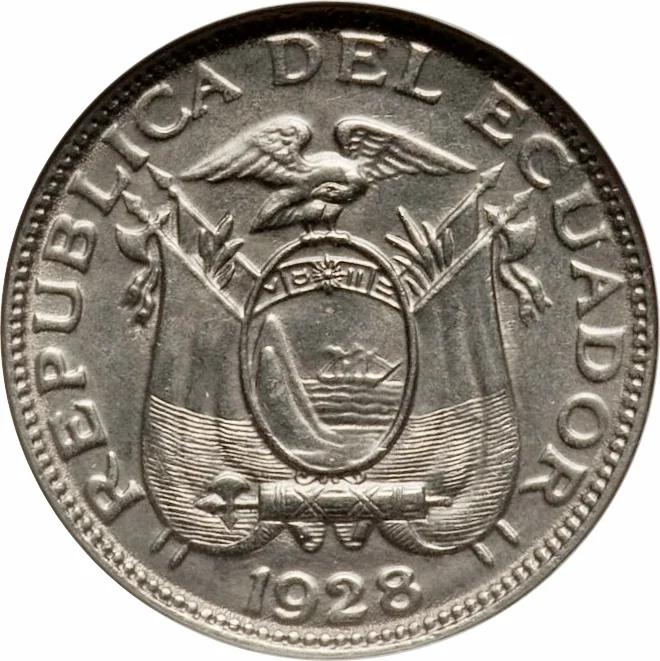
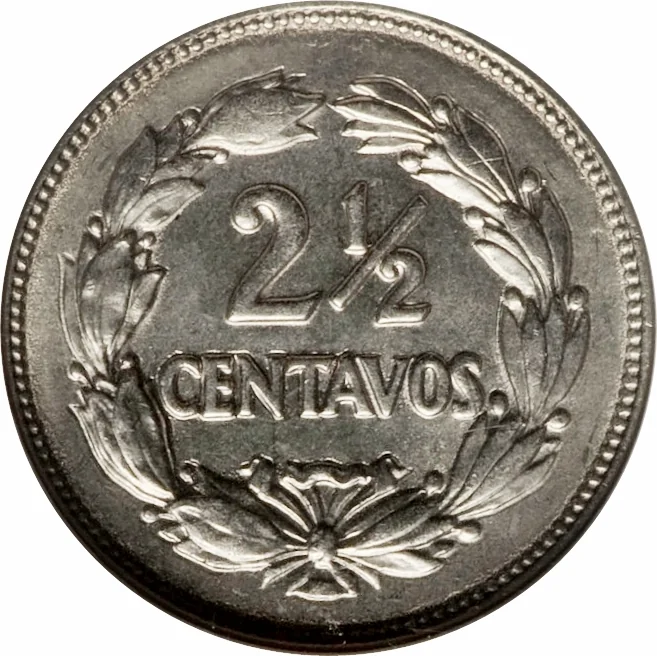
2½ centavos – Ecuador
Add to wishlist
Ecuador
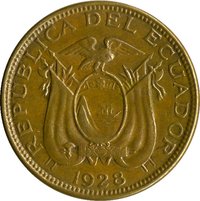
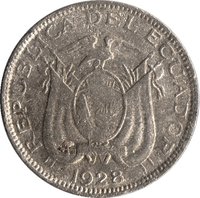
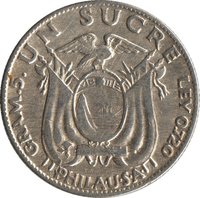
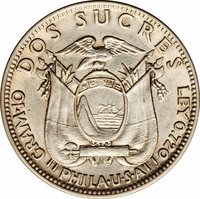
Obverse
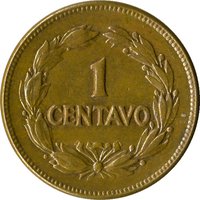
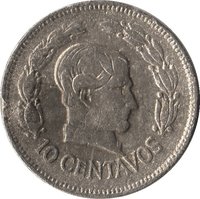
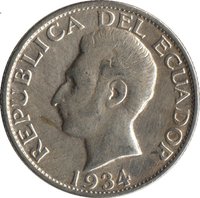
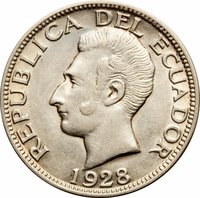
Reverse
Edge
Plain
Categories
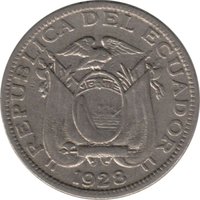
| Symbols> Coat of Arms |
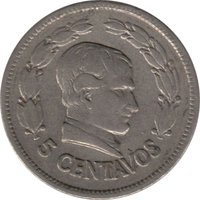
| Symbol> Wreath |
Mints
| Name | Mark |
|---|---|
| United States Mint of Philadelphia | — |
Mintings
| Year | Mint Mark | Mintage | Quality | Collection |
|---|---|---|---|---|
| 1928 | — | 4,000,000 |
Historical background
In 1928, Ecuador's currency situation was characterized by profound instability and a complex transition, rooted in decades of fiscal mismanagement and a reliance on commodity exports. The national currency, the sucre, established in 1884, was nominally on a silver standard but suffered from severe depreciation due to excessive money printing by private banks and the government to cover chronic budget deficits. This era was marked by a fragmented monetary system where several private banks issued their own banknotes, often without sufficient hard currency reserves, leading to widespread inflation and a loss of public confidence. The economy's dependence on cocoa exports, whose global prices were volatile, meant the government's foreign exchange reserves were unpredictable, further undermining the sucre's value.
The immediate catalyst for the crisis of the late 1920s was the collapse of the cocoa boom, which had temporarily masked the currency's structural weaknesses. As world cocoa prices plummeted, Ecuador's export earnings crashed, creating a severe balance of payments deficit and a drastic shortage of foreign currency (particularly British pounds and U.S. dollars). This made it impossible to service the substantial external debt or pay for essential imports. Consequently, the sucre went into a tailspin, losing value rapidly on international markets. The government's attempts to stabilize the currency through ad-hoc measures and loans were ineffective, leading to a full-blown monetary crisis.
This turbulent backdrop set the stage for a major reform. In 1927, the government had taken the first step by establishing the Central Bank of Ecuador (Banco Central del Ecuador), which began operations in 1928. Its primary mission was to centralize and control the issuance of currency, ending the chaotic era of private banknotes. While the new institution did not immediately resolve the economic distress, 1928 represents a pivotal year—the chaotic end of an unsustainable system and the fragile beginning of a centralized monetary authority tasked with imposing order, though true stabilization would remain a distant challenge for years to come.
The immediate catalyst for the crisis of the late 1920s was the collapse of the cocoa boom, which had temporarily masked the currency's structural weaknesses. As world cocoa prices plummeted, Ecuador's export earnings crashed, creating a severe balance of payments deficit and a drastic shortage of foreign currency (particularly British pounds and U.S. dollars). This made it impossible to service the substantial external debt or pay for essential imports. Consequently, the sucre went into a tailspin, losing value rapidly on international markets. The government's attempts to stabilize the currency through ad-hoc measures and loans were ineffective, leading to a full-blown monetary crisis.
This turbulent backdrop set the stage for a major reform. In 1927, the government had taken the first step by establishing the Central Bank of Ecuador (Banco Central del Ecuador), which began operations in 1928. Its primary mission was to centralize and control the issuance of currency, ending the chaotic era of private banknotes. While the new institution did not immediately resolve the economic distress, 1928 represents a pivotal year—the chaotic end of an unsustainable system and the fragile beginning of a centralized monetary authority tasked with imposing order, though true stabilization would remain a distant challenge for years to come.
Series: 1928 Ecuador circulation coins
🌟 Uncommon