

25 centavos – El Salvador
Add to wishlist
El Salvador
Context
Year: 1953
Issuer: El Salvador
Issuing organization: Central Reserve Bank of El Salvador
Period:
(since 1841)
Currency:
(since 1892)
Demonetization: 1 January 2001
Total mintage: 14,000,000
Material
References
KM: #
Numista: #10902
Value
Exchange value: 0.25 SVC
Bullion value: $5.75
Obverse
Description:
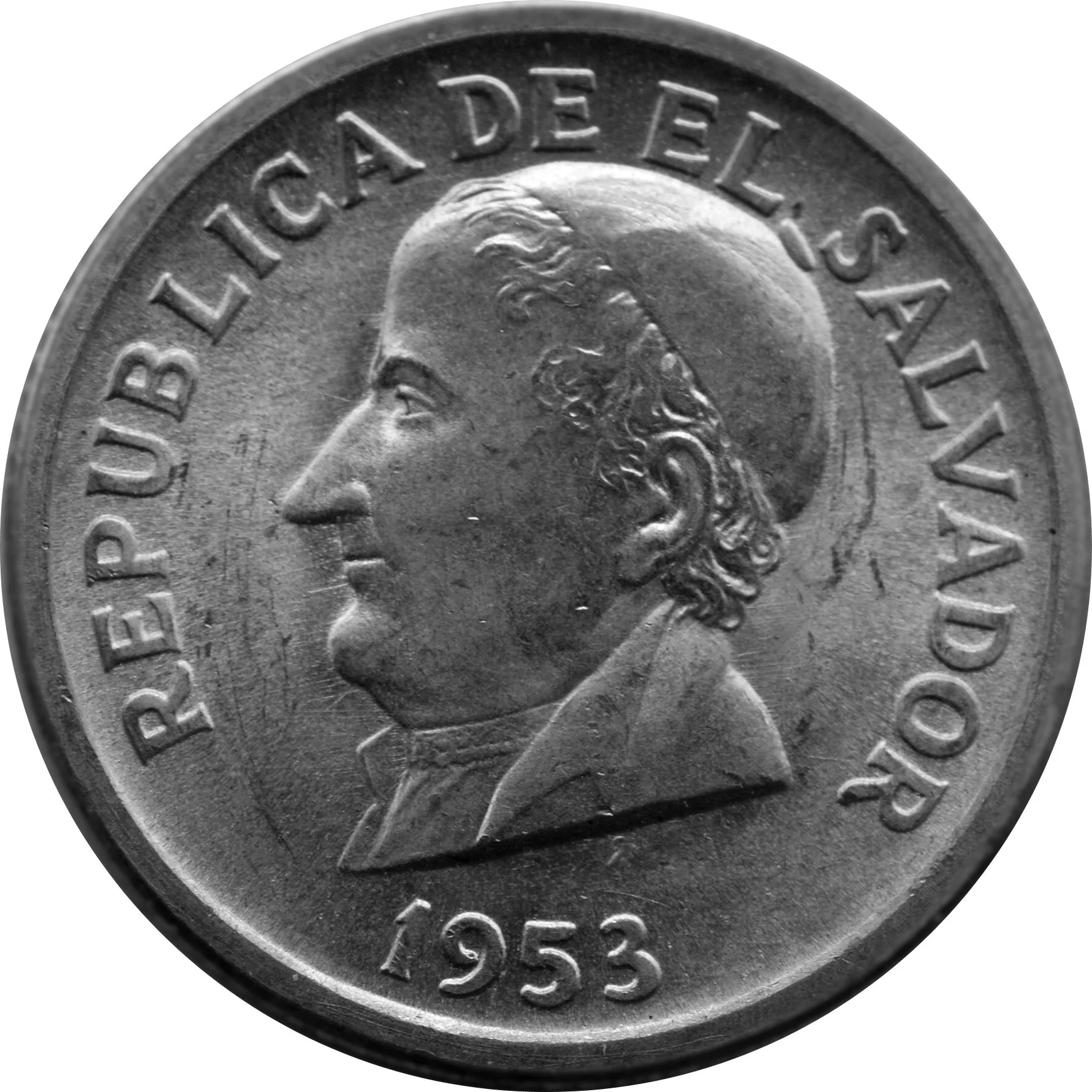
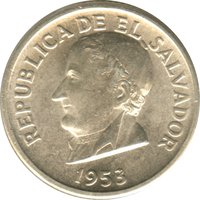
José Matías Delgado bust left, legend above, date below.
Inscription:
REPUBLICA DE EL SALVADOR
1953
1953
Translation:
REPUBLIC OF EL SALVADOR
1953
1953
Script: Latin
Language: Spanish
Engraver: Gilroy Roberts
Reverse
Description:
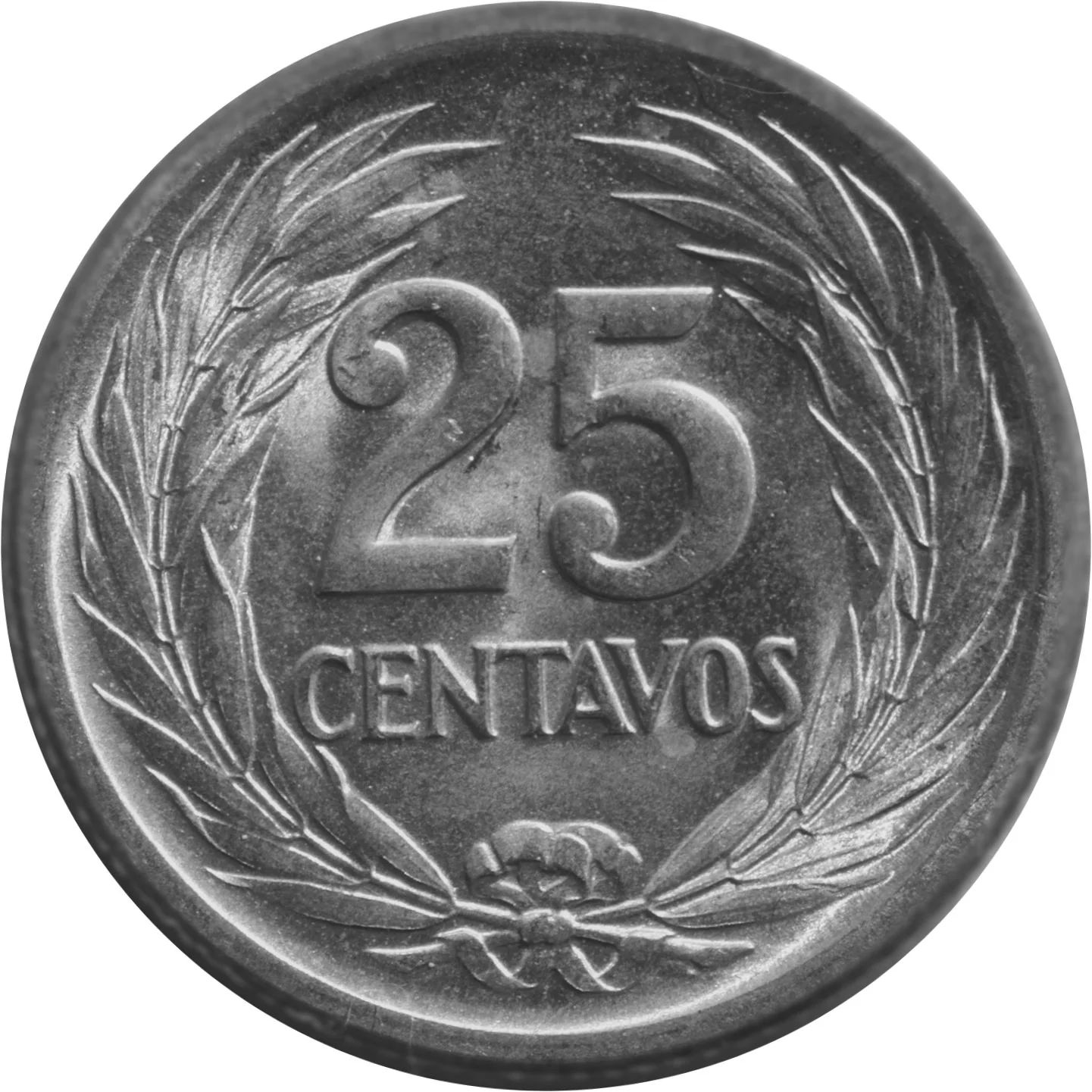
Treasure in the wreath.
Inscription:
25
CENTAVOS
CENTAVOS
Translation:
Twenty-five Centavos
Script: Latin
Language: Spanish
Engraver: Gilroy Roberts
Edge
Milled
Categories
| Person> Politician |
| Symbol> Wreath |
Mints
| Name | Mark |
|---|---|
| United States Mint of San Francisco | — |
Mintings
| Year | Mint Mark | Mintage | Quality | Collection |
|---|---|---|---|---|
| 1953 | — | 14,000,000 |
Historical background
In 1953, El Salvador's currency situation was defined by its adherence to the Colón (₡), which was firmly pegged to the United States dollar at a fixed exchange rate of 2.50 colones to 1 USD. This peg had been established in 1934 and provided a crucial anchor for monetary stability and international trade. The economy was primarily agrarian, with coffee exports constituting the overwhelming majority of foreign exchange earnings, making the stability of the colón essential for predictable pricing with major trading partners like the United States.
The monetary system was managed by the Central Reserve Bank of El Salvador, created in 1934. Its primary mandate was to maintain the currency peg, which it did by holding substantial reserves in gold and U.S. dollars to back the colón. This conservative, export-oriented model fostered price stability and low inflation for decades. However, it also tied El Salvador's economic health directly to volatile global coffee prices and limited the central bank's ability to use independent monetary policy to stimulate the domestic economy or address structural inequalities.
Beneath this surface stability, the mid-20th century period laid the groundwork for future challenges. The economy's extreme dependence on a single commodity made it vulnerable, and the benefits of coffee wealth were concentrated in the hands of a small landed elite. While the currency itself was stable in 1953, the underlying socio-economic structure was marked by growing inequality and rural poverty. These tensions, largely unaddressed by monetary policy focused solely on maintaining the peg, would later contribute to profound social and political upheaval in the coming decades.
The monetary system was managed by the Central Reserve Bank of El Salvador, created in 1934. Its primary mandate was to maintain the currency peg, which it did by holding substantial reserves in gold and U.S. dollars to back the colón. This conservative, export-oriented model fostered price stability and low inflation for decades. However, it also tied El Salvador's economic health directly to volatile global coffee prices and limited the central bank's ability to use independent monetary policy to stimulate the domestic economy or address structural inequalities.
Beneath this surface stability, the mid-20th century period laid the groundwork for future challenges. The economy's extreme dependence on a single commodity made it vulnerable, and the benefits of coffee wealth were concentrated in the hands of a small landed elite. While the currency itself was stable in 1953, the underlying socio-economic structure was marked by growing inequality and rural poverty. These tensions, largely unaddressed by monetary policy focused solely on maintaining the peg, would later contribute to profound social and political upheaval in the coming decades.
🌱 Common