

1 Cent – Seychelles
Seychelles
Context
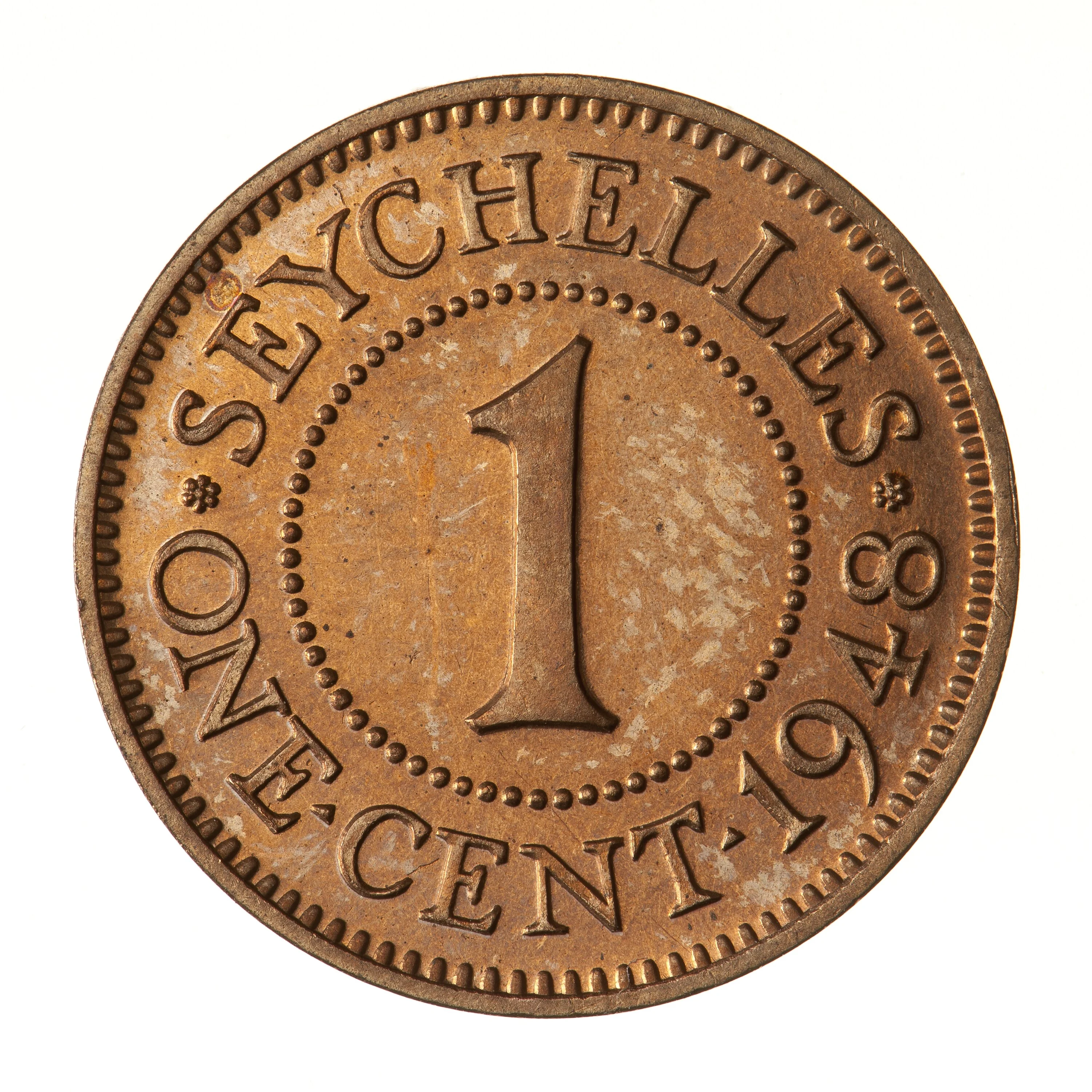
Year: 1948
Issuer: Seychelles 
Ruler: George VI
Currency:
(since 1914)
Demonetized: Yes
Total mintage: 300,000
Material
References
KM: #Click to copy to clipboard5
Numista: #20574
Value
Exchange value: 0.01 SCR
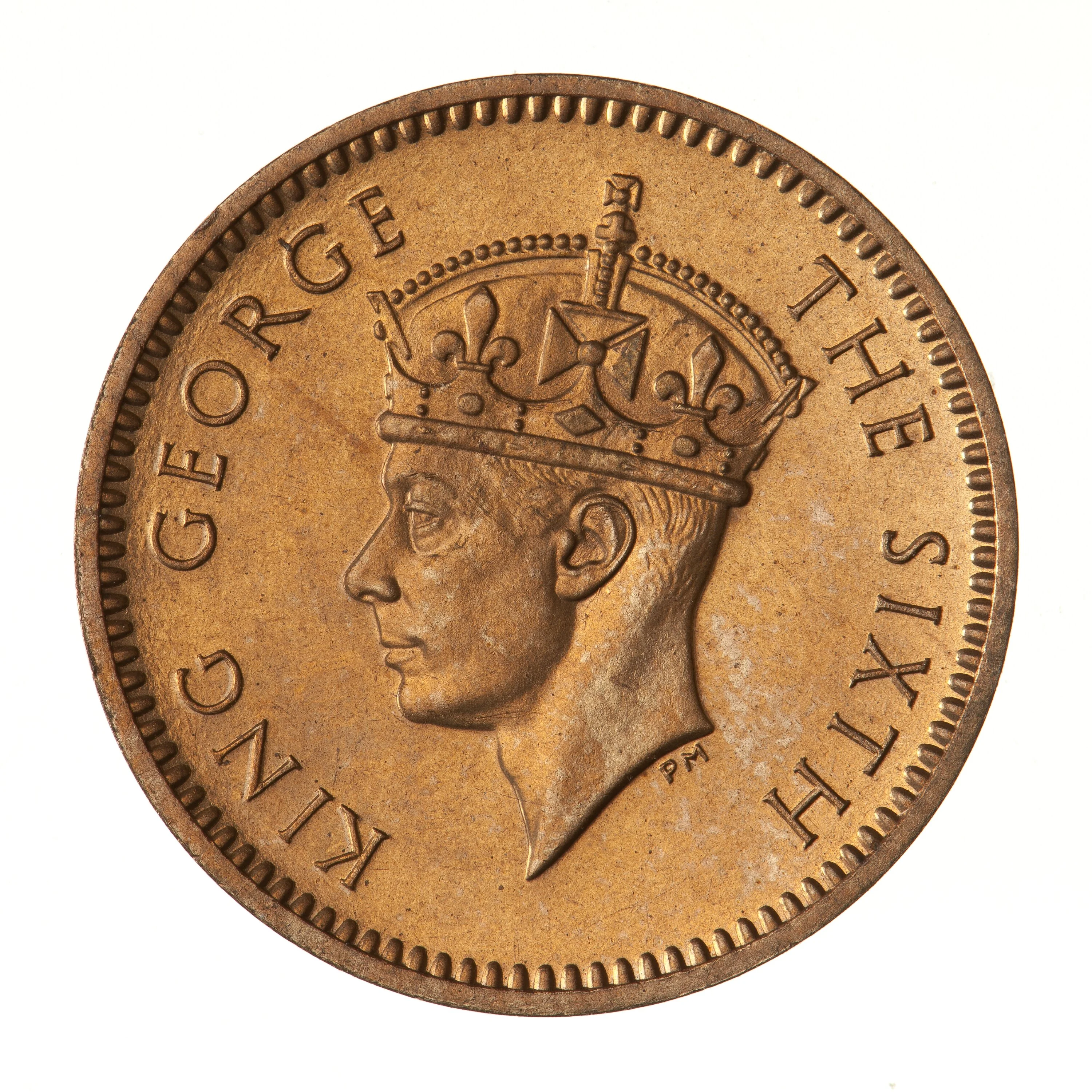
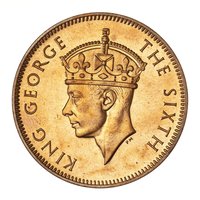
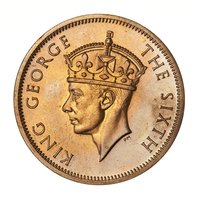
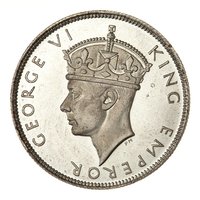
Obverse
Description:
King facing left
Inscription:
KING GEORGE THE SIXTH
PM
PM
Translation:
KING GEORGE THE SIXTH
BY THE GRACE OF GOD, KING OF ALL THE BRITISH DOMINIONS, DEFENDER OF THE FAITH, EMPEROR OF INDIA
BY THE GRACE OF GOD, KING OF ALL THE BRITISH DOMINIONS, DEFENDER OF THE FAITH, EMPEROR OF INDIA
Script: Latin
Language: English
Engraver: Percy Metcalfe
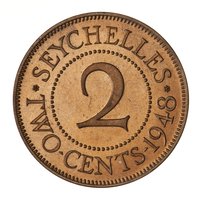
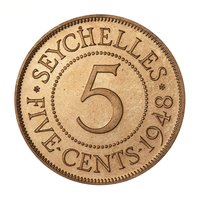
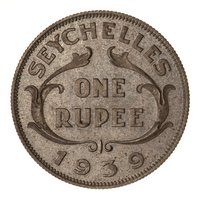
Reverse
Edge
Plain
Mints
| Name | Mark |
|---|---|
| Royal Mint (Tower Hill) | — |
Mintings
| Year | Mint Mark | Mintage | Quality | Collection |
|---|---|---|---|---|
| 1948 | — | 300,000 | ||
| 1948 | — | — | Proof |
Historical background
In 1948, the currency situation in Seychelles was firmly under British colonial administration, as the islands were a Crown Colony. The official currency was the Seychelles Rupee (SCR), which had been introduced in 1914, replacing the Mauritian rupee. This rupee was not an independent currency but was pegged at par to the Indian rupee, reflecting the historical trade and administrative links within the British Empire. Consequently, its value was ultimately tied to the sterling area and the British pound sterling, with the colony's monetary policy entirely directed from London.
The economy in the late 1940s was primarily based on vanilla, copra, and cinnamon, with a limited need for complex financial structures. The currency in circulation consisted of banknotes issued by the Government of Seychelles and subsidiary silver coins. There was no central bank; currency issuance was a function of the colonial government, operating under strict orders from the British government. This system ensured stability and alignment with imperial economic interests but offered no autonomous monetary control to the colony.
Overall, the currency situation in 1948 was characterized by stability and dependency. The Seychelles Rupee functioned as a reliable medium of exchange for a small, plantation-based island economy, but its fate was wholly dependent on the policies of the United Kingdom and the fixed peg to the Indian rupee. This arrangement would persist until the 1970s, when the path to independence prompted the establishment of the Seychelles Monetary Authority and a move toward a more independent monetary system.
The economy in the late 1940s was primarily based on vanilla, copra, and cinnamon, with a limited need for complex financial structures. The currency in circulation consisted of banknotes issued by the Government of Seychelles and subsidiary silver coins. There was no central bank; currency issuance was a function of the colonial government, operating under strict orders from the British government. This system ensured stability and alignment with imperial economic interests but offered no autonomous monetary control to the colony.
Overall, the currency situation in 1948 was characterized by stability and dependency. The Seychelles Rupee functioned as a reliable medium of exchange for a small, plantation-based island economy, but its fate was wholly dependent on the policies of the United Kingdom and the fixed peg to the Indian rupee. This arrangement would persist until the 1970s, when the path to independence prompted the establishment of the Seychelles Monetary Authority and a move toward a more independent monetary system.
🌱 Fairly Common