

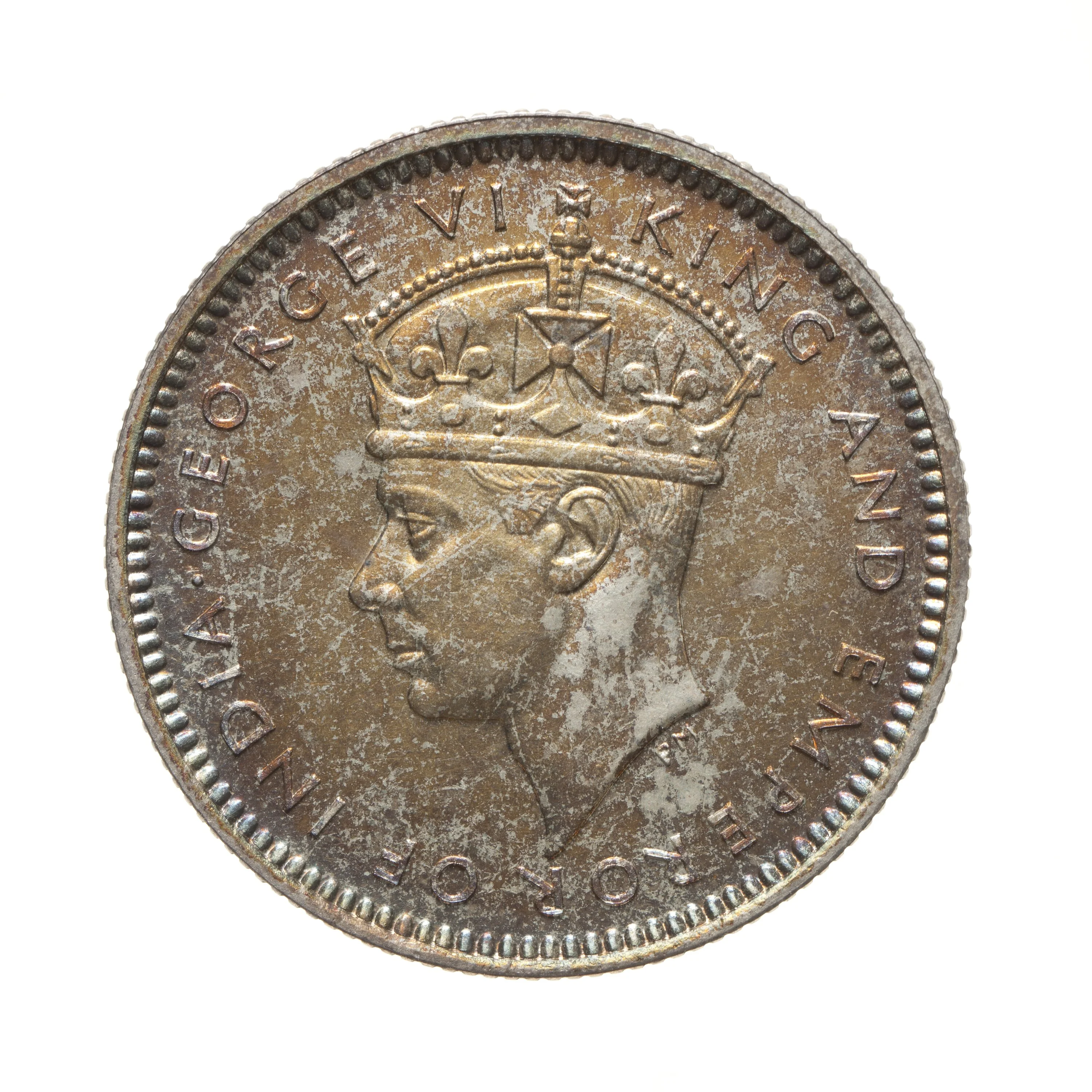
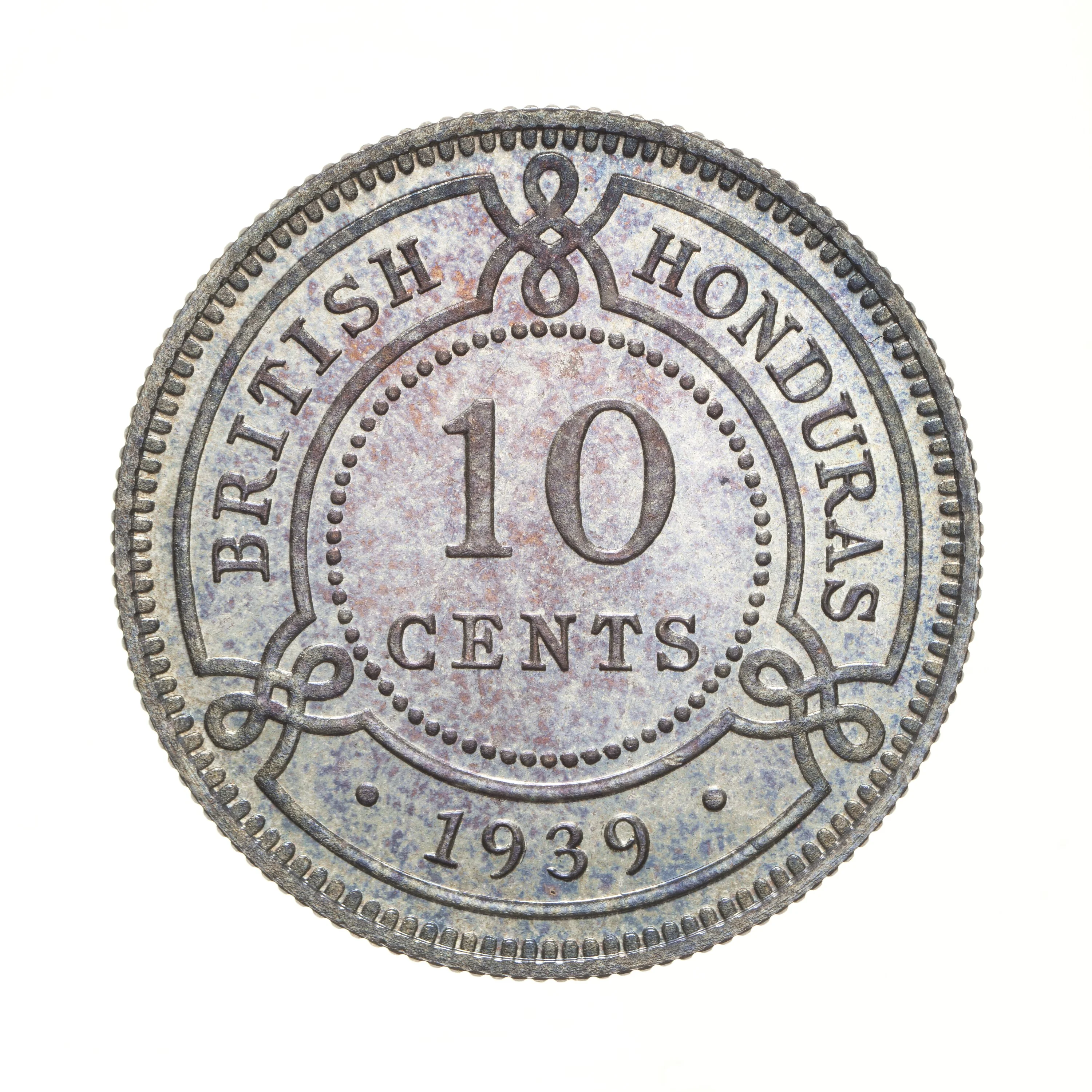
10 Cents – British Honduras
Belize
Context
Years: 1939–1946
Country: Belize 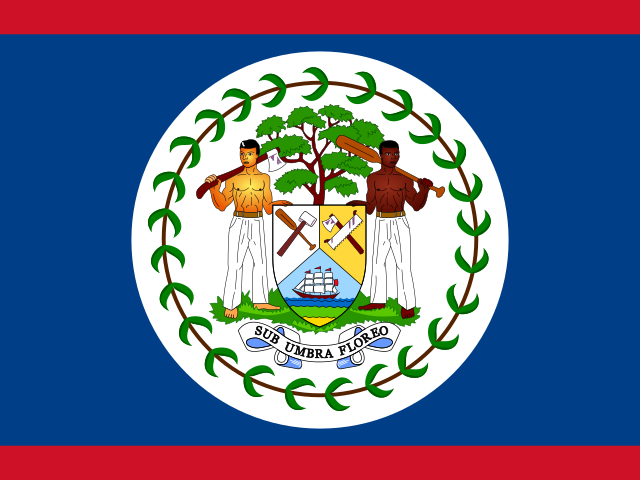
Issuer: British Honduras
Ruler: George VI
Currency:
(1885—1973)
Total mintage: 90,000
Material
References
KM: #Click to copy to clipboard23
Numista: #20556
Value
Bullion value: $6.10
Obverse
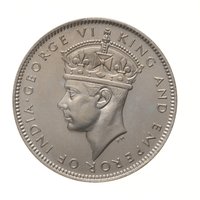
Description:
King George VI facing left.
Inscription:
· GEORGE VI KING AND EMPEROR OF INDIA
PM
PM
Translation:
GEORGE VI KING AND EMPEROR OF INDIA
Script: Latin
Language: English
Engraver: Percy Metcalfe
Reverse
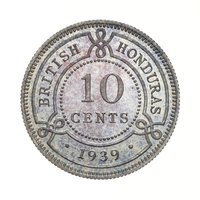
Description:
Denomination above, date below.
Inscription:
BRITISH HONDURAS
10
CENTS
· 1939 ·
10
CENTS
· 1939 ·
Script: Latin
Edge
Reeded
Mints
| Name | Mark |
|---|---|
| Royal Mint (Tower Hill) | — |
Mintings
| Year | Mint Mark | Mintage | Quality | Collection |
|---|---|---|---|---|
| 1939 | — | — | Proof | |
| 1939 | — | 20,000 | ||
| 1942 | — | 10,000 | ||
| 1943 | — | 20,000 | ||
| 1944 | — | — | Proof | |
| 1944 | — | 30,000 | ||
| 1946 | — | 10,000 | ||
| 1946 | — | — | Proof |
Historical background
In 1939, the currency situation in British Honduras (modern-day Belize) was characterized by its formal but somewhat anomalous link to the British pound sterling. The colony operated on a sterling exchange standard, with the local currency, the British Honduras dollar, fixed at a rate of 4 shillings 2 pence sterling (or $4.80 BHD to £1). However, this peg was not maintained by a central bank or currency board in the colony itself. Instead, the physical currency in circulation consisted primarily of notes issued by two private British banks—Barclays Bank (Dominion, Colonial and Overseas) and the Bank of Nova Scotia—which were required to hold sterling reserves in London to fully back their note issues.
This system created a degree of dependency and occasional scarcity. The colony's economy was small and heavily reliant on the export of a few primary products, notably mahogany and chicle. Fluctuations in these commodity markets directly impacted the flow of sterling into the colony, which in turn influenced the availability of cash. While the peg to sterling provided stability in foreign exchange, the practical reality for many residents, especially in rural areas, involved a chronic shortage of small change. This often led to the continued use of informal and inconvenient methods, such as cutting dollar notes into fractions to make "small change," a practice the authorities discouraged but could not fully eradicate.
The outbreak of World War II in September 1939 immediately exacerbated these existing vulnerabilities. The war disrupted shipping and trade, the lifeblood of the colony's sterling earnings, and placed greater strain on the financial system. In response, the colonial government took a step toward greater monetary control by introducing its own first official issue of paper currency (1-dollar notes) in 1939, partly to alleviate the small change shortage and reduce reliance on private banknotes. Thus, the year 1939 stands as a transitional point, marking the end of a purely private note-issuing system and the beginning of direct government involvement in currency, set against the backdrop of a global conflict that would profoundly challenge the colony's economic and monetary stability.
This system created a degree of dependency and occasional scarcity. The colony's economy was small and heavily reliant on the export of a few primary products, notably mahogany and chicle. Fluctuations in these commodity markets directly impacted the flow of sterling into the colony, which in turn influenced the availability of cash. While the peg to sterling provided stability in foreign exchange, the practical reality for many residents, especially in rural areas, involved a chronic shortage of small change. This often led to the continued use of informal and inconvenient methods, such as cutting dollar notes into fractions to make "small change," a practice the authorities discouraged but could not fully eradicate.
The outbreak of World War II in September 1939 immediately exacerbated these existing vulnerabilities. The war disrupted shipping and trade, the lifeblood of the colony's sterling earnings, and placed greater strain on the financial system. In response, the colonial government took a step toward greater monetary control by introducing its own first official issue of paper currency (1-dollar notes) in 1939, partly to alleviate the small change shortage and reduce reliance on private banknotes. Thus, the year 1939 stands as a transitional point, marking the end of a purely private note-issuing system and the beginning of direct government involvement in currency, set against the backdrop of a global conflict that would profoundly challenge the colony's economic and monetary stability.
🌟 Uncommon