

Obverse
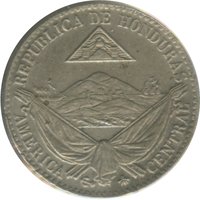
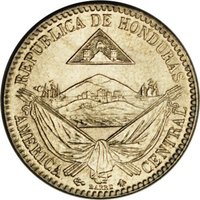
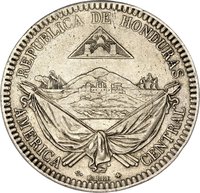
Description:
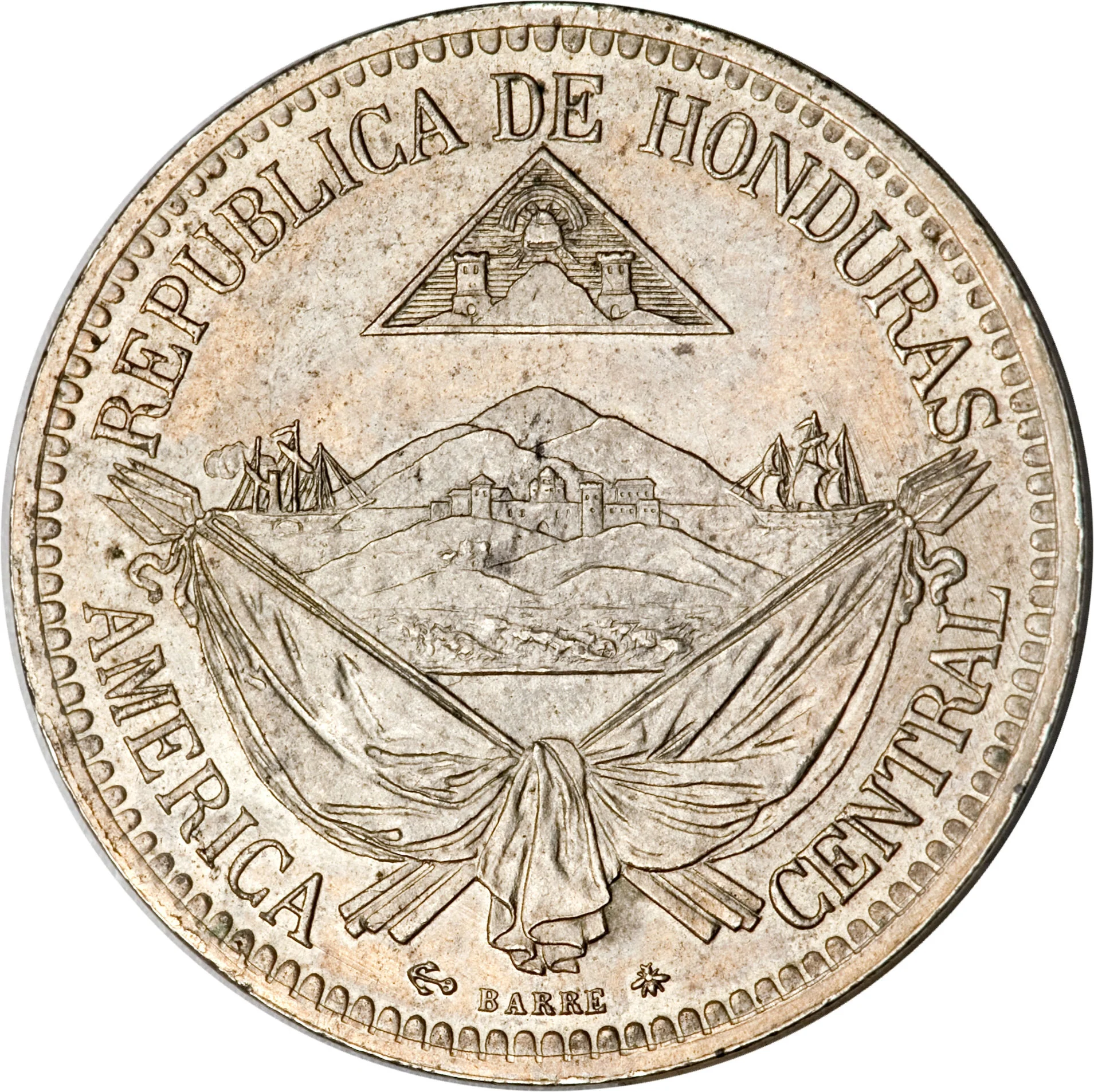
Crest with encircling motto.
Inscription:
REPUBLICA DE HONDURAS
AMERICA CENTRAL
AMERICA CENTRAL
Translation:
Republic of Honduras
Central America
Central America
Script: Latin
Language: Spanish
Engraver: Désiré-Albert Barre
Reverse
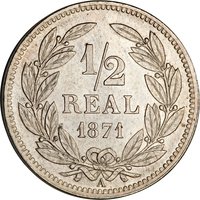
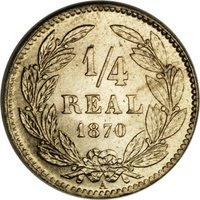
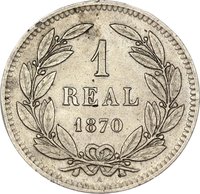
Description:
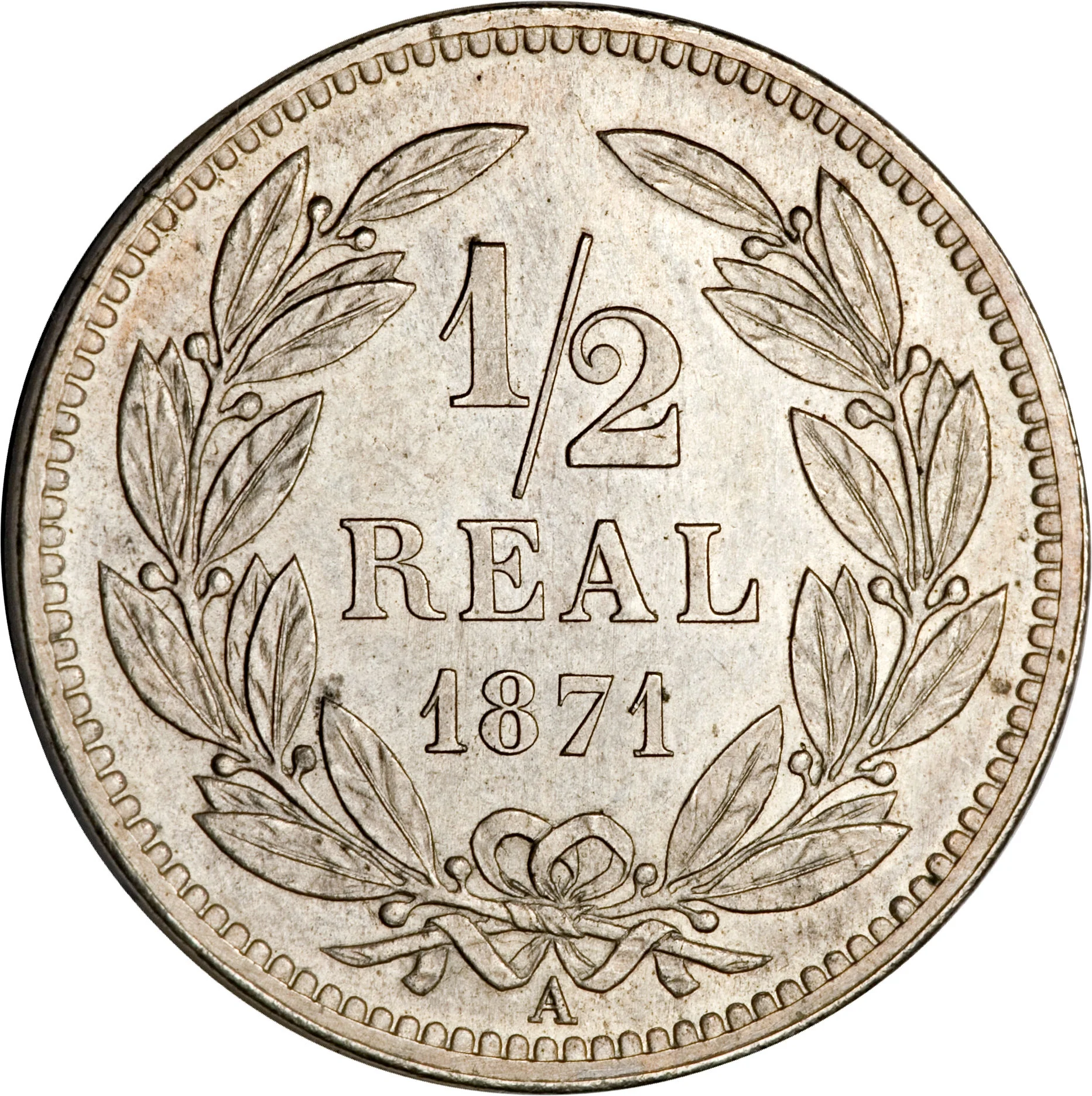
Denomination and date in wreath, initial below.
Inscription:
1/2
REAL
1871
A
REAL
1871
A
Script: Latin
Engraver: Désiré-Albert Barre
Edge
Plain
Categories
| Symbols> Coat of Arms |
| Symbol> Wreath |
Mints
| Name | Mark |
|---|---|
| Monnaie de Paris | A |
Historical background
In 1869, Honduras was grappling with a deeply fragmented and unstable currency system, a direct legacy of its political turbulence and economic underdevelopment following independence. The nation lacked a unified national coinage, leading to a chaotic circulation of a variety of coins. These included worn and clipped Spanish colonial pieces, coins from other Central American republics, and significant quantities of foreign silver, particularly Peruvian and Bolivian pesos, as well as coins from Mexico, the United States, and Europe. This proliferation of foreign currency, often of varying weights and fineness, created constant confusion in commerce and facilitated widespread fraud.
The situation was severely exacerbated by the government's chronic fiscal deficits. To finance its operations, the administration of President José María Medina frequently resorted to issuing decrees that altered the official valuation (or tasa) of these circulating coins. By arbitrarily raising the nominal value of certain low-weight foreign coins, the government could create seigniorage profit to cover short-term expenses. However, this practice amounted to a debasement of the currency, eroded public trust, and caused price instability. It effectively created a system where the legal value of money was detached from its intrinsic metallic value, discouraging sound investment and long-term economic planning.
Consequently, the year 1869 fell within a prolonged period of monetary disorder that hindered national economic integration and growth. The absence of a strong central bank or a standardized national currency meant that transactions were slow and uncertain, complicating both domestic trade and international exchange. This chaotic monetary environment reflected and reinforced Honduras's broader challenges of political instability and reliance on a limited export economy (primarily precious metals and agricultural products), delaying the establishment of a modern financial system until well into the following decades.
The situation was severely exacerbated by the government's chronic fiscal deficits. To finance its operations, the administration of President José María Medina frequently resorted to issuing decrees that altered the official valuation (or tasa) of these circulating coins. By arbitrarily raising the nominal value of certain low-weight foreign coins, the government could create seigniorage profit to cover short-term expenses. However, this practice amounted to a debasement of the currency, eroded public trust, and caused price instability. It effectively created a system where the legal value of money was detached from its intrinsic metallic value, discouraging sound investment and long-term economic planning.
Consequently, the year 1869 fell within a prolonged period of monetary disorder that hindered national economic integration and growth. The absence of a strong central bank or a standardized national currency meant that transactions were slow and uncertain, complicating both domestic trade and international exchange. This chaotic monetary environment reflected and reinforced Honduras's broader challenges of political instability and reliance on a limited export economy (primarily precious metals and agricultural products), delaying the establishment of a modern financial system until well into the following decades.
Series: 1869 Honduras circulation coins
⭐ Somewhat Rare