

50 francs – Djibouti
Add to wishlist
Djibouti
Context
Years: 1977–2017
Issuer: Djibouti
Period:
(since 1977)
Currency:
(since 1977)
Total mintage: 2,565,350
Material
References
KM: #
Numista: #2035
Value
Exchange value: 50 DJF
Obverse
Reverse
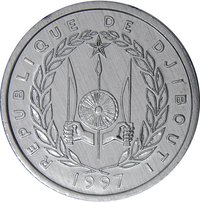
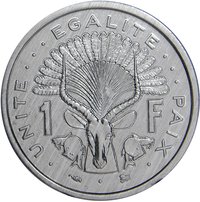
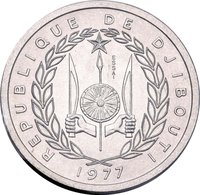
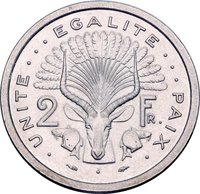
Description:
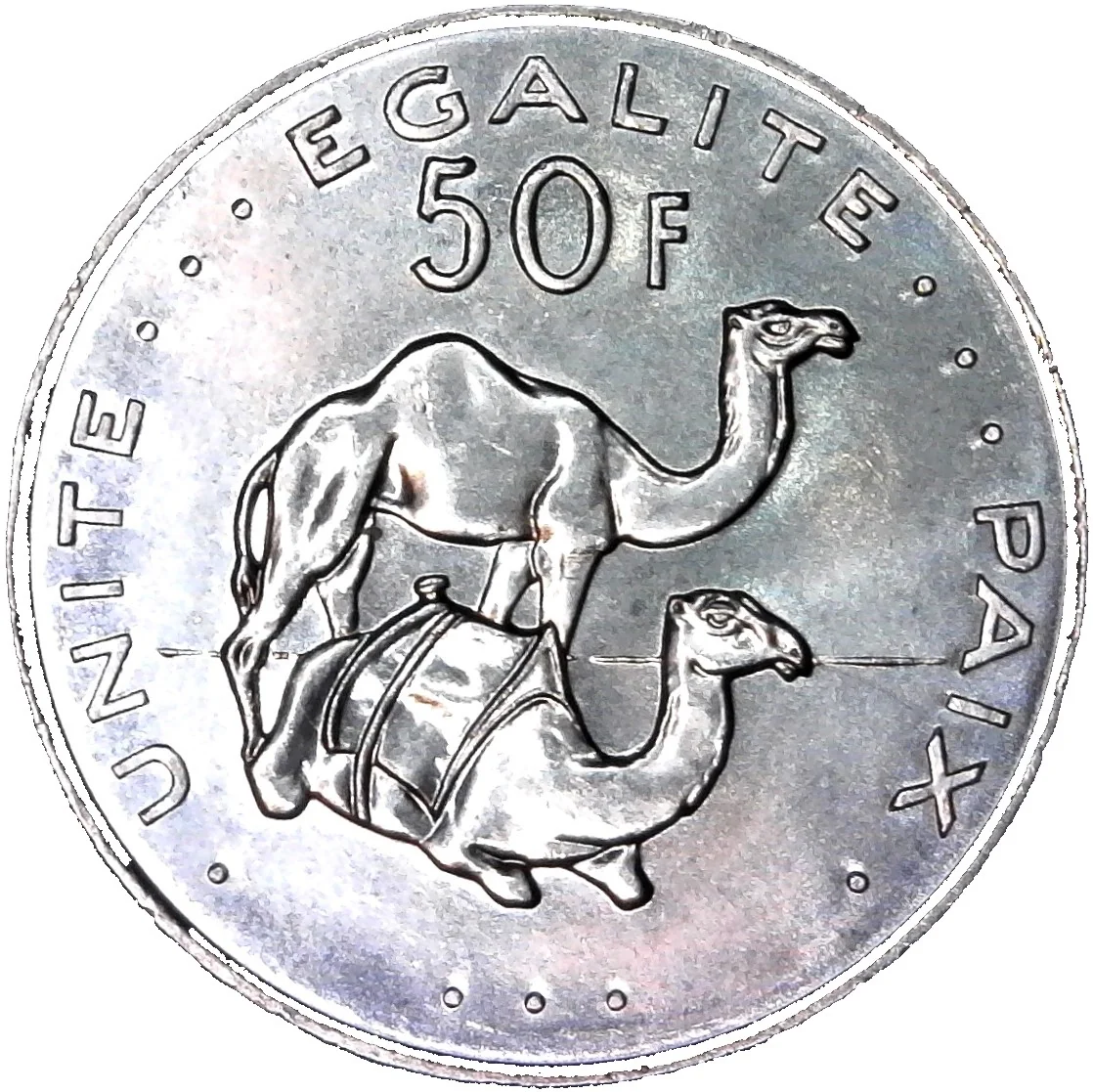
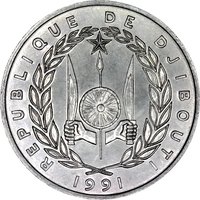
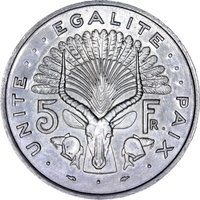
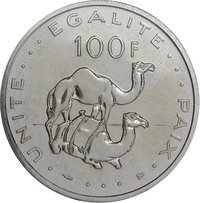
Two dromedaries facing right; value above, legend around.
Inscription:
· UNITE · · · EGALITE · · · PAIX ·
50 F
50 F
Translation:
UNITY · · · EQUALITY · · · PEACE ·
50 F
50 F
Script: Latin
Language: French
Engraver: Raymond Joly
Edge
Milled
Categories
| Animal> Camel |
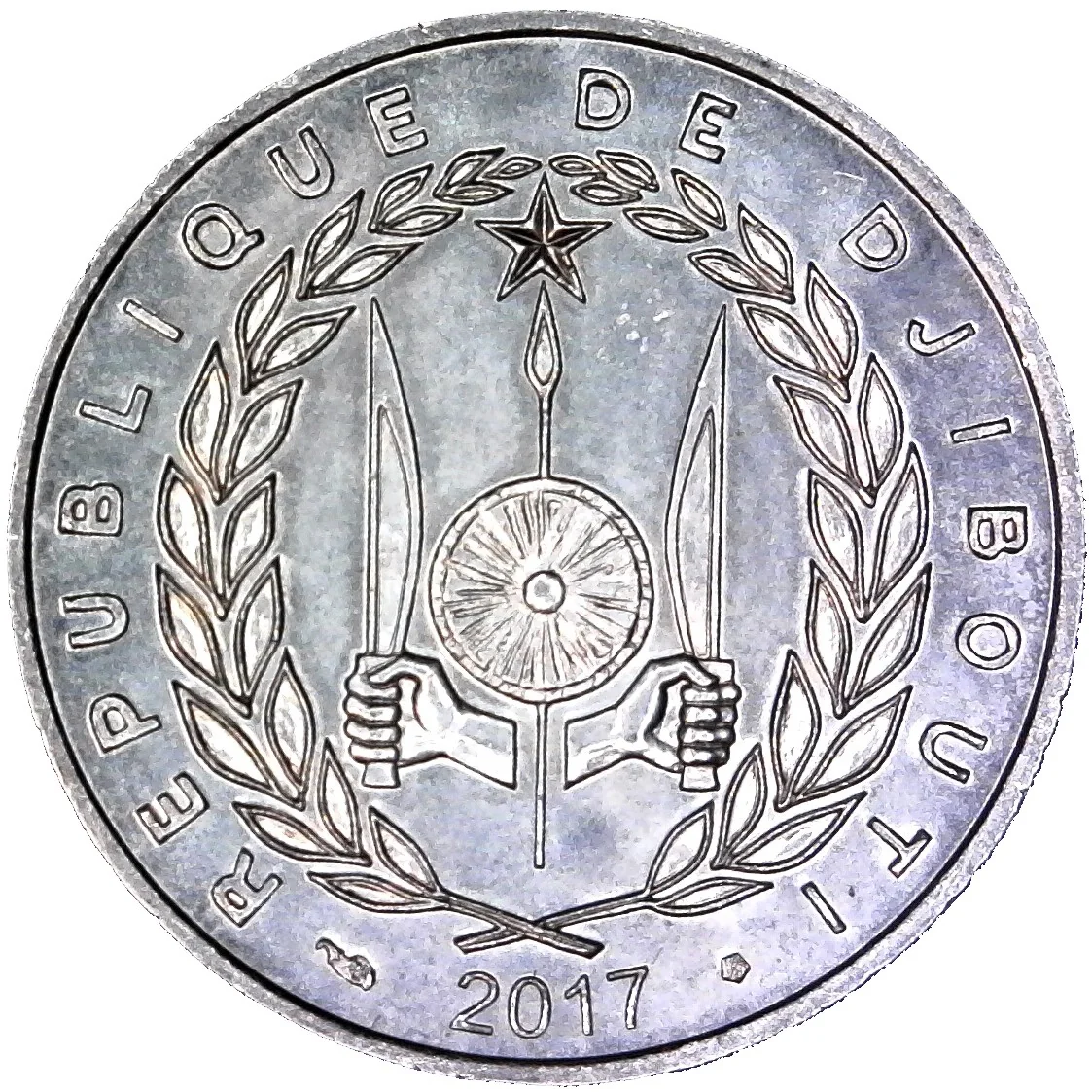
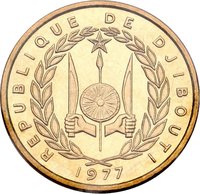
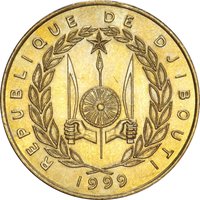
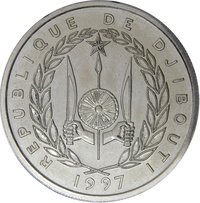
| Symbols> Coat of Arms |
| Symbol> Wreath |
| Object> Cold weapons |
Mints
| Name | Mark |
|---|---|
| Monnaie de Paris | — |
Mintings
| Year | Mint Mark | Mintage | Quality | Collection |
|---|---|---|---|---|
| 1977 | — | 500,000 | ||
| 1982 | — | 165,000 | ||
| 1983 | — | 250,000 | ||
| 1986 | — | 150,000 | ||
| 1989 | — | 100,000 | ||
| 1991 | — | 900,000 | ||
| 1997 | — | 350 | In sets | |
| 1999 | — | 500,000 | ||
| 2007 | — | — | ||
| 2010 | — | — | ||
| 2016 | — | — | ||
| 2017 | — | — |
Historical background
Upon gaining independence from France in June 1977, Djibouti inherited a unique and stable currency arrangement. The territory had been using the Djiboutian franc (DJF), which was pegged at a fixed and unchanging parity to the US dollar (USD 1 = DJF 177.721) since 1949. This peg was managed by the Caisse Centrale de Coopération Économique (CCCE), a French public agency, which guaranteed full convertibility. Consequently, Djibouti entered statehood with a fully convertible, hard currency backed by foreign reserves, a rare advantage for a new and economically modest nation.
The new government, led by President Hassan Gouled Aptidon, made a deliberate and strategic decision to maintain this monetary framework. Rather than establishing a central bank or printing currency to finance development—a path that often leads to inflation in nascent states—Djibouti opted for continuity. It formally institutionalized the existing system by creating the Banque Nationale de Djibouti in 1977, but its role was strictly limited to issuing currency and managing the currency board. The French Treasury continued to guarantee the convertibility, ensuring the franc's stability and credibility.
This choice defined Djibouti's monetary background in 1977: one of prudent conservatism over sovereign experimentation. The fixed peg to the dollar provided immediate price stability, attracted foreign commerce to its strategic port, and fostered confidence in the financial system. However, it also meant surrendering autonomous monetary policy; Djibouti could not devalue its currency to boost competitiveness or set its own interest rates. The currency situation was therefore characterized by a trade-off—sacrificing monetary sovereignty for the perceived greater benefits of low inflation and integration into the global trading system, a foundation upon which its service-based economy would be built.
The new government, led by President Hassan Gouled Aptidon, made a deliberate and strategic decision to maintain this monetary framework. Rather than establishing a central bank or printing currency to finance development—a path that often leads to inflation in nascent states—Djibouti opted for continuity. It formally institutionalized the existing system by creating the Banque Nationale de Djibouti in 1977, but its role was strictly limited to issuing currency and managing the currency board. The French Treasury continued to guarantee the convertibility, ensuring the franc's stability and credibility.
This choice defined Djibouti's monetary background in 1977: one of prudent conservatism over sovereign experimentation. The fixed peg to the dollar provided immediate price stability, attracted foreign commerce to its strategic port, and fostered confidence in the financial system. However, it also meant surrendering autonomous monetary policy; Djibouti could not devalue its currency to boost competitiveness or set its own interest rates. The currency situation was therefore characterized by a trade-off—sacrificing monetary sovereignty for the perceived greater benefits of low inflation and integration into the global trading system, a foundation upon which its service-based economy would be built.
Series: 1977 Djibouti circulation coins
🌱 Very Common