

1 tanga – Portuguese India
Add to wishlist
India
Context
Year: 1871
Country: India
Issuer: Portuguese India
Ruler: Louis I
Currency:
(1706—1880)
Demonetized: Yes
Total mintage: 50,000
Material
References
KM: #
Numista: #20319
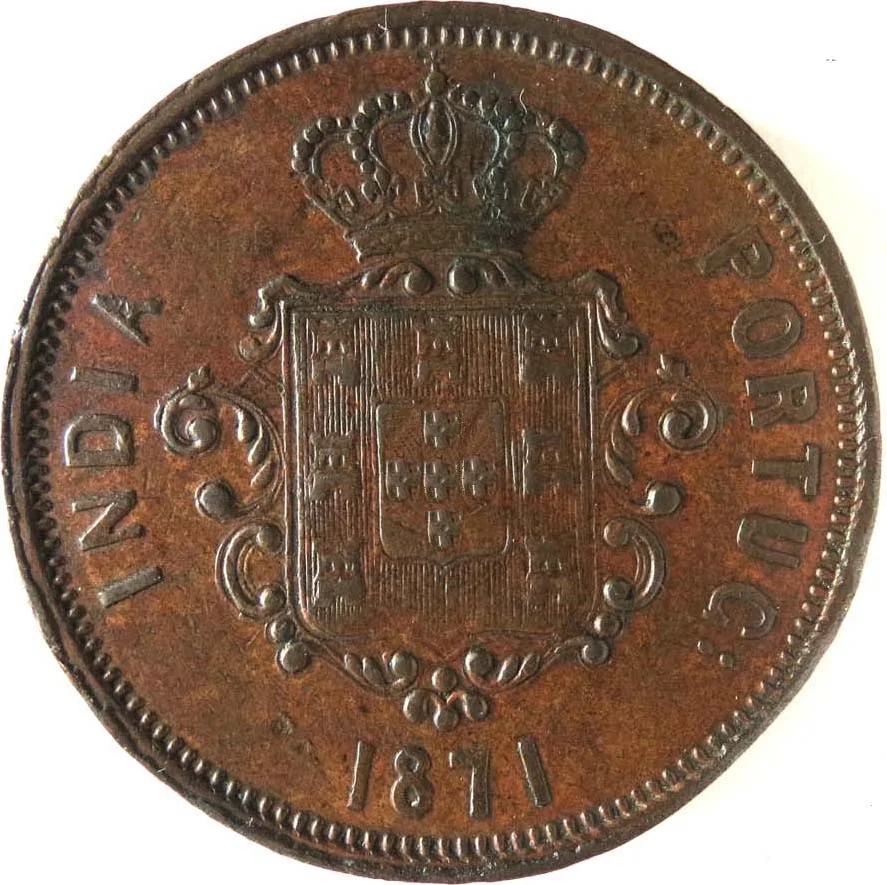
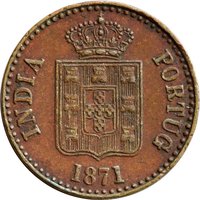
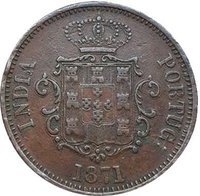
Obverse
Description:
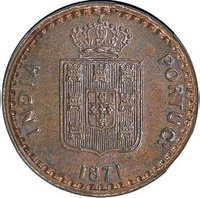
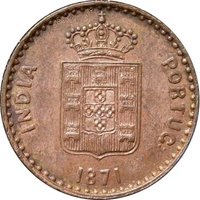
Royal coat of arms
Inscription:
INDIA PORTUG:
1871
1871
Translation:
INDIA PORTUGUESA:
1871
1871
Script: Latin
Languages: Portuguese, English
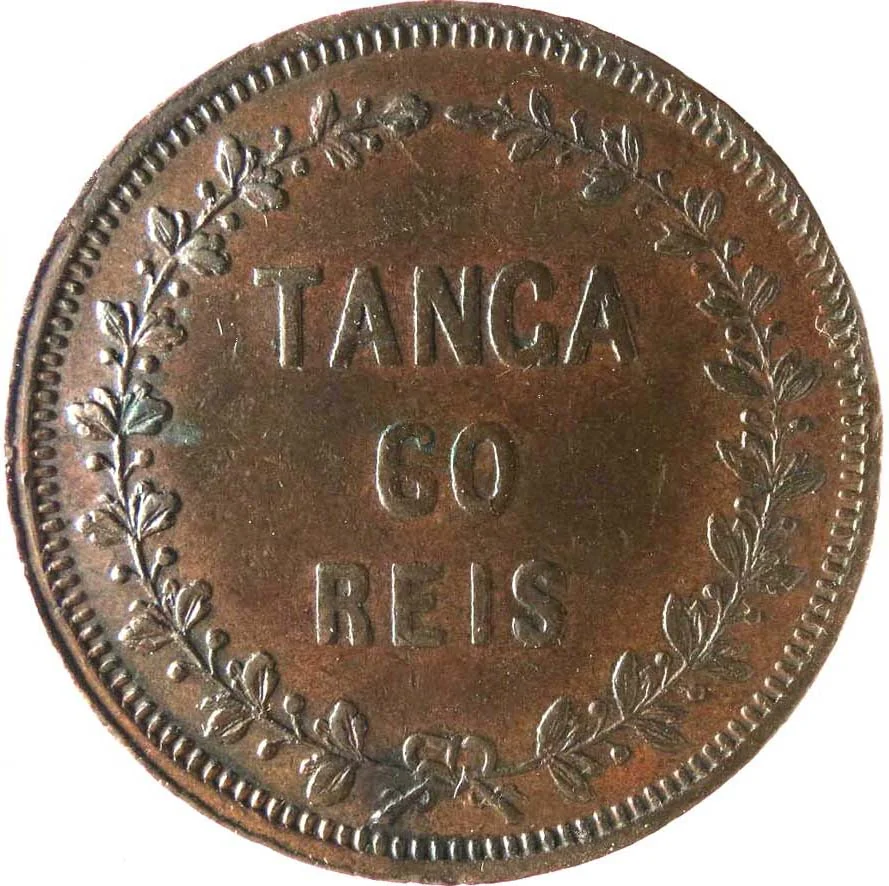
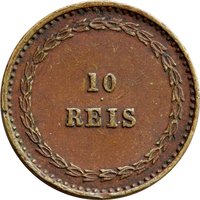
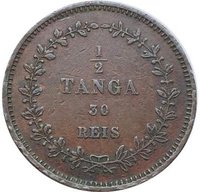
Reverse
Description:
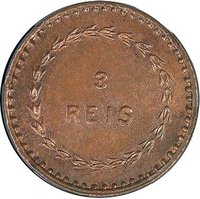
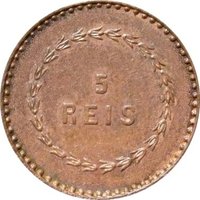
Wreath: A decorative ring of foliage or flowers.
Inscription:
TANGA
60
REIS
60
REIS
Script: Latin
Edge
Plain
Mints
| Name | Mark |
|---|---|
| Mumbai / Bombay | — |
Mintings
| Year | Mint Mark | Mintage | Quality | Collection |
|---|---|---|---|---|
| 1871 | — | 50,000 |
Historical background
In 1871, the currency situation in Portuguese India was a complex and transitional one, characterized by the coexistence of multiple monetary systems. The official currency was the Portuguese Indian Rupia (divided into 16 tangas or 960 réis), which had been introduced in the late 18th century to replace the earlier xerafim. However, the British Indian Rupee, given the overwhelming economic influence of British India in the region, circulated widely and was often preferred for trade. This created a dual-system where exchange rates between the two rupees, and their respective fractional coins, fluctuated and caused commercial inconvenience.
The Portuguese administration was actively attempting to reform and standardize the currency during this period. A major step had been taken in 1869 with the issuance of a new decimalized coinage, where 1 Rupia was now officially equal to 960 réis and subdivided into 12 tangas or 96 bazarucos. This reform aimed to simplify accounting and align the system more closely with the metrical reforms occurring in Portugal itself. In practice, however, the older non-decimal denominations and the persistent circulation of British and even old Mughal-era coins meant the reform's implementation on the ground was gradual and incomplete.
Consequently, the monetary landscape in Goa, Damão, and Diu in 1871 was one of official transition muddled by daily practical realities. Merchants and the public had to navigate between the newer decimal Portuguese coins, the older Portuguese denominations, and the ubiquitous British Indian currency. This fragmentation reflected Portuguese India's broader economic position: administratively tied to Lisbon but commercially and geographically integrated into the financial orbit of British Bombay, leading to a persistent and unresolved currency duality.
The Portuguese administration was actively attempting to reform and standardize the currency during this period. A major step had been taken in 1869 with the issuance of a new decimalized coinage, where 1 Rupia was now officially equal to 960 réis and subdivided into 12 tangas or 96 bazarucos. This reform aimed to simplify accounting and align the system more closely with the metrical reforms occurring in Portugal itself. In practice, however, the older non-decimal denominations and the persistent circulation of British and even old Mughal-era coins meant the reform's implementation on the ground was gradual and incomplete.
Consequently, the monetary landscape in Goa, Damão, and Diu in 1871 was one of official transition muddled by daily practical realities. Merchants and the public had to navigate between the newer decimal Portuguese coins, the older Portuguese denominations, and the ubiquitous British Indian currency. This fragmentation reflected Portuguese India's broader economic position: administratively tied to Lisbon but commercially and geographically integrated into the financial orbit of British Bombay, leading to a persistent and unresolved currency duality.
💎 Extremely Rare