

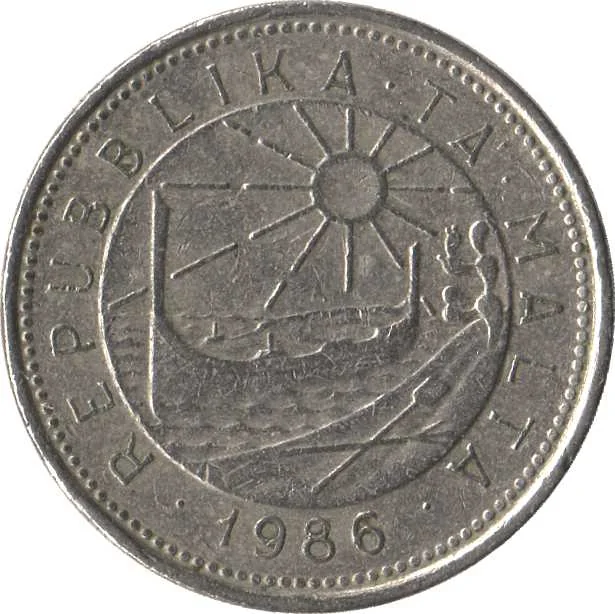
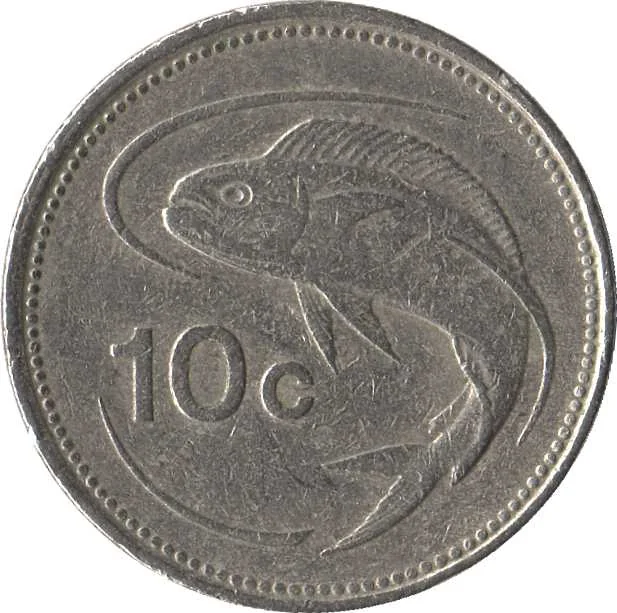
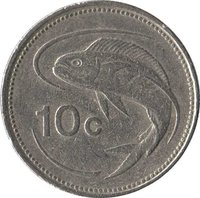
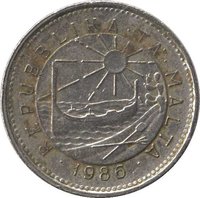
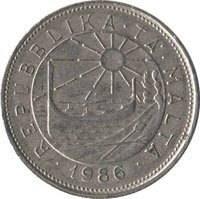
10 Cents – Malta
Malta
Context
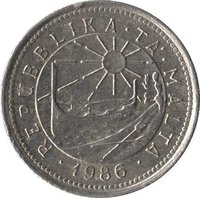
Year: 1986
Issuer: Malta 
Period:
(since 1974)
Currency:
(1972—2007)
Demonetized: Yes
Total mintage: 4,198,000
Material
Diameter: 22 mm
Weight: 5.01 g
Thickness: 1.75 mm
Shape: Round
Composition: Copper-nickel
Technique: Milled
Alignment: Medal alignment
flip
References
KM: #Click to copy to clipboard76
Numista: #2024
Value
Exchange value: 0.10 MTL
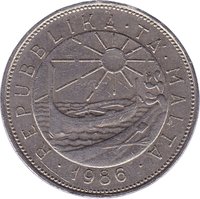
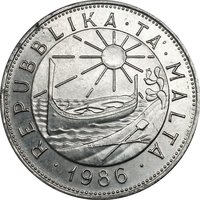
Obverse
Reverse
Edge
Milled
Categories
| Animal> Fish |
| Transportation> Watercraft |
Mints
| Name | Mark |
|---|---|
| Malta Mint | — |
Mintings
| Year | Mint Mark | Mintage | Quality | Collection |
|---|---|---|---|---|
| 1986 | — | 10,000 | Proof | |
| 1986 | — | 4,188,000 |
Historical background
In 1986, Malta’s currency situation was defined by its unique and tightly controlled system, operating as a Sterling Area member in practice, though not formally. The Maltese lira (Lm), also known as the pound, was pegged to a basket of currencies, heavily weighted towards the British pound sterling. This reflected Malta’s deep historical economic ties to the United Kingdom, a relationship still significant despite the closure of the British military base in 1979. The Central Bank of Malta maintained strict exchange controls, regulating all foreign currency transactions to safeguard reserves and manage the balance of payments. The lira itself was a strong and artificially stable currency, but its high value and non-convertibility presented challenges for trade and tourism competitiveness.
Economically, this period was one of transition and gradual liberalisation under the Labour government of Prime Minister Karmenu Mifsud Bonnici. The economy was shifting from a dependence on British military spending towards manufacturing, tourism, and services. The fixed exchange rate provided stability for planning and investment but required continuous management. A significant feature was the existence of a dual exchange rate system for the tourism sector, where a favourable "tourist rate" was applied to encourage hard currency earnings. This complex system highlighted the tension between maintaining a strong currency for prestige and controlling inflation, while also needing to generate vital foreign exchange from key industries.
Looking forward, the situation in 1986 set the stage for significant changes. The strict exchange controls and the peg to a sterling-heavy basket would be progressively reformed in the early 1990s following a change in government. These reforms, including a shift to a more diversified currency basket and gradual liberalisation, were crucial steps in aligning Malta with European economic practices, ultimately paving the way for future European Union membership and the eventual adoption of the euro in 2008. Thus, 1986 represents a point of stability under a controlled regime, immediately preceding a period of modernisation and integration into the global economy.
Economically, this period was one of transition and gradual liberalisation under the Labour government of Prime Minister Karmenu Mifsud Bonnici. The economy was shifting from a dependence on British military spending towards manufacturing, tourism, and services. The fixed exchange rate provided stability for planning and investment but required continuous management. A significant feature was the existence of a dual exchange rate system for the tourism sector, where a favourable "tourist rate" was applied to encourage hard currency earnings. This complex system highlighted the tension between maintaining a strong currency for prestige and controlling inflation, while also needing to generate vital foreign exchange from key industries.
Looking forward, the situation in 1986 set the stage for significant changes. The strict exchange controls and the peg to a sterling-heavy basket would be progressively reformed in the early 1990s following a change in government. These reforms, including a shift to a more diversified currency basket and gradual liberalisation, were crucial steps in aligning Malta with European economic practices, ultimately paving the way for future European Union membership and the eventual adoption of the euro in 2008. Thus, 1986 represents a point of stability under a controlled regime, immediately preceding a period of modernisation and integration into the global economy.
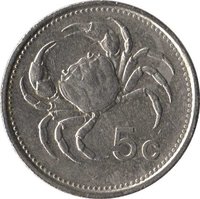
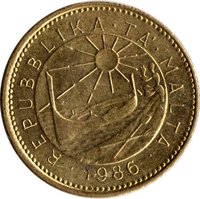
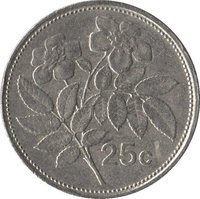
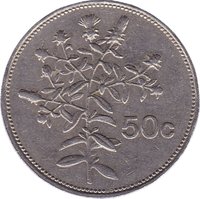
Series: 1986 Malta circulation coins
🌱 Very Common