

2 cents – Danish West Indies
Add to wishlist
United States
Context
Year: 1905
Country: United States
Issuer: Danish West Indies
Ruler: Christian IX
Currency:
(1849—1905)
Demonetized: Yes
Total mintage: 150,040
Material
References
KM: #
Numista: #20171
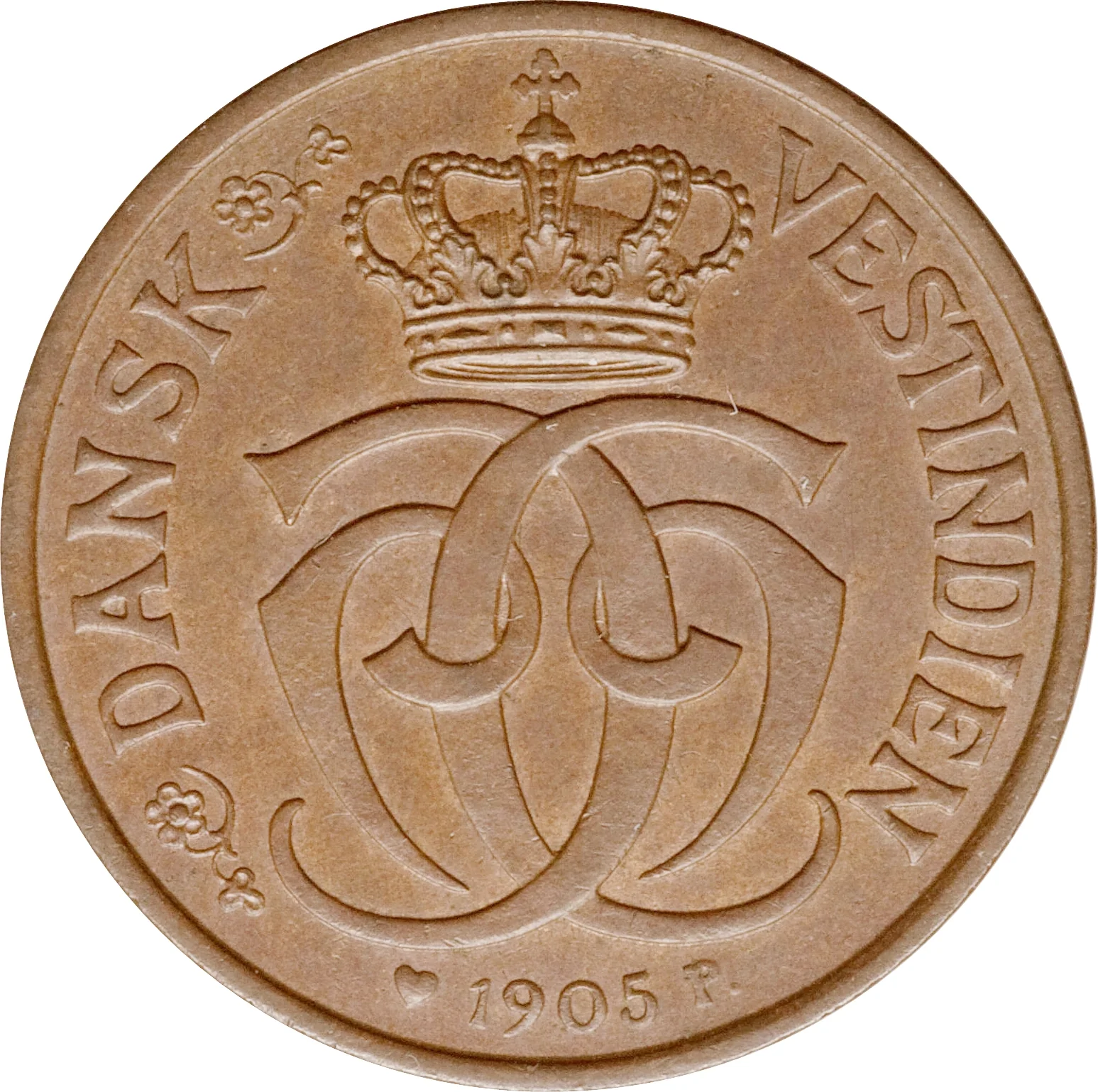
Obverse
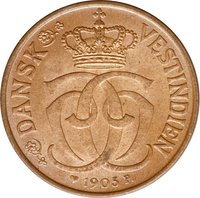
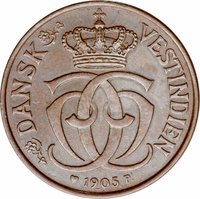
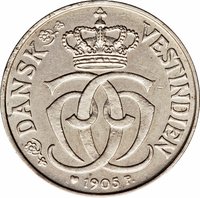
Description:
Crowned initials
Inscription:
DANSK VESTINDIEN
♥ 1905 P.
♥ 1905 P.
Translation:
Danish West Indies
♥ 1905 P.
♥ 1905 P.
Script: Latin
Language: Danish
Engraver: Vilhelm Burchard Poulsen
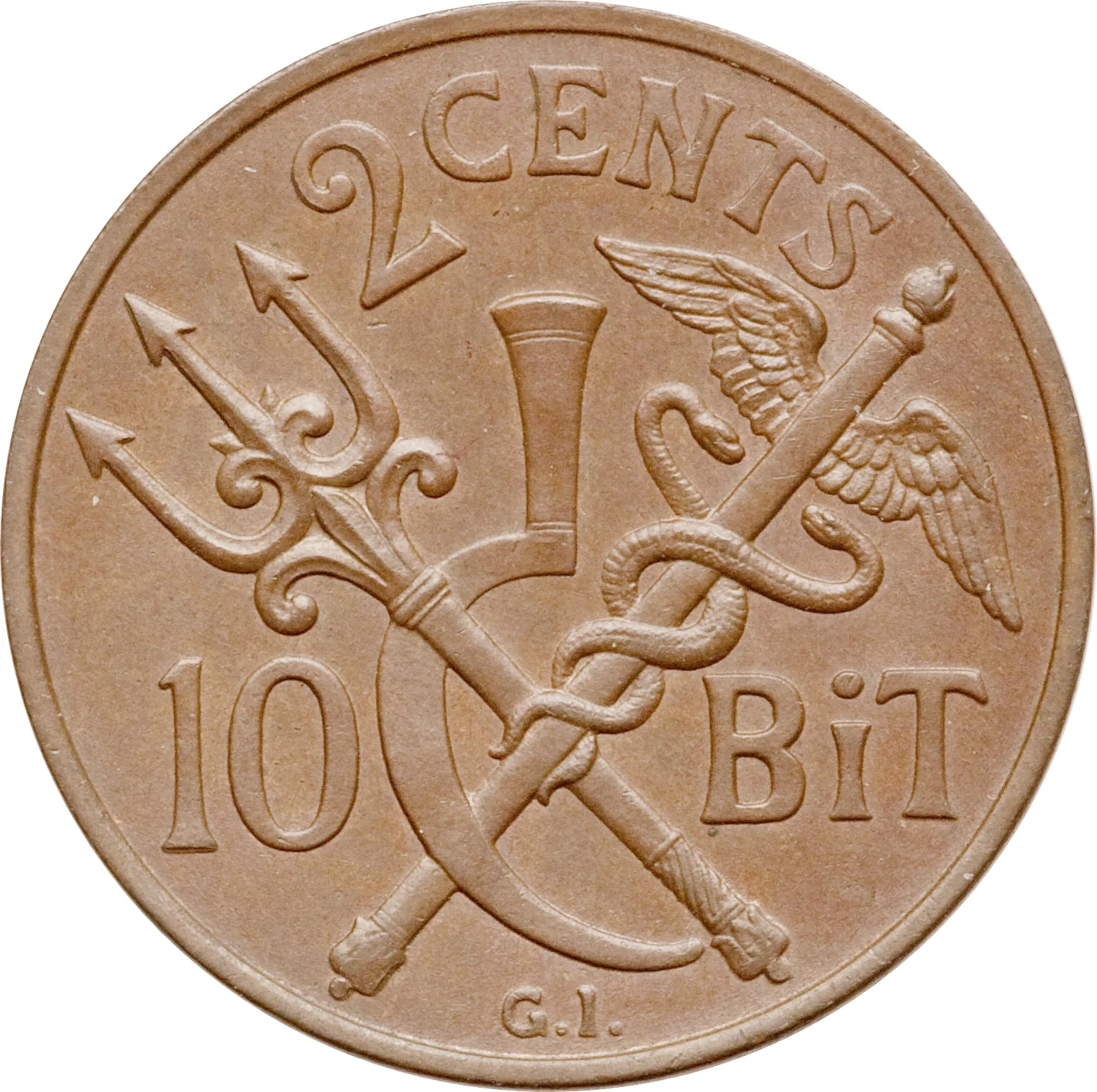
Reverse
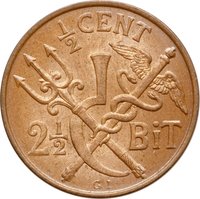
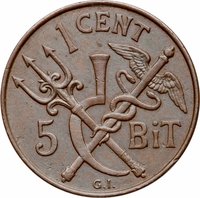
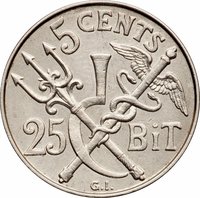
Description:
Denomination
Inscription:
2 CENTS
10 BiT
G.I.
10 BiT
G.I.
Translation:
2 CENTS
10 BIT
G.I.
10 BIT
G.I.
Script: Latin
Language: English
Engraver: Gunnar Jensen
Edge
Plain
Mints
| Name | Mark |
|---|---|
| Royal Danish Mint | ❤ |
Mintings
| Year | Mint Mark | Mintage | Quality | Collection |
|---|---|---|---|---|
| 1905 | P♥GI | 20 | Proof | |
| 1905 | P♥GI | 150,000 | ||
| 1905 | P♥GI | 20 | Prooflike |
Historical background
In 1905, the Danish West Indies (present-day U.S. Virgin Islands) operated under a complex and somewhat dysfunctional currency system, a legacy of its role as a bustling commercial hub. The official currency was the Danish rigsdaler, divided into 100 cents, but in practice, a multitude of foreign coins circulated freely. Most dominant were the British sterling coins, particularly the silver dollar and fractional pieces, due to the colony's extensive trade with neighboring British islands. U.S. gold coins and Danish silver also had legal tender status, creating a de facto multi-currency environment that reflected the islands' international connections but caused daily commercial confusion.
This monetary pluralism led to significant practical problems. Exchange rates between the various coins fluctuated, and their intrinsic silver or gold values often differed from their face values, leading to arbitrage and the frequent outflow of the most undervalued coins. Merchants and the public had to constantly calculate values between rigsdaler, shillings, and dollars, a process prone to error and dispute. The system was inefficient for local trade and an obstacle to stable government accounting, as colonial revenues and expenditures were recorded in the official Danish rigsdaler while actual transactions used a mix of currencies.
The situation in 1905 was a point of growing frustration for both the local business community and the Danish colonial administration. Discussions about monetary reform had been ongoing for years, with a strong push to simplify the system. The most frequently debated solution was the potential adoption of the gold-standard U.S. dollar as the sole official currency, which would align the islands' economy more closely with its primary trading partner. While this change would not be formally enacted until the islands were transferred to the United States in 1917, the currency chaos of 1905 underscored the colony's shifting economic dependencies and the administrative desire for modern, standardized monetary governance.
This monetary pluralism led to significant practical problems. Exchange rates between the various coins fluctuated, and their intrinsic silver or gold values often differed from their face values, leading to arbitrage and the frequent outflow of the most undervalued coins. Merchants and the public had to constantly calculate values between rigsdaler, shillings, and dollars, a process prone to error and dispute. The system was inefficient for local trade and an obstacle to stable government accounting, as colonial revenues and expenditures were recorded in the official Danish rigsdaler while actual transactions used a mix of currencies.
The situation in 1905 was a point of growing frustration for both the local business community and the Danish colonial administration. Discussions about monetary reform had been ongoing for years, with a strong push to simplify the system. The most frequently debated solution was the potential adoption of the gold-standard U.S. dollar as the sole official currency, which would align the islands' economy more closely with its primary trading partner. While this change would not be formally enacted until the islands were transferred to the United States in 1917, the currency chaos of 1905 underscored the colony's shifting economic dependencies and the administrative desire for modern, standardized monetary governance.
🌟 Uncommon