

1 Dollar – Barbados
Barbados
Context
Years: 1988–2005
Issuer: Barbados 
Ruler: Elizabeth II
Currency:
(since 1973)
Total mintage: 3,336,000
Material
Diameter: 25.85 mm
Weight: 6.32 g
Thickness: 1.65 mm
Shape: Equilateral curve heptagon
Magnetic: No
Technique: Milled
Alignment: Medal alignment
flip
References
KM: #Click to copy to clipboard14.2
Numista: #20152
Value
Exchange value: 1 BBD
Obverse
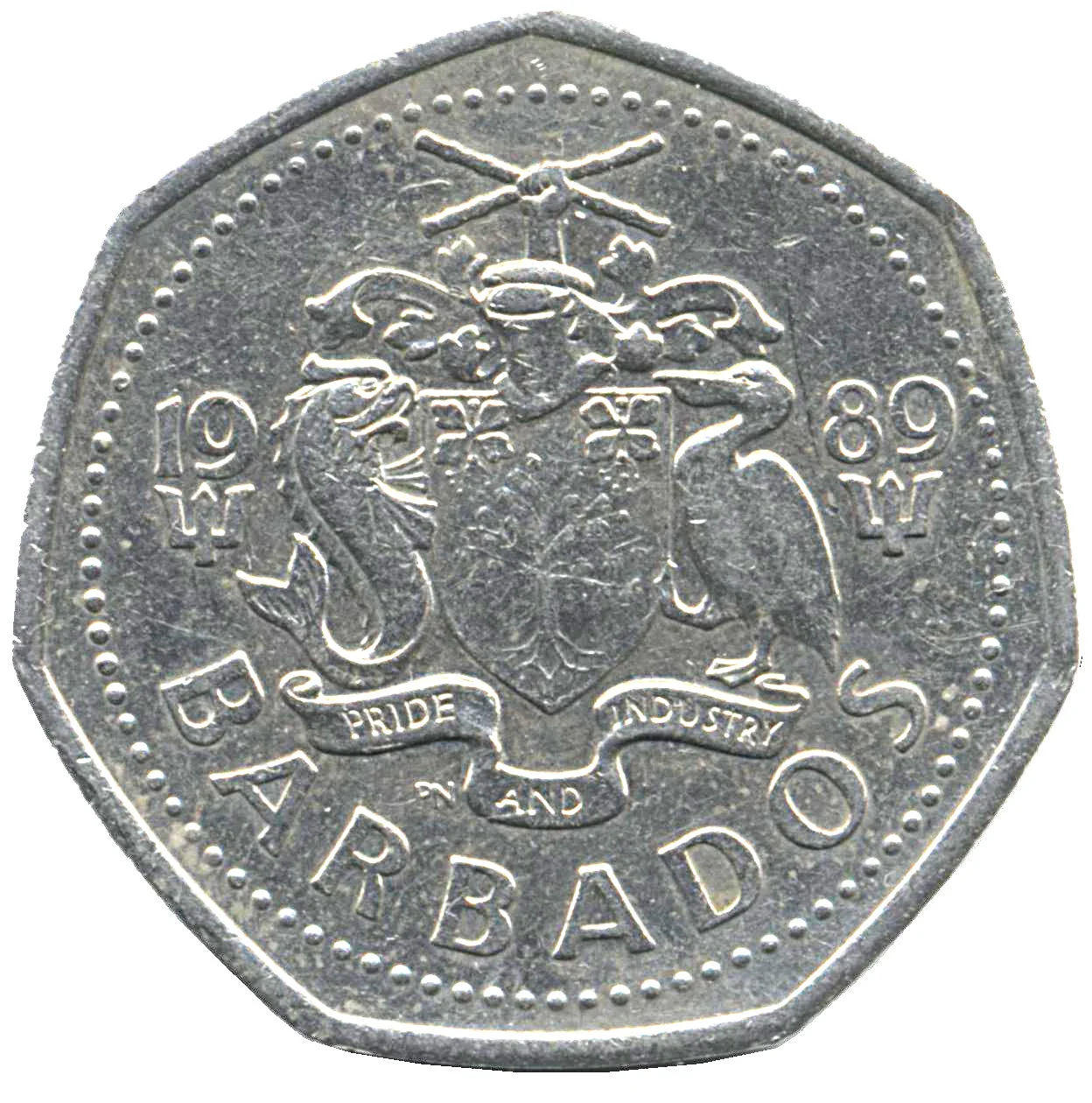
Reverse
Description:
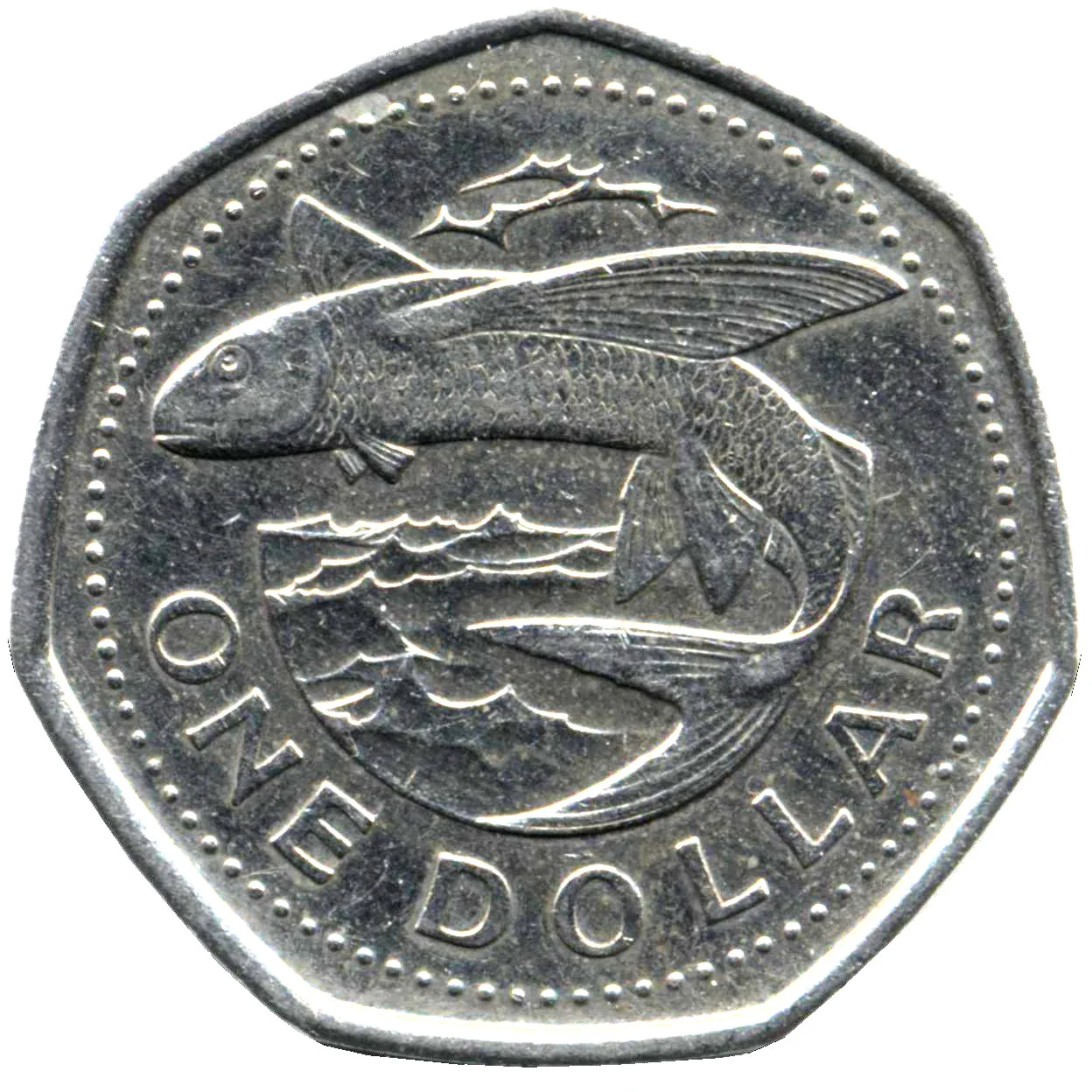
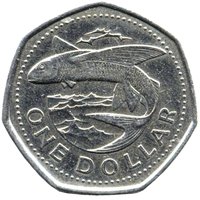
The flying fish, Barbados's national symbol, and the value below.
Inscription:
ONE DOLLAR
Script: Latin
Edge
Plain
Categories
| Animal> Fish |
| Symbols> Coat of Arms |
Mints
| Name | Mark |
|---|---|
| Royal Canadian Mint of Winnipeg | — |
| Royal Mint | — |
Mintings
| Year | Mint Mark | Mintage | Quality | Collection |
|---|---|---|---|---|
| 1988 | — | 3,336,000 | ||
| 1989 | — | — | ||
| 1994 | — | — | ||
| 1997 | — | — | Proof | |
| 1998 | — | — | ||
| 2000 | — | — | ||
| 2004 | — | — | ||
| 2005 | — | — |
Historical background
In 1988, Barbados was operating under a fixed exchange rate regime, with its currency, the Barbados dollar (BBD), pegged at a rate of 2:1 to the United States dollar. This peg, established in 1975, was a cornerstone of the country's economic policy, designed to provide stability, curb inflation, and foster confidence for both domestic businesses and foreign investors, particularly in the crucial tourism sector. The Central Bank of Barbados maintained this parity through strict exchange controls and careful management of its foreign reserves, which were essential for defending the fixed rate.
However, the economy in the late 1980s faced significant headwinds that put pressure on this system. A global recession and rising oil prices had negatively impacted tourism and export earnings, leading to persistent trade and current account deficits. Consequently, foreign reserves were under strain, and there was underlying market anxiety about the sustainability of the peg. The government, under Prime Minister Erskine Sandiford, was simultaneously implementing a stringent austerity program as part of a structural adjustment agreement with the International Monetary Fund (IMF), which aimed to restore fiscal balance through public sector cuts and tax increases.
Thus, the currency situation in 1988 was one of formal stability but underlying vulnerability. While the BBD peg remained firmly intact and publicly defended by authorities, it existed within a context of economic contraction and external pressures. The focus of policymakers was less on devaluation and more on using fiscal discipline and IMF support to rebuild reserves and correct macroeconomic imbalances, thereby reinforcing the foundation of the fixed exchange rate system that defined Barbados's financial landscape.
However, the economy in the late 1980s faced significant headwinds that put pressure on this system. A global recession and rising oil prices had negatively impacted tourism and export earnings, leading to persistent trade and current account deficits. Consequently, foreign reserves were under strain, and there was underlying market anxiety about the sustainability of the peg. The government, under Prime Minister Erskine Sandiford, was simultaneously implementing a stringent austerity program as part of a structural adjustment agreement with the International Monetary Fund (IMF), which aimed to restore fiscal balance through public sector cuts and tax increases.
Thus, the currency situation in 1988 was one of formal stability but underlying vulnerability. While the BBD peg remained firmly intact and publicly defended by authorities, it existed within a context of economic contraction and external pressures. The focus of policymakers was less on devaluation and more on using fiscal discipline and IMF support to rebuild reserves and correct macroeconomic imbalances, thereby reinforcing the foundation of the fixed exchange rate system that defined Barbados's financial landscape.
🌱 Very Common