

2 euro (Maria Montessori) – Italy
Add to wishlist
Circulating commemorative coins
Commemoration: 150th Anniversary of the Birth of Maria Montessori
Italy
Obverse
Description:
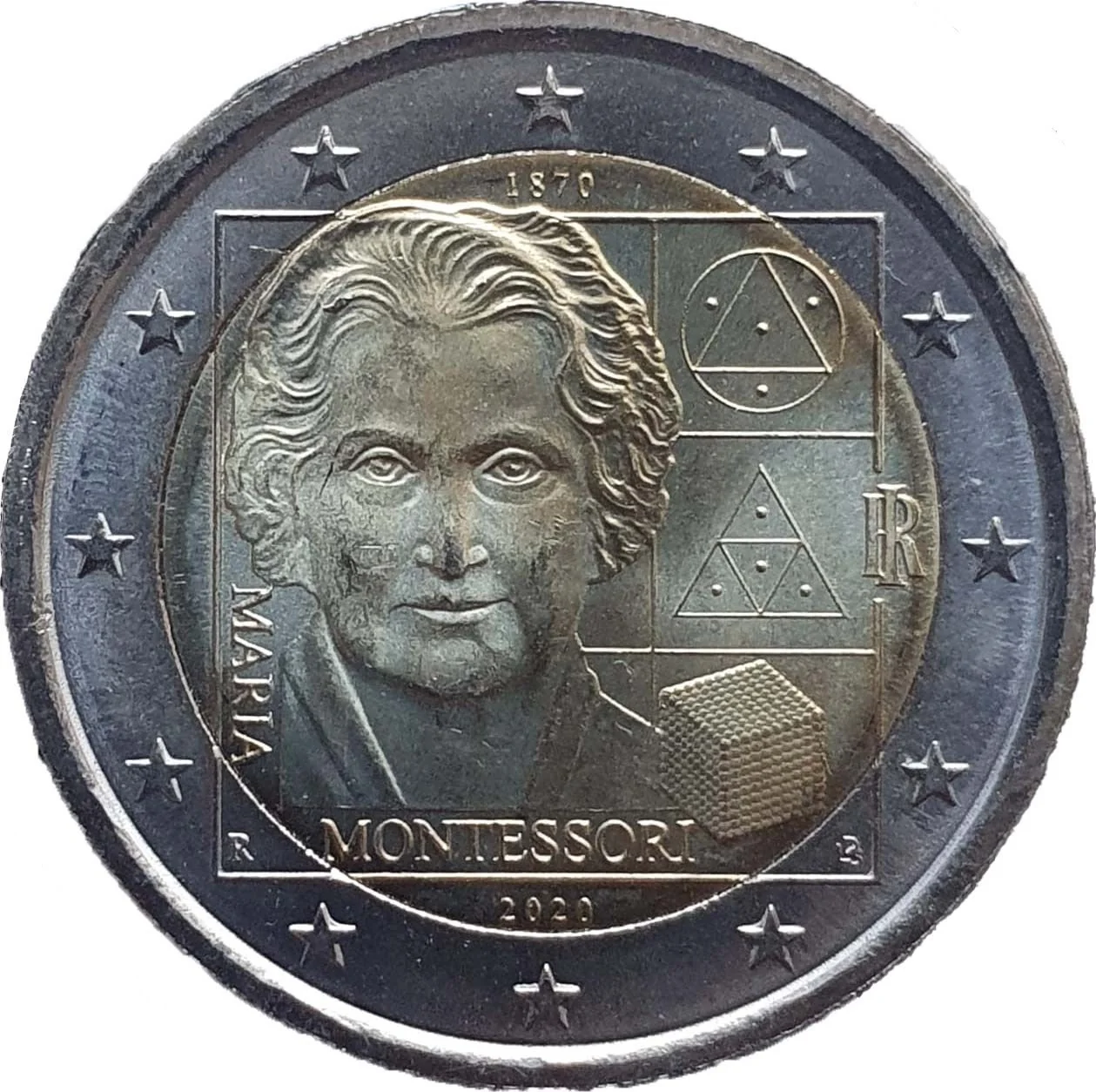
A geometric portrait of Maria Montessori with elements of her educational methods. It features the inscription "MARIA MONTESSORI," the dates 1870 and 2020, and the markings RI, R, and LDS. The outer ring bears the 12 stars of the European flag.
Inscription:
1870
RI
MARIA MONTESSORI
R
LDS
2020
RI
MARIA MONTESSORI
R
LDS
2020
Translation:
1870
RI
MARIA MONTESSORI
R
LDS
2020
RI
MARIA MONTESSORI
R
LDS
2020
Script: Latin
Engraver: Luciana De Simoni
Reverse
Edge
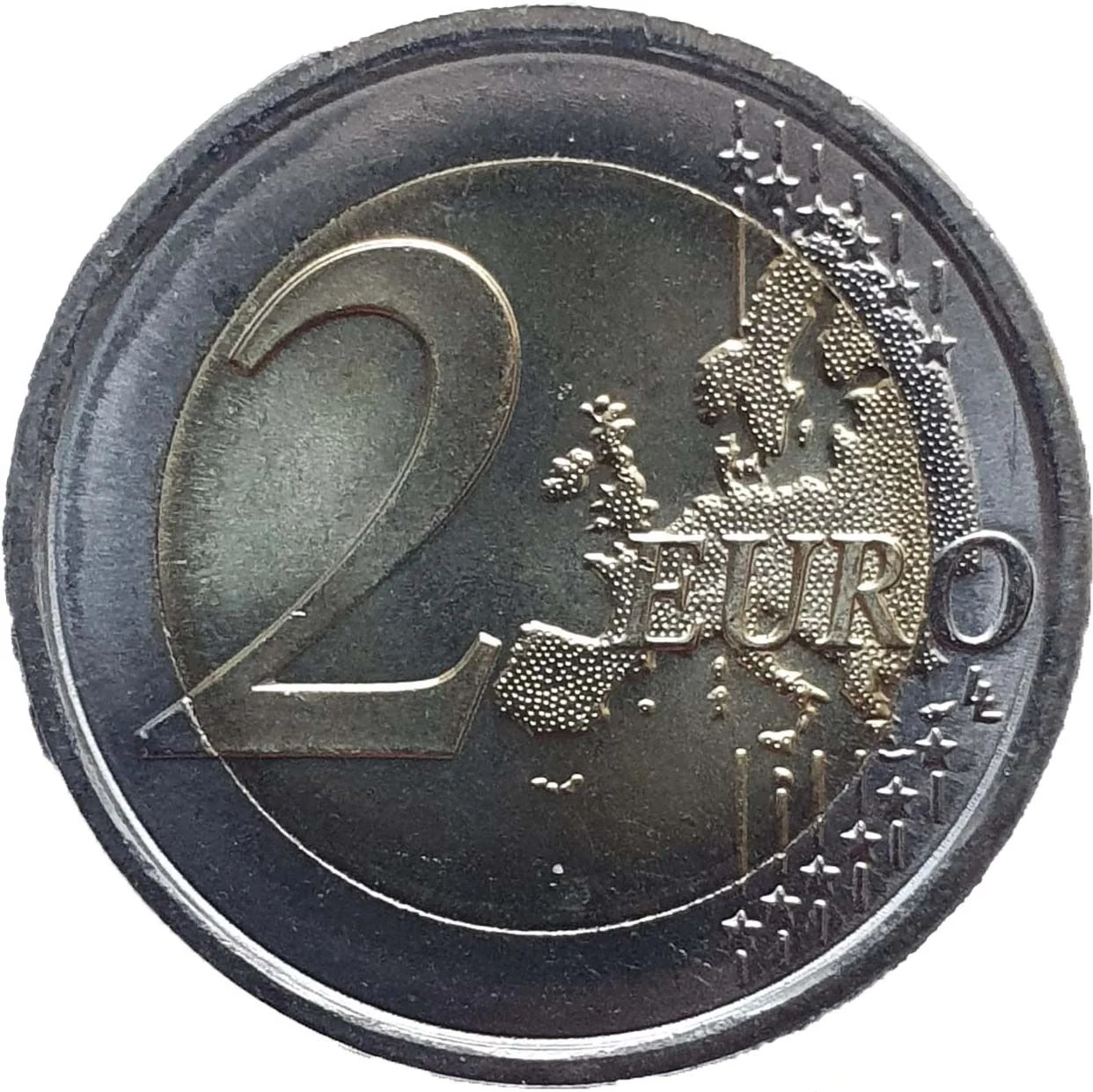
Finely ribbed with edge lettering: six times the sequence "2 *" alternately upright and inverted.
Legend:
2 * 2 * 2 * 2 * 2 * 2 *
Categories
| Event> Birth anniversary |
| Map |
Mints
| Name | Mark |
|---|---|
| Rome | R |
Historical background
In 2020, Italy's currency situation was defined by its membership in the Eurozone, using the euro (€) as its legal tender. This meant the country had relinquished direct control over its monetary policy to the European Central Bank (ECB), a framework that provided stability but also presented significant challenges. The year was dominated by the severe economic shock of the COVID-19 pandemic, which triggered Italy's deepest post-war recession, with GDP contracting by nearly 9%. The crisis strained the country's already high public debt, which soared to over 155% of GDP, raising concerns about fiscal sustainability within the single-currency area.
The currency situation was heavily influenced by the ECB's decisive actions to preserve the integrity of the euro. To prevent financial fragmentation and a potential debt crisis that could threaten Italy's position in the Eurozone, the ECB launched the massive Pandemic Emergency Purchase Programme (PEPP). This €1.85 trillion asset-purchase scheme was crucial in buying Italian government bonds, keeping borrowing costs down, and ensuring liquidity in the financial system. These measures effectively shielded Italy from the market pressures that had characterized the Eurozone debt crisis a decade earlier, though they also reignited political debates about shared fiscal responsibility.
Domestically, the pandemic accelerated trends toward digital payments, a shift encouraged by the government through incentives to reduce cash transactions for hygiene and transparency reasons. However, the use of physical cash remained culturally entrenched. There was no serious political movement to abandon the euro, as the currency was widely seen as a necessary anchor during the turmoil. Ultimately, Italy's 2020 currency narrative was one of reliance on European institutions for stability during an unprecedented crisis, highlighting both the protections and the constraints of sharing a common currency.
The currency situation was heavily influenced by the ECB's decisive actions to preserve the integrity of the euro. To prevent financial fragmentation and a potential debt crisis that could threaten Italy's position in the Eurozone, the ECB launched the massive Pandemic Emergency Purchase Programme (PEPP). This €1.85 trillion asset-purchase scheme was crucial in buying Italian government bonds, keeping borrowing costs down, and ensuring liquidity in the financial system. These measures effectively shielded Italy from the market pressures that had characterized the Eurozone debt crisis a decade earlier, though they also reignited political debates about shared fiscal responsibility.
Domestically, the pandemic accelerated trends toward digital payments, a shift encouraged by the government through incentives to reduce cash transactions for hygiene and transparency reasons. However, the use of physical cash remained culturally entrenched. There was no serious political movement to abandon the euro, as the currency was widely seen as a necessary anchor during the turmoil. Ultimately, Italy's 2020 currency narrative was one of reliance on European institutions for stability during an unprecedented crisis, highlighting both the protections and the constraints of sharing a common currency.
Series: Italy 2 euro commemoratives
🌱 Very Common