

20 Centavos – Philippines
Philippines
Context
Years: 1880–1885
Issuer: Philippines 
Ruler: Alfonso XII
Currency:
(1857—1967)
Demonetization: 1 October 1904
Total mintage: 4,270,000
Material
References
KM: #Click to copy to clipboard149
Numista: #20042
Value
Bullion value: $12.32
Obverse
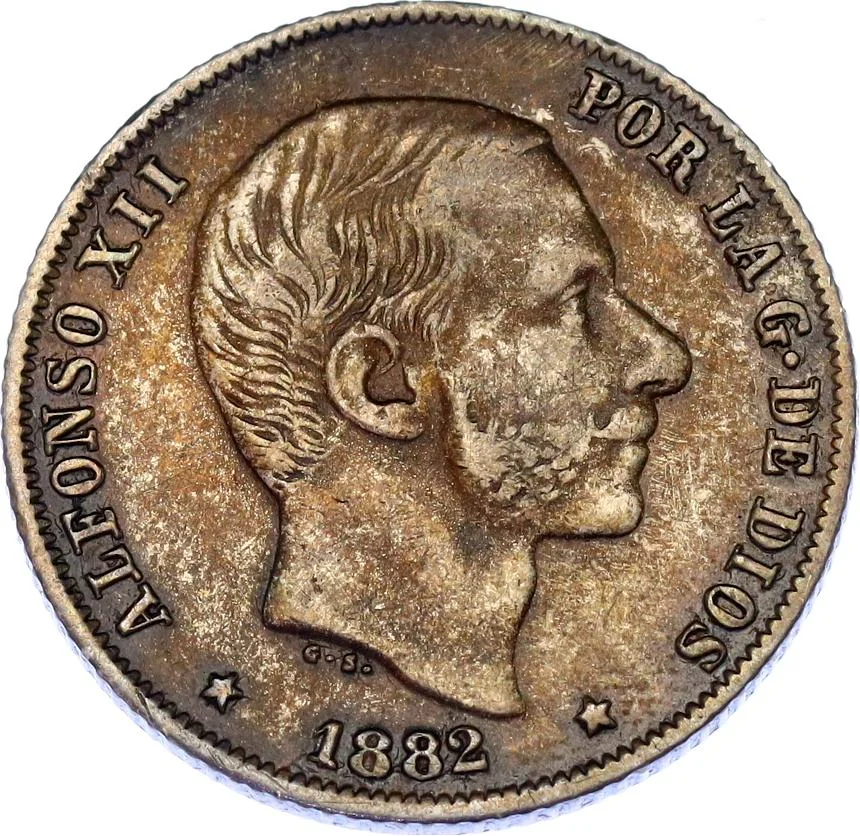
Description:
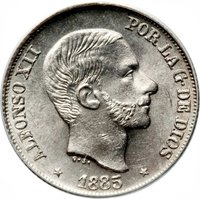
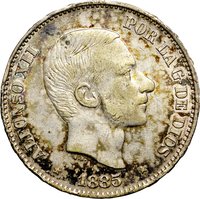
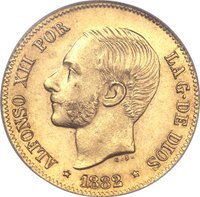
Alfonso XII facing right.
Inscription:
ALFONSO XII POR LA G · DE DIOS
G·S·
* 1885 *
G·S·
* 1885 *
Translation:
By the grace of God, Alfonso XII
* 1885 *
* 1885 *
Script: Latin
Language: Spanish
Engraver: Gregorio Sellán y González
Reverse
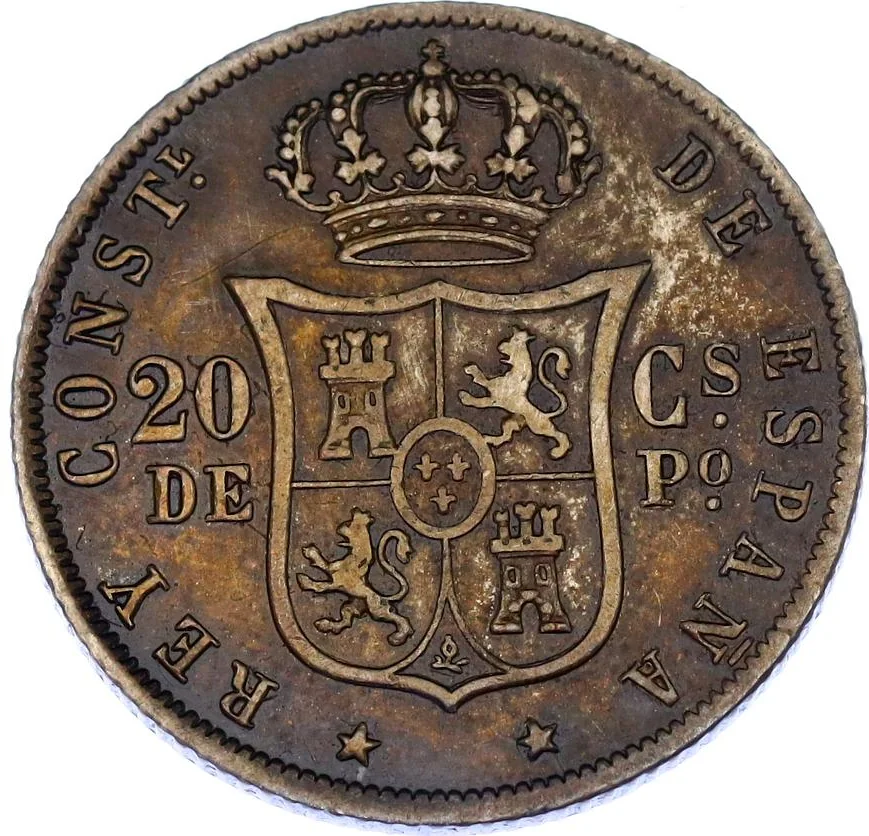
Description:
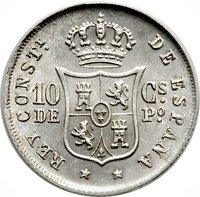
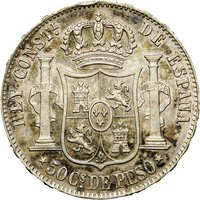
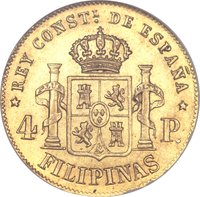
Spanish coat of arms.
Inscription:
REY CONSTL. DE ESPAÑA
20 Cs.
DE Po.
20 Cs.
DE Po.
Translation:
King Constitutional of Spain
20 Cs.
Of Po.
20 Cs.
Of Po.
Script: Latin
Language: Spanish
Engraver: Gregorio Sellán y González
Edge
Reeded
Categories
| Person> Monarch |
| Symbols> Coat of Arms |
Mints
| Name | Mark |
|---|---|
| Manila | — |
Mintings
| Year | Mint Mark | Mintage | Quality | Collection |
|---|---|---|---|---|
| 1880 | — | 70,000 | ||
| 1881 | — | 1,029,000 | ||
| 1882 | — | 968,000 | ||
| 1883 | — | — | ||
| 1884 | — | 859,000 | ||
| 1885 | — | 1,344,000 |
Historical background
In 1880, the Philippines operated under a complex and often chaotic monetary system, a legacy of its colonial history under Spain. The official currency was the Spanish-Filipino peso (also called the "peso fuerte" or strong peso), which was theoretically on a bimetallic standard tied to both silver and gold. However, the reality was a proliferation of various coins in circulation. These included Mexican silver dollars (the famous "pieces of eight"), Peruvian and Bolivian coins, and Spanish coins minted specifically for the colony. This diversity led to constant problems with valuation, counterfeiting, and wear, making everyday commerce difficult and unreliable.
The Spanish colonial government struggled to impose order. A royal decree in 1857 had established the peso as equivalent to the Spanish duro (or 20 reales), but the promised influx of sufficient standardized coinage from the Madrid mint never materialized. Consequently, the older mixed coinage remained dominant. Furthermore, the global decline in the value of silver relative to gold in the 1870s (a period known as the "silver crisis") was beginning to affect the Philippine economy. This devaluation disrupted international trade, as the silver-based peso lost value against gold-based currencies like the British pound, which was crucial for the export of key products like sugar, tobacco, and abaca.
This unstable currency environment exacerbated social and economic tensions within the colony. It particularly frustrated the growing class of Filipino and foreign mestizo merchants and planters, who were increasingly integrated into global markets and needed a stable medium for loans, contracts, and exports. The inefficiency and perceived neglect of the monetary system by Spanish authorities became a point of grievance, contributing to the broader critique of colonial administration. Thus, in 1880, the currency situation was not merely a financial nuisance but a symbol of the wider economic mismanagement that would fuel calls for reform and, eventually, revolution.
The Spanish colonial government struggled to impose order. A royal decree in 1857 had established the peso as equivalent to the Spanish duro (or 20 reales), but the promised influx of sufficient standardized coinage from the Madrid mint never materialized. Consequently, the older mixed coinage remained dominant. Furthermore, the global decline in the value of silver relative to gold in the 1870s (a period known as the "silver crisis") was beginning to affect the Philippine economy. This devaluation disrupted international trade, as the silver-based peso lost value against gold-based currencies like the British pound, which was crucial for the export of key products like sugar, tobacco, and abaca.
This unstable currency environment exacerbated social and economic tensions within the colony. It particularly frustrated the growing class of Filipino and foreign mestizo merchants and planters, who were increasingly integrated into global markets and needed a stable medium for loans, contracts, and exports. The inefficiency and perceived neglect of the monetary system by Spanish authorities became a point of grievance, contributing to the broader critique of colonial administration. Thus, in 1880, the currency situation was not merely a financial nuisance but a symbol of the wider economic mismanagement that would fuel calls for reform and, eventually, revolution.
Series: 1880 series
🌱 Fairly Common