

5 drachmas – Crete
Add to wishlist
Greece
Obverse
Description:
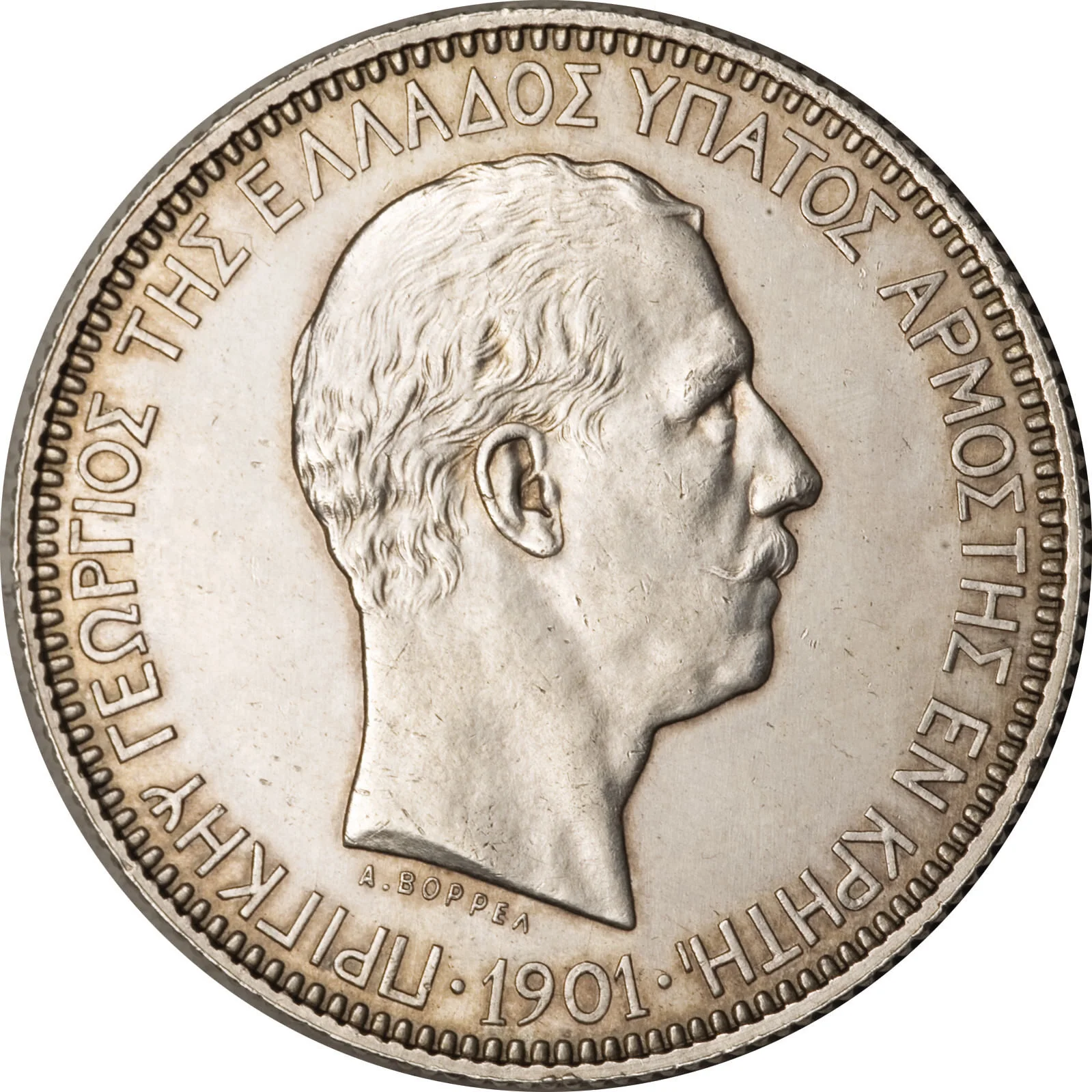
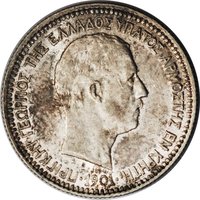
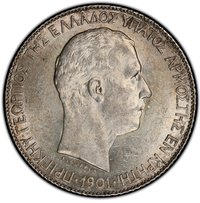
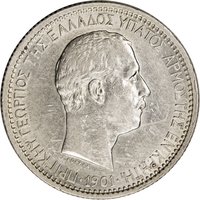
Bareheaded bust of Prince George right, initials and date below.
Inscription:
ΠΡΙΓΚΗΨ ΓΕΩΡΓΙΟΣ ΤΗΣ ΕΛΛΑΔΟΣ ΥΠΑΤΟΣ ΑΡΜΟΣΤΗΣ ΕΝ ΚΡΗΤΗ 1901
Α ΒΟΡΡΕΛ
Α ΒΟΡΡΕΛ
Translation:
Prince George of Greece High Commissioner in Crete 1901
A. Vorrel
A. Vorrel
Script: Greek
Language: Greek
Engraver: Henri-Auguste Patey
Designer: Alfred Borrel
Reverse
Description:
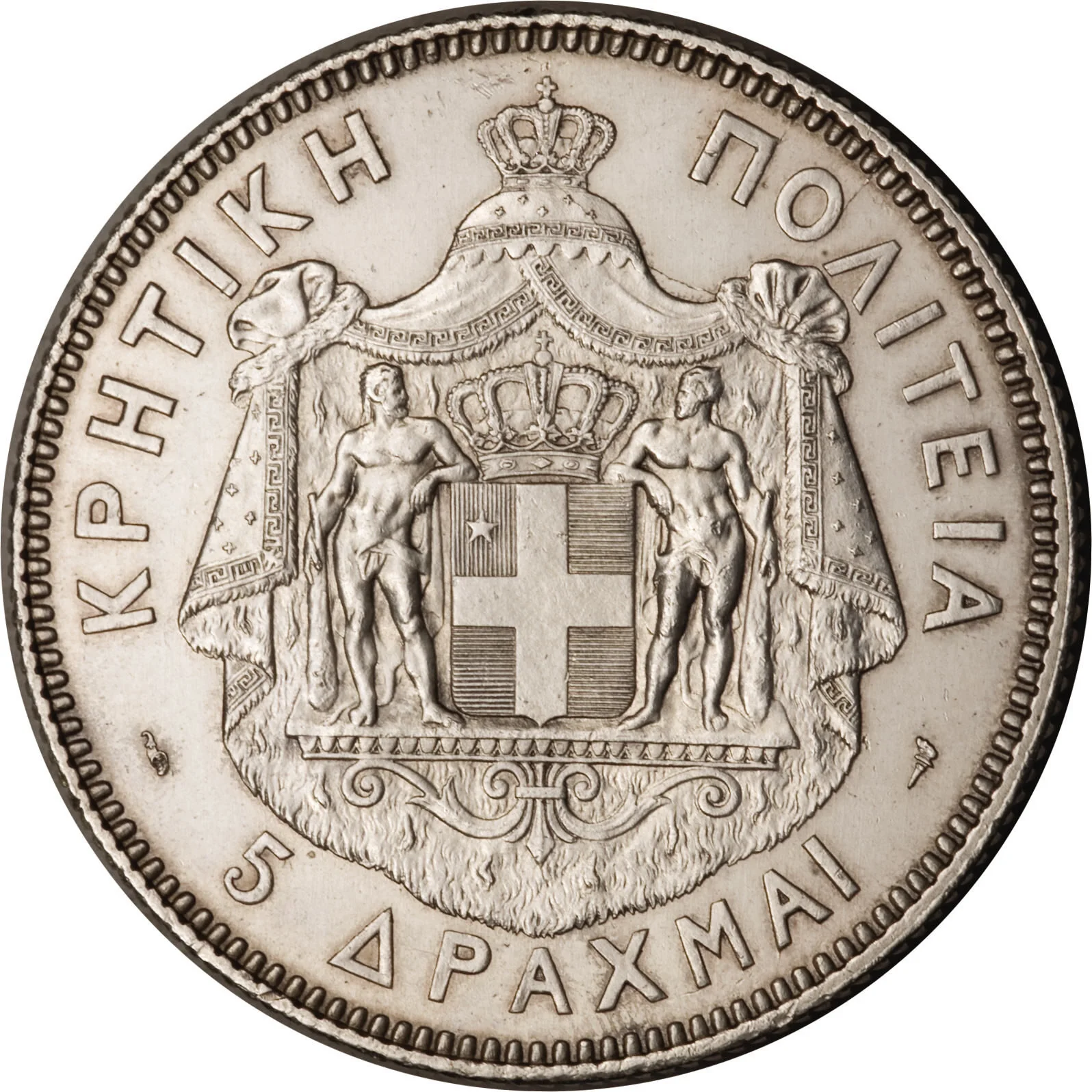
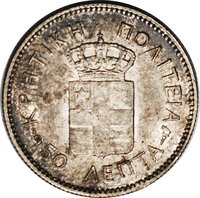
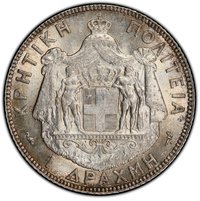
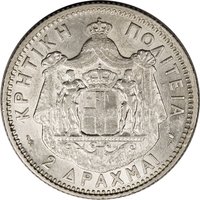
Cretan coat of arms with denomination and privy marks.
Inscription:
ΚΡΗΤΙΚΗ ΠΟΛΙΤΕΙΑ
5 ΔΡΑΧΜΑΙ
5 ΔΡΑΧΜΑΙ
Translation:
CRETAN STATE
5 DRACHMAS
5 DRACHMAS
Script: Greek
Language: Greek
Engraver: Henri-Auguste Patey
Designer: Alfred Borrel
Edge
Reeded
Mints
| Name | Mark |
|---|---|
| Monnaie de Paris | — |
Mintings
| Year | Mint Mark | Mintage | Quality | Collection |
|---|---|---|---|---|
| 1901 | — | 150,000 |
Historical background
In 1901, Crete existed in a complex and transitional political state that directly shaped its currency situation. Following the violent Cretan Revolt of 1897 against Ottoman rule, the Great Powers (Britain, France, Russia, and Italy) had established an autonomous Cretan State under Ottoman suzerainty but administered by a High Commissioner, Prince George of Greece. This unique status meant the island was de facto detached from the Ottoman Empire but not yet formally united with Greece, creating a monetary vacuum. The Ottoman lira (the "Turkish pound") remained in circulation but was increasingly unpopular and unstable, reflecting the political rupture.
To address this, the Cretan Assembly unilaterally adopted the Greek currency in 1900, declaring the drachma the official monetary unit of the island. However, this declaration was more aspirational than practical in 1901. The autonomous government lacked the infrastructure to fully implement the change, and no distinct Cretan coinage or banknotes were issued. Consequently, the monetary landscape was a messy hybrid: Greek drachma notes and coins circulated alongside older Ottoman, French, Italian, and British currencies, with exchange rates fluctuating based on trade and political sentiment.
This currency duality mirrored the island's unresolved national question. The widespread use of the drachma was a powerful symbolic act of enosis (union with Greece) and a daily rejection of Ottoman sovereignty, actively encouraged by the pro-unionist government. Yet, the persistent circulation of other currencies underscored the reality of international oversight and the island's limbo. The currency situation in 1901 was thus a direct reflection of Crete's contested sovereignty, serving as both a practical economic challenge and a potent political symbol of its desired Greek future.
To address this, the Cretan Assembly unilaterally adopted the Greek currency in 1900, declaring the drachma the official monetary unit of the island. However, this declaration was more aspirational than practical in 1901. The autonomous government lacked the infrastructure to fully implement the change, and no distinct Cretan coinage or banknotes were issued. Consequently, the monetary landscape was a messy hybrid: Greek drachma notes and coins circulated alongside older Ottoman, French, Italian, and British currencies, with exchange rates fluctuating based on trade and political sentiment.
This currency duality mirrored the island's unresolved national question. The widespread use of the drachma was a powerful symbolic act of enosis (union with Greece) and a daily rejection of Ottoman sovereignty, actively encouraged by the pro-unionist government. Yet, the persistent circulation of other currencies underscored the reality of international oversight and the island's limbo. The currency situation in 1901 was thus a direct reflection of Crete's contested sovereignty, serving as both a practical economic challenge and a potent political symbol of its desired Greek future.
🌟 Uncommon