

3 Shahis – Afghanistan
Afghanistan
Context
Year: 1919
Iranian - Persian Year: 1298
Issuer: Afghanistan 
Period:
Ruler: Amanullah Khan
Currency:
(1891—1923)
Demonetized: Yes
Material
References
KM: #Click to copy to clipboard869
Numista: #108763
Obverse
Description:
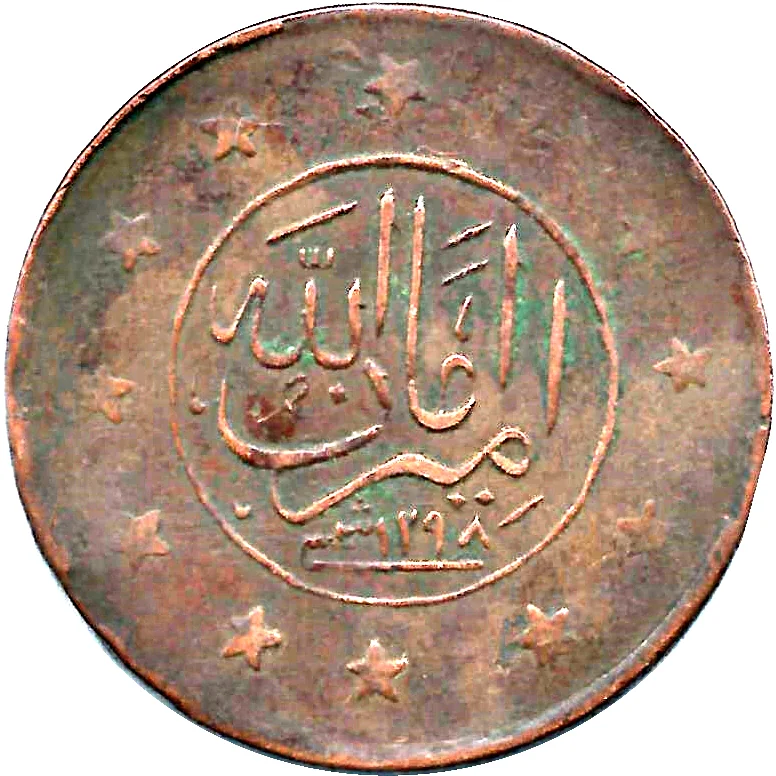
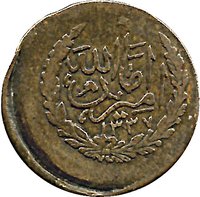
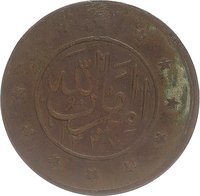
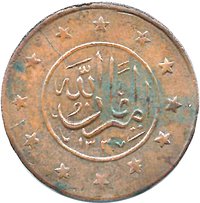
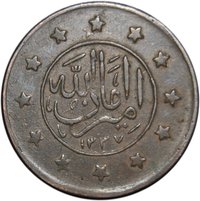
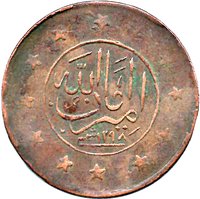
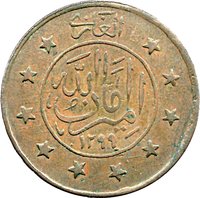
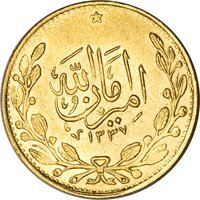
Inscription within a circle of twelve stars, with Shamsi to the lower right of the date.
Script: Arabic
Reverse
Description:
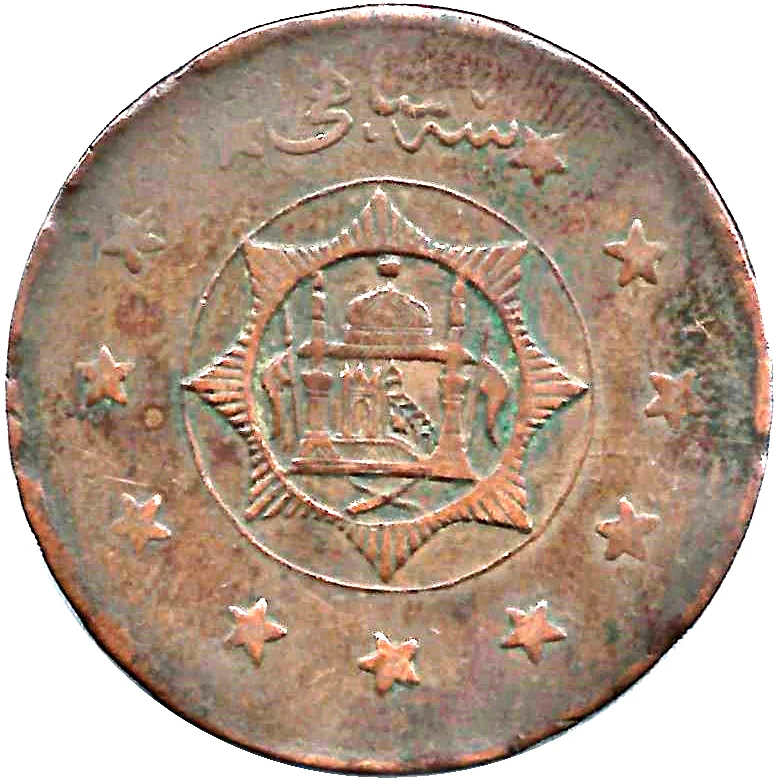
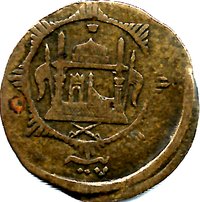
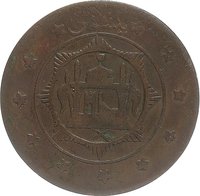
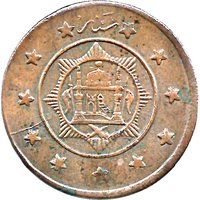
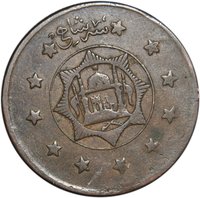
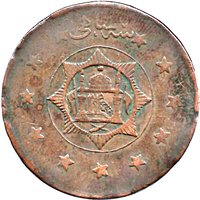
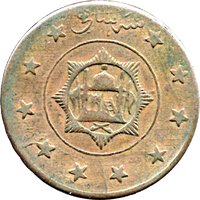
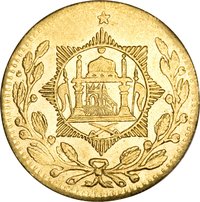
A mosque encircled by ten stars, inside an eight-pointed star.
Script: Arabic
Edge
Plain
Categories
| Building> Religious building |
Mintings
| Year | Mint Mark | Mintage | Quality | Collection |
|---|---|---|---|---|
| 1919 | — | — |
Historical background
In 1919, Afghanistan's currency situation was characterized by a complex and fragmented system, heavily influenced by its geopolitical position and internal economic structure. The primary circulating medium was the Afghan rupee, a silver coin introduced by Amir Abdur Rahman in the 1890s to unify the monetary system. However, this unification was incomplete. Alongside the state-minted rupees, a vast array of foreign and historical coins remained in widespread use, including British Indian rupees, Persian krans, Russian tsarist rubles, and even older Afghan coins from previous rulers. This multiplicity reflected Afghanistan's role as a crossroads for regional trade and the limited reach of the central government's financial authority beyond major cities.
The monetary system was fundamentally commodity-based and vulnerable to external shocks. The value of the silver Afghan rupee was intrinsically tied to the global price of silver, and its exchange rate with the British Indian rupee—the currency of its largest trading partner—fluctuated dramatically. These fluctuations caused significant economic instability, complicating government finance and cross-border commerce. Furthermore, the state's capacity to issue currency was physically constrained by the limited output of the Kabul mint, leading to chronic shortages of official coinage, especially in remote provinces where barter and older coins persisted.
This unstable monetary backdrop existed as Afghanistan, under the new ruler Amanullah Khan, embarked on the Third Anglo-Afghan War in May 1919 to secure full independence from British influence. The war effort itself placed immense strain on the treasury, likely exacerbating currency shortages and inflationary pressures. The successful conclusion of the war with the Treaty of Rawalpindi in August 1919, which granted Afghanistan sovereign control over its foreign affairs, set the stage for subsequent monetary reforms. Amanullah's new independent government would soon seek to modernize and stabilize the currency as part of a broader nation-building project, beginning with the introduction of a new currency, the afghani, in the mid-1920s.
The monetary system was fundamentally commodity-based and vulnerable to external shocks. The value of the silver Afghan rupee was intrinsically tied to the global price of silver, and its exchange rate with the British Indian rupee—the currency of its largest trading partner—fluctuated dramatically. These fluctuations caused significant economic instability, complicating government finance and cross-border commerce. Furthermore, the state's capacity to issue currency was physically constrained by the limited output of the Kabul mint, leading to chronic shortages of official coinage, especially in remote provinces where barter and older coins persisted.
This unstable monetary backdrop existed as Afghanistan, under the new ruler Amanullah Khan, embarked on the Third Anglo-Afghan War in May 1919 to secure full independence from British influence. The war effort itself placed immense strain on the treasury, likely exacerbating currency shortages and inflationary pressures. The successful conclusion of the war with the Treaty of Rawalpindi in August 1919, which granted Afghanistan sovereign control over its foreign affairs, set the stage for subsequent monetary reforms. Amanullah's new independent government would soon seek to modernize and stabilize the currency as part of a broader nation-building project, beginning with the introduction of a new currency, the afghani, in the mid-1920s.
💎 Extremely Rare