

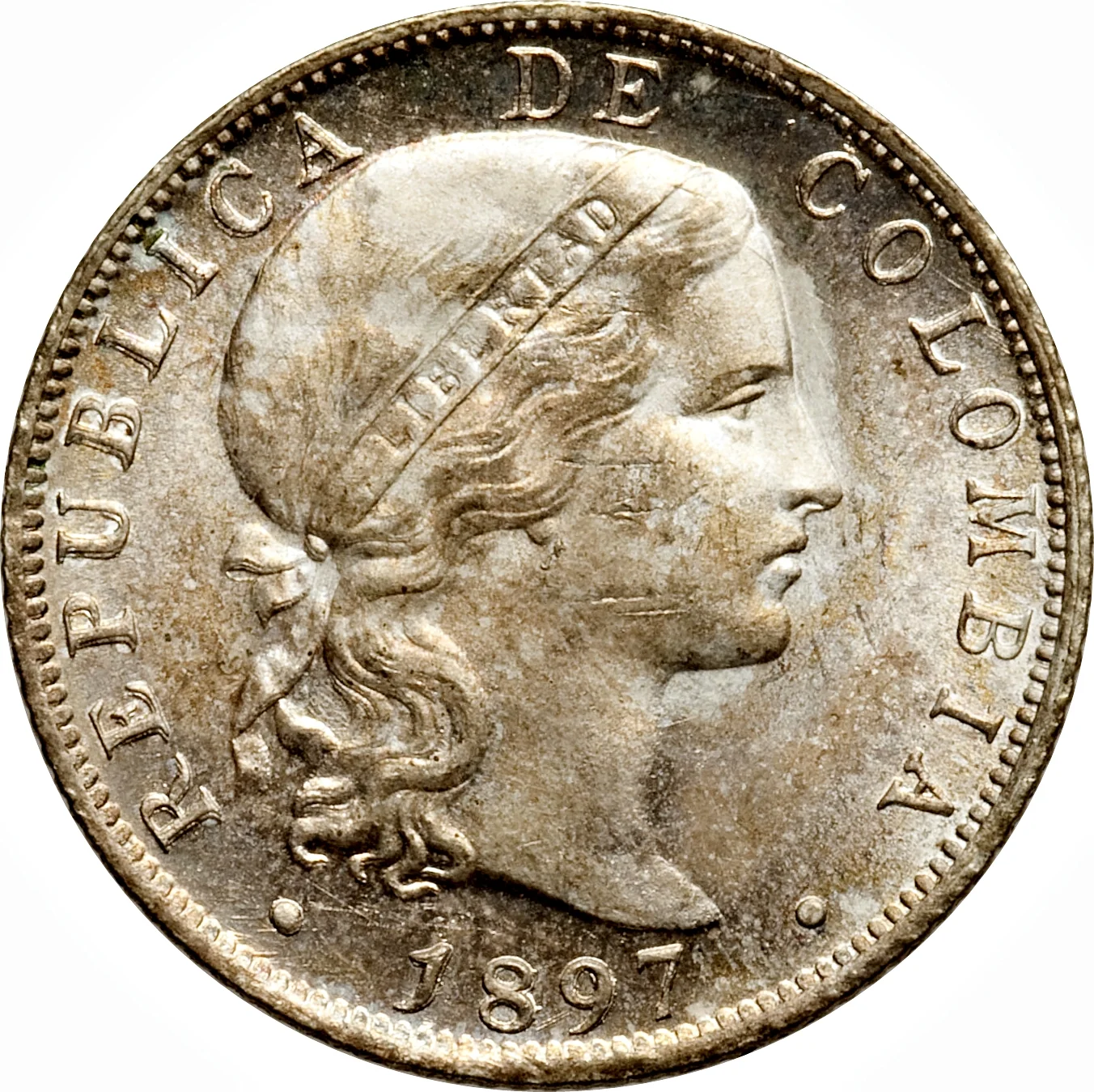
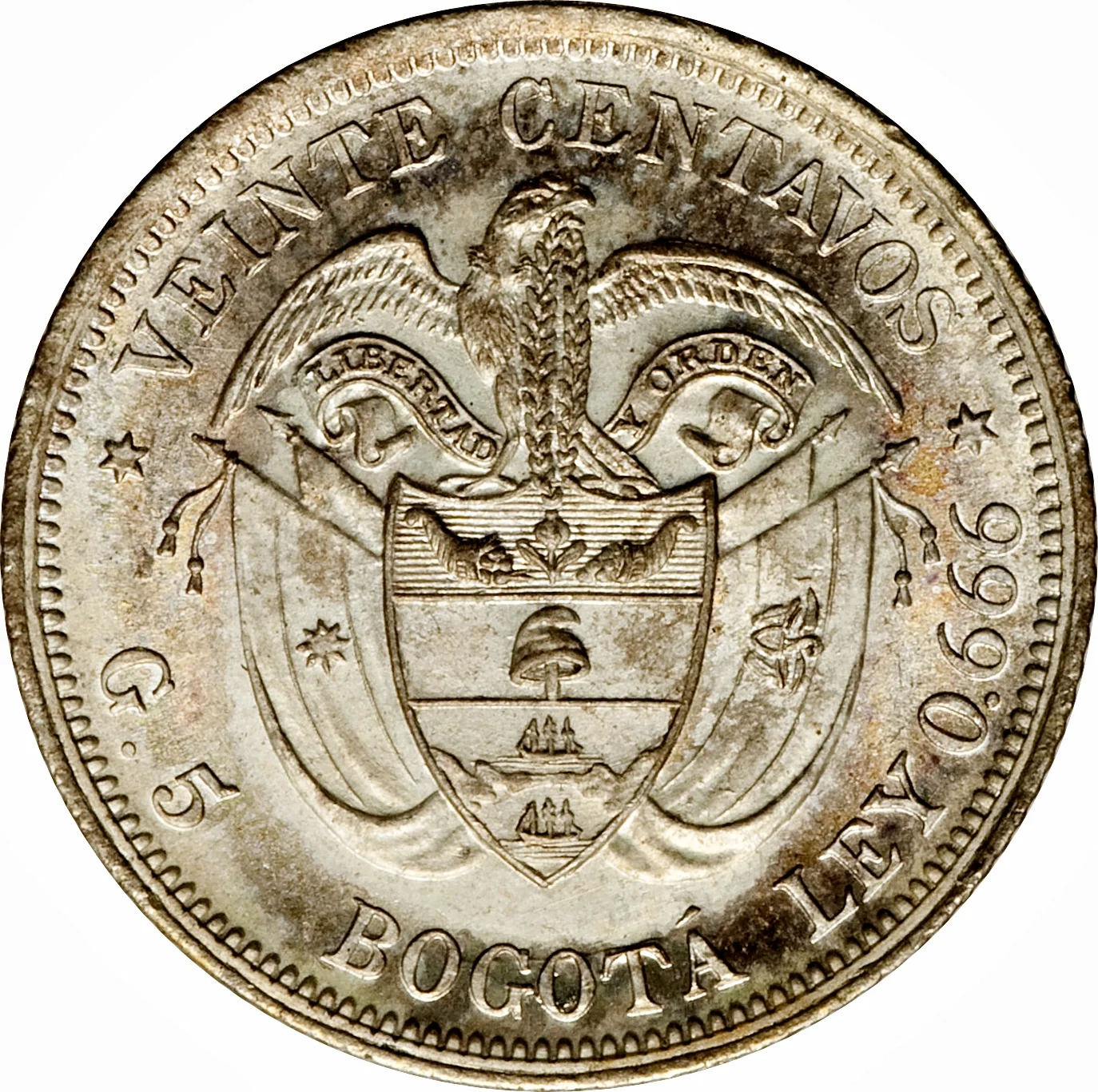
20 Centavos – Colombia
Colombia

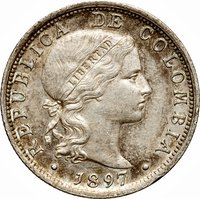
Obverse
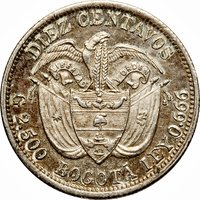
Reverse
Edge
Reeded.
Categories
| Symbols> Coat of Arms |
Mints
| Name | Mark |
|---|---|
| Royal Mint of Belgium | — |
Mintings
| Year | Mint Mark | Mintage | Quality | Collection |
|---|---|---|---|---|
| 1897 | — | 1,441,000 |
Historical background
In 1897, Colombia's currency situation was characterized by profound instability and fragmentation, a direct legacy of the political and fiscal turmoil following the Constitution of 1886 and the subsequent Regeneración policies. The nation operated without a unified, official paper currency; instead, a chaotic mix of monetary instruments circulated. These included debased silver coinage, limited gold coins (primarily for foreign trade), and, most problematically, a flood of inconvertible paper notes issued by numerous private banks and even some departmental governments. This lack of a central monetary authority led to wild fluctuations in value and widespread confusion in commerce.
The root of the crisis lay in the severe depreciation of this paper money, particularly the notes from the Banco Nacional (which had lost its issuing monopoly). The government, facing chronic budget deficits and the immense costs of internal conflicts and infrastructure projects like the Panama Canal, increasingly relied on printing money to finance its expenses. This led to rampant inflation, a severe loss of public confidence in the banking system, and a growing disparity between the paper peso and the gold peso, with the former trading at a steep and volatile discount. Economic activity was hampered as merchants and foreign traders struggled with unpredictable exchange rates.
Recognizing the unsustainable situation, the government of President Miguel Antonio Caro had already taken a pivotal step toward reform with the Law 87 of 1896, which aimed to unify the currency and pave the way for a return to the gold standard. However, in 1897, the practical implementation of this reform was still in its early and painful stages. The process of withdrawing the discredited paper money and consolidating issuance under a single, soon-to-be-established central bank (the Banco Central de Colombia, founded in 1905) would be a protracted and difficult one, set against the backdrop of the brewing Thousand Days' War (1899-1902), which would soon plunge the nation into deeper economic chaos. Thus, 1897 represents a critical juncture—a year of acknowledged monetary crisis and the beginning of a fraught, decades-long journey toward financial consolidation.
The root of the crisis lay in the severe depreciation of this paper money, particularly the notes from the Banco Nacional (which had lost its issuing monopoly). The government, facing chronic budget deficits and the immense costs of internal conflicts and infrastructure projects like the Panama Canal, increasingly relied on printing money to finance its expenses. This led to rampant inflation, a severe loss of public confidence in the banking system, and a growing disparity between the paper peso and the gold peso, with the former trading at a steep and volatile discount. Economic activity was hampered as merchants and foreign traders struggled with unpredictable exchange rates.
Recognizing the unsustainable situation, the government of President Miguel Antonio Caro had already taken a pivotal step toward reform with the Law 87 of 1896, which aimed to unify the currency and pave the way for a return to the gold standard. However, in 1897, the practical implementation of this reform was still in its early and painful stages. The process of withdrawing the discredited paper money and consolidating issuance under a single, soon-to-be-established central bank (the Banco Central de Colombia, founded in 1905) would be a protracted and difficult one, set against the backdrop of the brewing Thousand Days' War (1899-1902), which would soon plunge the nation into deeper economic chaos. Thus, 1897 represents a critical juncture—a year of acknowledged monetary crisis and the beginning of a fraught, decades-long journey toward financial consolidation.
⭐ Somewhat Rare