

¼ Abbasi – Ganja Khanate
Context
Year: 1801
Islamic (Hijri) Year: 1215
Country: Caucasia
Issuer: Ganja Khanate
Currency:
Demonetized: Yes
Material
References
Numista: #197906
Value
Bullion value: $2.02
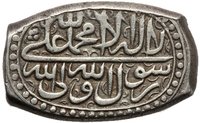
Obverse
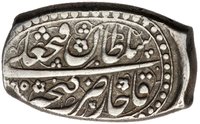
Reverse
Edge
Plain
Mints
| Name | Mark |
|---|---|
| Ganja | — |
Mintings
| Year | Mint Mark | Mintage | Quality | Collection |
|---|---|---|---|---|
| 1801 | — | — |
Historical background
In 1801, the currency situation in the Ganja Khanate was a direct reflection of its precarious political position, caught between the waning influence of the Persian Qajar Empire and the expanding imperial ambitions of the Russian Empire. The monetary system was not nationally unified but was instead a complex and fragmented mix of coins in circulation. The most prominent were Persian silver abbasis and shahis, alongside a variety of Ottoman, Russian, and even older Safavid-era coins, all valued by their intrinsic silver or copper content rather than a stable face value from a central mint. This heterogeneity created a chaotic commercial environment, requiring constant assay and leading to significant transaction friction.
The khanate's own minting capacity was limited and inconsistent. While some Ganja khans, such as Javad Khan (reigning at the time), occasionally struck crude local coins bearing their names, these issues were insufficient in volume and quality to dominate the economy. The primary function of these local coins was often to demonstrate a degree of sovereignty and to facilitate local tax collection and military payroll, rather than to standardize commerce. Consequently, the monetary supply was largely dependent on the inflow and outflow of foreign specie, making the economy vulnerable to regional trade shifts and the political demands of more powerful neighbors.
This unstable monetary landscape reached its crisis point in 1801, as the khanate became a focal point of the Russo-Persian wars. The increased presence of Russian troops and the demands of war financing further strained the ad-hoc system. The situation was resolved abruptly by geopolitical conquest rather than monetary reform: in January 1804, following a siege, Russian forces captured Ganja, formally annexing the khanate. The Russian Imperial government subsequently abolished the local currency, integrating the territory into the Russian monetary system and ending the Ganja Khanate's distinct, if dysfunctional, currency era.
The khanate's own minting capacity was limited and inconsistent. While some Ganja khans, such as Javad Khan (reigning at the time), occasionally struck crude local coins bearing their names, these issues were insufficient in volume and quality to dominate the economy. The primary function of these local coins was often to demonstrate a degree of sovereignty and to facilitate local tax collection and military payroll, rather than to standardize commerce. Consequently, the monetary supply was largely dependent on the inflow and outflow of foreign specie, making the economy vulnerable to regional trade shifts and the political demands of more powerful neighbors.
This unstable monetary landscape reached its crisis point in 1801, as the khanate became a focal point of the Russo-Persian wars. The increased presence of Russian troops and the demands of war financing further strained the ad-hoc system. The situation was resolved abruptly by geopolitical conquest rather than monetary reform: in January 1804, following a siege, Russian forces captured Ganja, formally annexing the khanate. The Russian Imperial government subsequently abolished the local currency, integrating the territory into the Russian monetary system and ending the Ganja Khanate's distinct, if dysfunctional, currency era.
✨ Legendary