

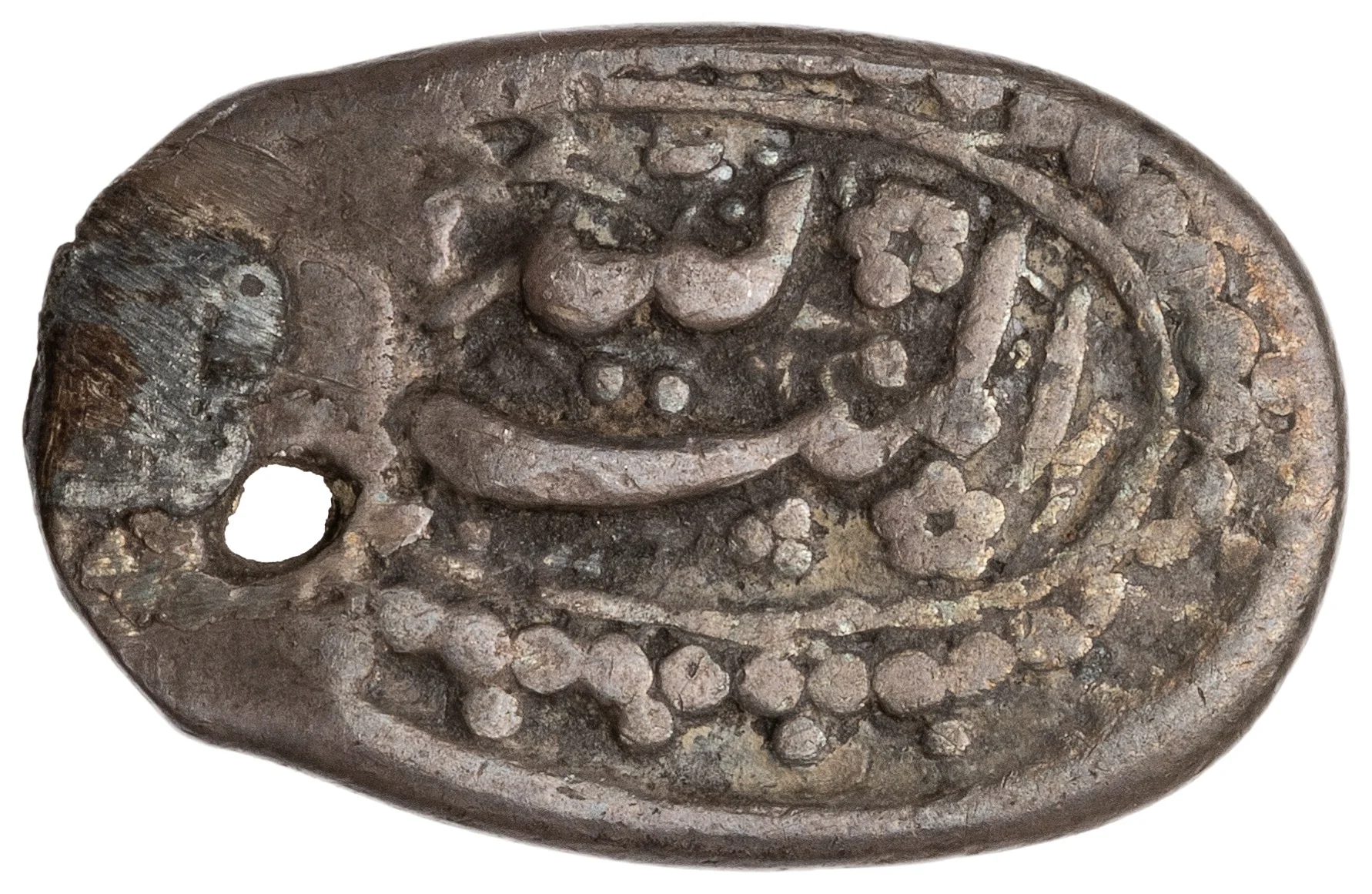
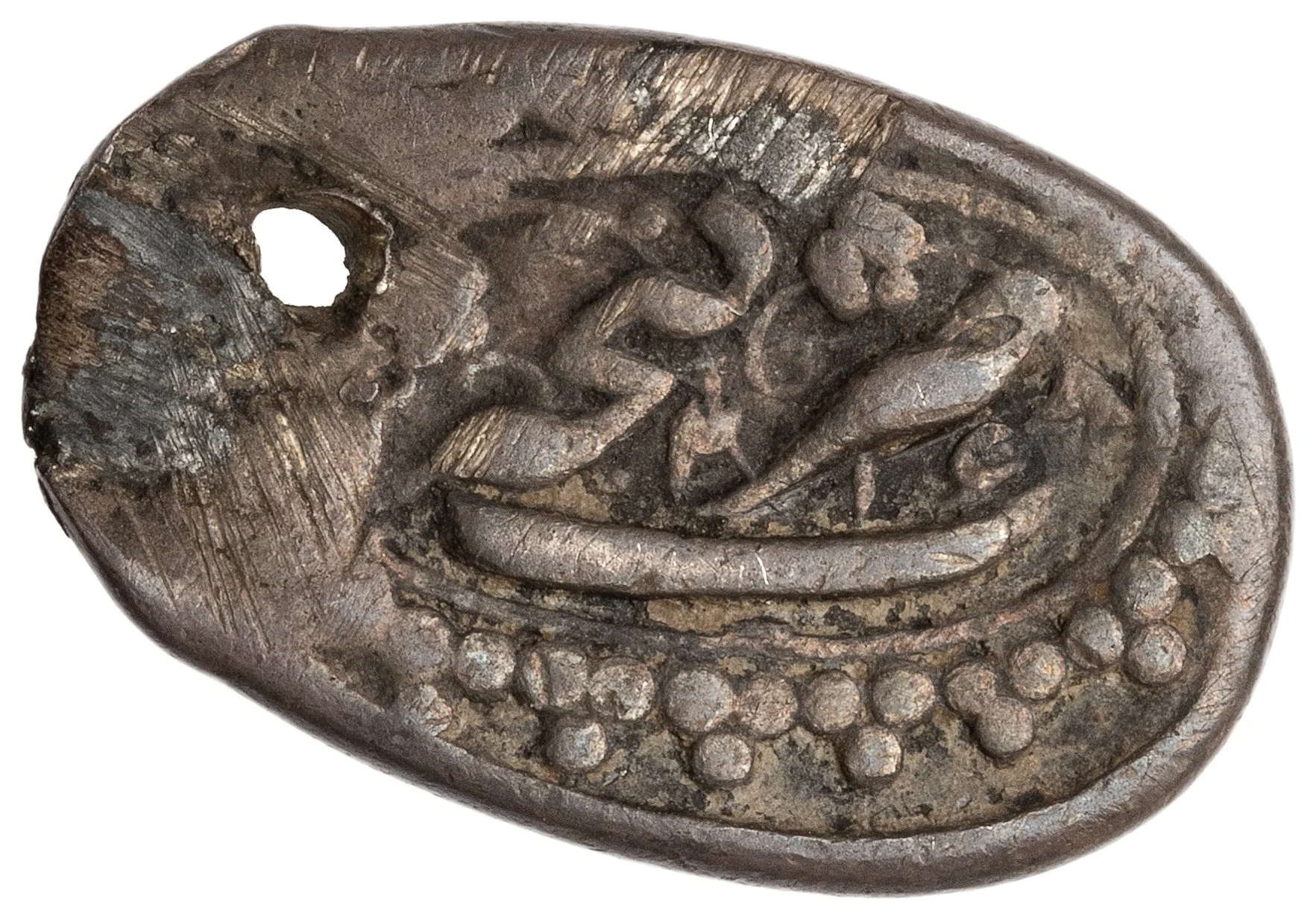
½ Abbasi – Ganja Khanate
Context
Year: 1802
Islamic (Hijri) Year: 1216
Country: Caucasia
Issuer: Ganja Khanate
Currency:
Demonetized: Yes
Material
References
Numista: #197835
Value
Bullion value: $4.15
Obverse
Reverse
Edge
Plain
Mints
| Name | Mark |
|---|---|
| Ganja | — |
Mintings
| Year | Mint Mark | Mintage | Quality | Collection |
|---|---|---|---|---|
| 1802 | — | — |
Historical background
In 1802, the Ganja Khanate, a semi-autonomous Georgian principality under the nominal suzerainty of the Persian Qajar dynasty, operated within a complex and fragmented monetary environment. Its economy was fundamentally shaped by its geopolitical position as a crossroads between the Russian and Ottoman Empires and Persia. Consequently, the currency in circulation was not a unified system issued by the Khanate itself, but a diverse mixture of foreign coins. The most prominent were Russian silver rubles and kopecks, Persian silver abbasis and copper puls, and to a lesser extent, Ottoman kurush and para. This multiplicity created constant challenges for trade and taxation, requiring local merchants and officials to be adept at assessing the weight, purity, and fluctuating exchange rates of various coins.
The internal economy remained heavily reliant on a combination of barter for local agricultural goods and the use of low-value copper coins for everyday market transactions. The Khanate's authority, under Javad Khan, did not extend to minting its own significant silver currency, which was a traditional symbol of sovereignty in the region. Instead, the state's revenue, derived from land taxes and customs duties on the lucrative trade routes passing through its territory, was collected in this heterogeneous mix of specie. This lack of a centralized monetary policy left the Khanate vulnerable to economic pressures from its more powerful neighbors, whose political ambitions directly influenced the flow and stability of currency.
This unstable monetary situation was a microcosm of the Khanate's precarious independence. By 1802, tensions with the Russian Empire were escalating, culminating in the Russian assault and annexation of Ganja in early 1804. The currency chaos reflected the Khanate's transitional and vulnerable state—no longer fully integrated into the Persian monetary sphere, yet not absorbed into the Russian system. The diverse coins in the bazaars of Ganja in 1802 were, therefore, tangible symbols of its contested sovereignty and the looming imperial confrontation that would soon determine its fate.
The internal economy remained heavily reliant on a combination of barter for local agricultural goods and the use of low-value copper coins for everyday market transactions. The Khanate's authority, under Javad Khan, did not extend to minting its own significant silver currency, which was a traditional symbol of sovereignty in the region. Instead, the state's revenue, derived from land taxes and customs duties on the lucrative trade routes passing through its territory, was collected in this heterogeneous mix of specie. This lack of a centralized monetary policy left the Khanate vulnerable to economic pressures from its more powerful neighbors, whose political ambitions directly influenced the flow and stability of currency.
This unstable monetary situation was a microcosm of the Khanate's precarious independence. By 1802, tensions with the Russian Empire were escalating, culminating in the Russian assault and annexation of Ganja in early 1804. The currency chaos reflected the Khanate's transitional and vulnerable state—no longer fully integrated into the Persian monetary sphere, yet not absorbed into the Russian system. The diverse coins in the bazaars of Ganja in 1802 were, therefore, tangible symbols of its contested sovereignty and the looming imperial confrontation that would soon determine its fate.

✨ Legendary