

10 Paisa – Nepal
Nepal
Context
Years: 1953–1955
Issuer: Nepal 
Ruler: Tribhuvan Bir Bikram Shah
Currency:
(since 1932)
Demonetized: Yes
Material
References
KM: #Click to copy to clipboard737
Numista: #19730
Value
Exchange value: 0.10 NPR
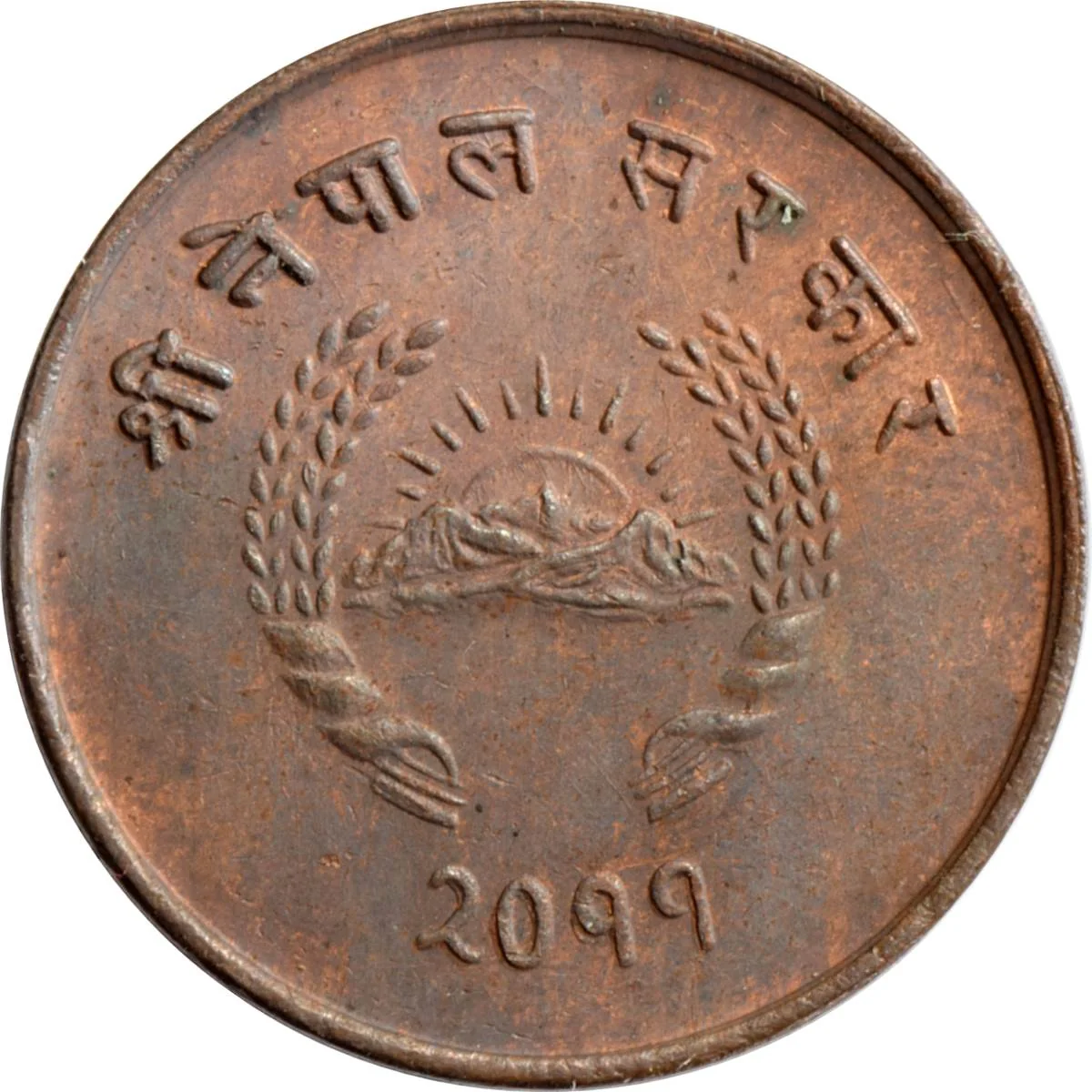
Obverse
Description:
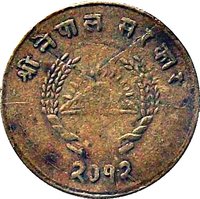
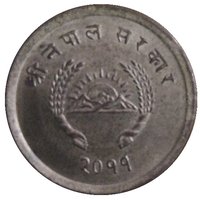
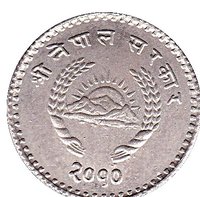
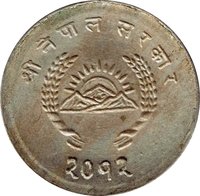
Sun rising over three hills amid grain sprigs.
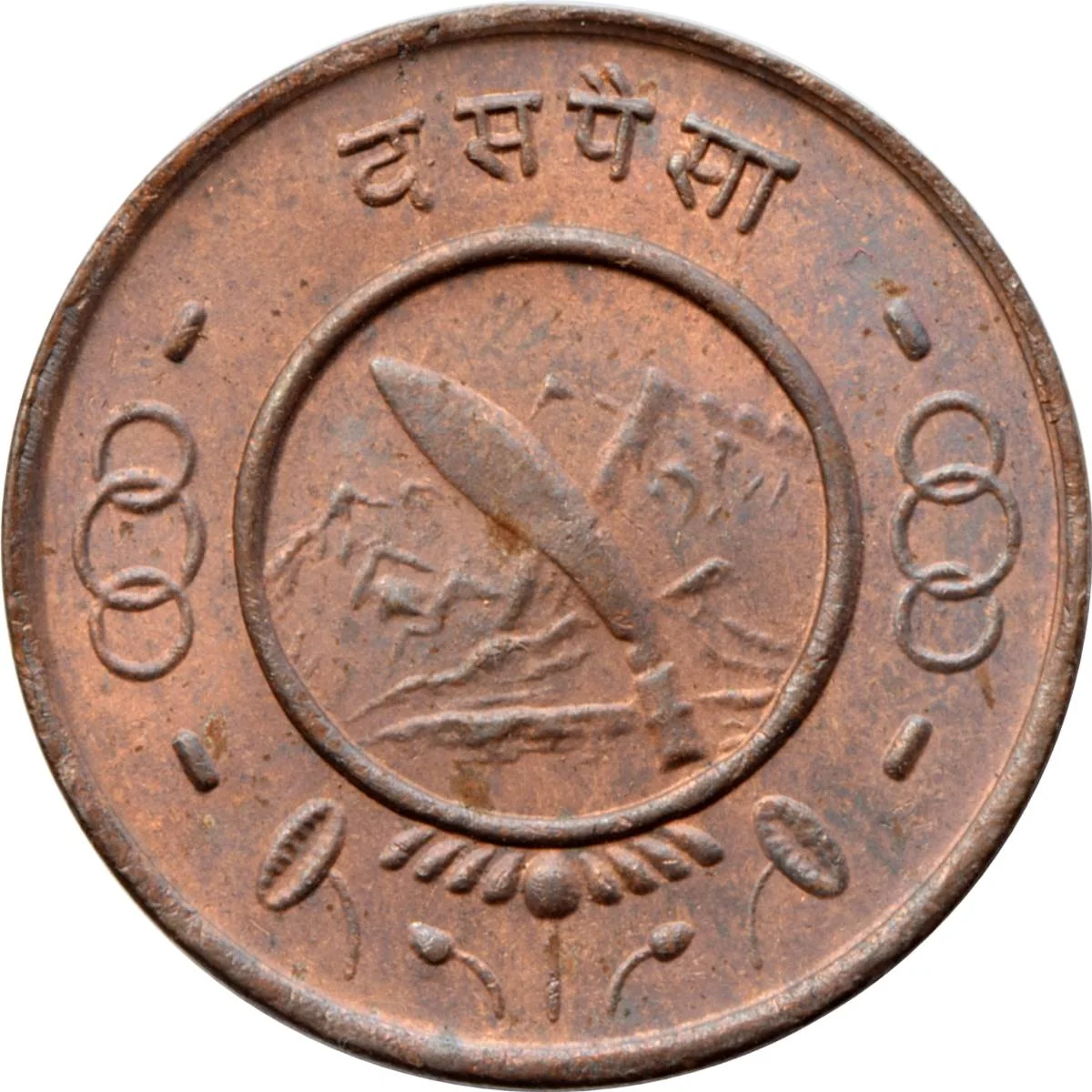
Reverse
Description:
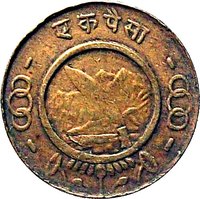
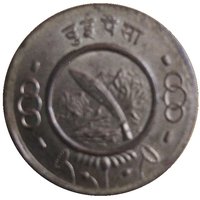
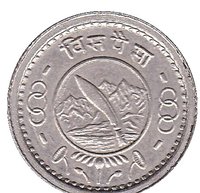
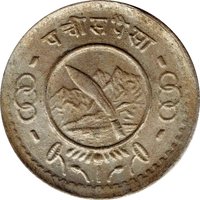
Dagger before three hills, encircled.
Edge
Plain
Mintings
| Year | Mint Mark | Mintage | Quality | Collection |
|---|---|---|---|---|
| 1953 | — | — | ||
| 1954 | — | — | ||
| 1955 | — | — |
Historical background
In 1953, Nepal's currency situation was characterized by a complex and transitional monetary system, heavily influenced by its historical ties to India and its own efforts to establish sovereignty. The dominant currency in circulation remained the Indian Rupee, a legacy of the 1924 Nepal-India Treaty that had formally pegged the Nepalese Rupee (NPR) to its Indian counterpart. This meant the NPR was not an independent fiat currency but was backed by and freely convertible with Indian currency, which was used extensively, especially in the southern Terai region and for significant trade. Concurrently, the silver Mohar from the Rana period still circulated, particularly in more remote hill areas, creating a dual-currency environment.
This period fell within the early years of the post-Rana era following the 1951 revolution, a time when the new government sought to modernize the state's institutions. A key development was the establishment of the Nepal Rastra Bank in 1956, which was being planned in 1953. The monetary system of 1953 was therefore on the cusp of major reform, still operating under the old, India-dependent framework while policymakers drafted laws to create a central bank and assert greater national control over currency issuance and monetary policy.
The reliance on Indian currency facilitated cross-border trade but also meant Nepal had little autonomous monetary policy, with its money supply and value effectively determined by the Reserve Bank of India. This interdependence was a point of both practical convenience and political concern for a nation freshly asserting its independent identity. Thus, the currency situation in 1953 was one of lingering colonial-era structures, awaiting the formal institutional changes that would begin to redefine Nepal's financial sovereignty in the latter half of the decade.
This period fell within the early years of the post-Rana era following the 1951 revolution, a time when the new government sought to modernize the state's institutions. A key development was the establishment of the Nepal Rastra Bank in 1956, which was being planned in 1953. The monetary system of 1953 was therefore on the cusp of major reform, still operating under the old, India-dependent framework while policymakers drafted laws to create a central bank and assert greater national control over currency issuance and monetary policy.
The reliance on Indian currency facilitated cross-border trade but also meant Nepal had little autonomous monetary policy, with its money supply and value effectively determined by the Reserve Bank of India. This interdependence was a point of both practical convenience and political concern for a nation freshly asserting its independent identity. Thus, the currency situation in 1953 was one of lingering colonial-era structures, awaiting the formal institutional changes that would begin to redefine Nepal's financial sovereignty in the latter half of the decade.
Series: 1953 Nepal circulation coins
🌱 Fairly Common