

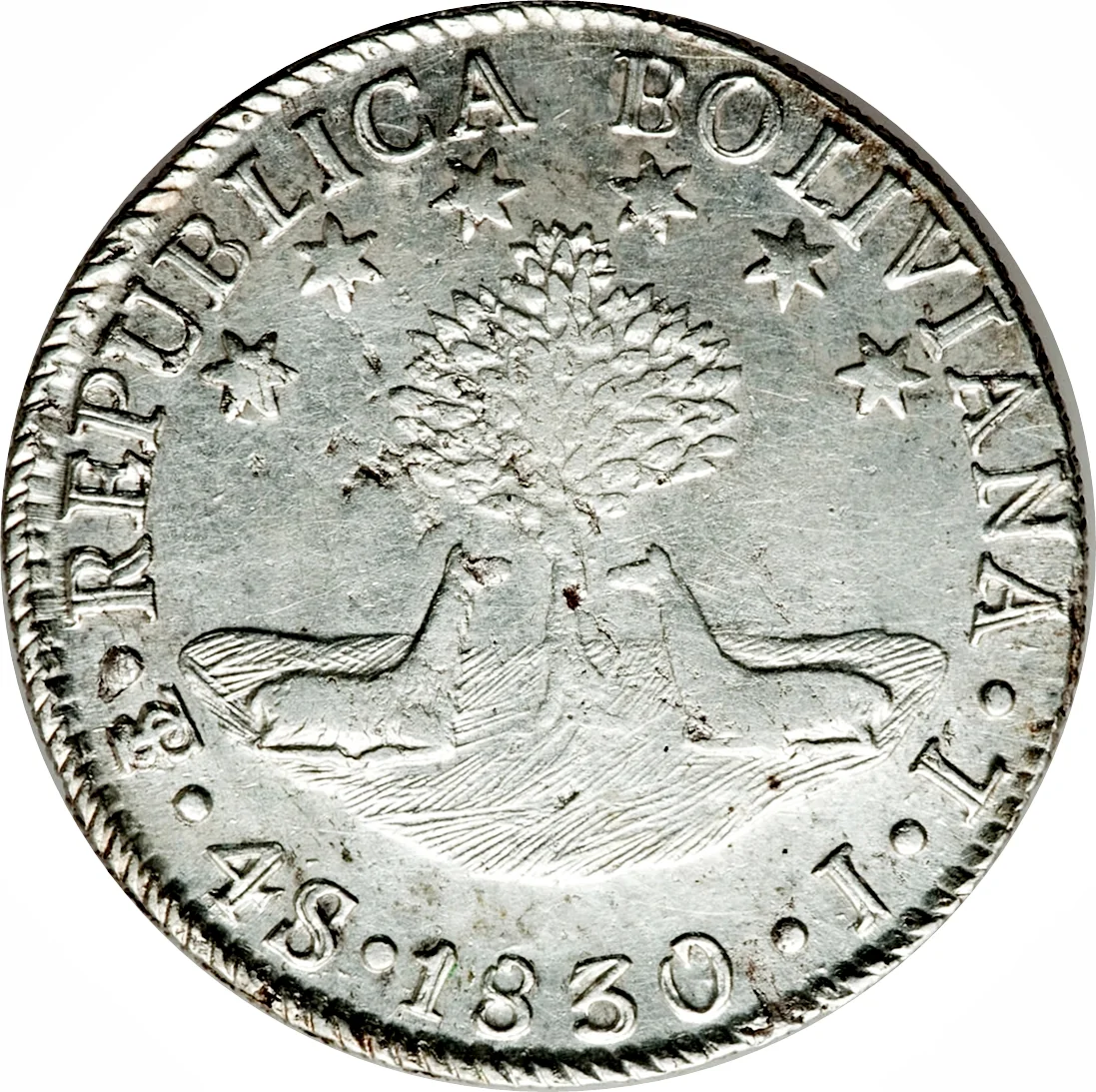
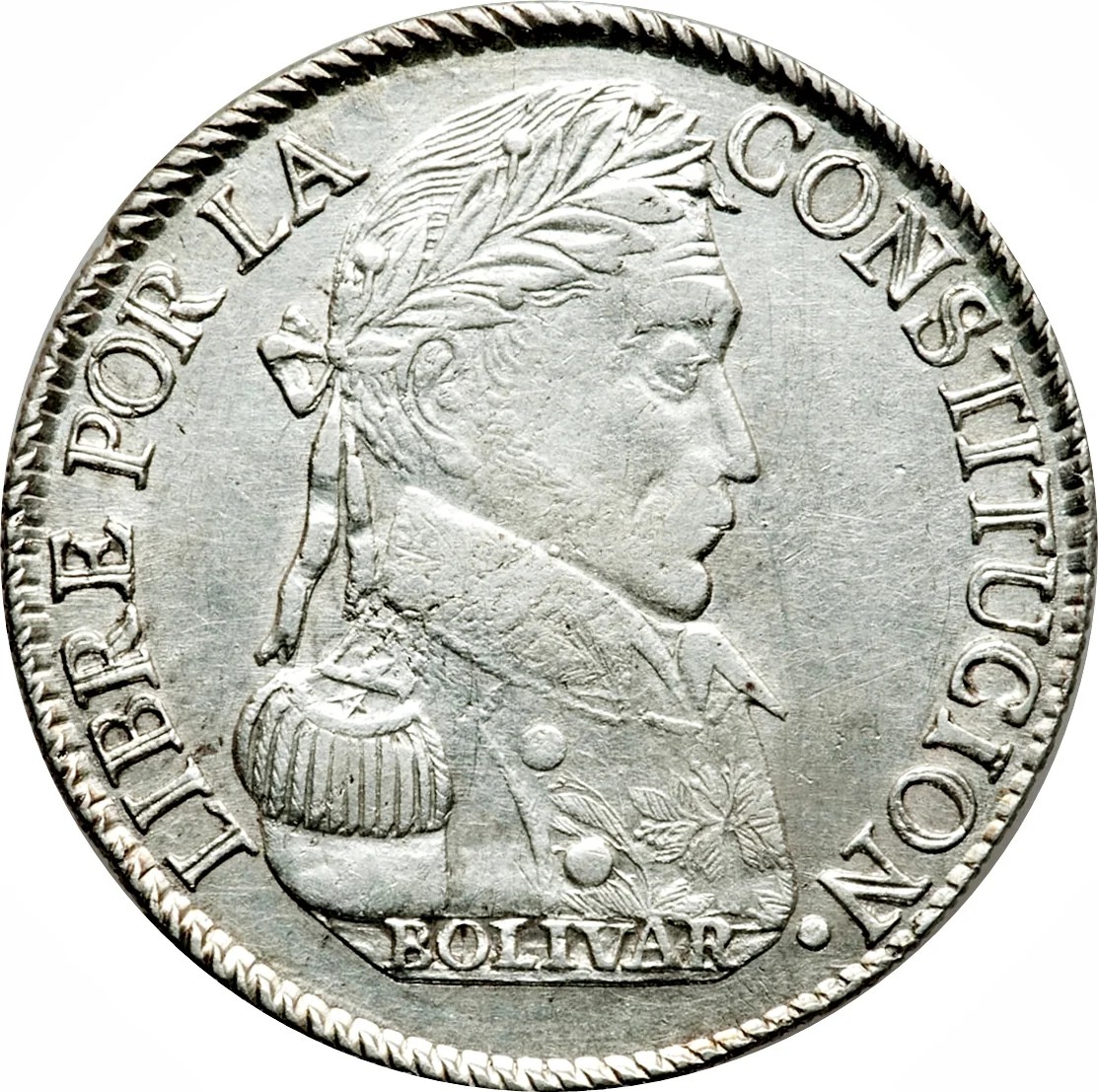
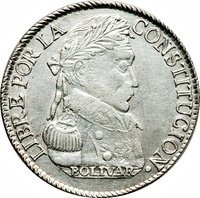
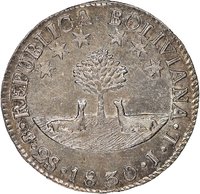
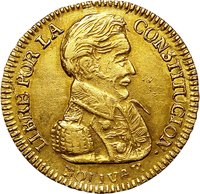
Obverse
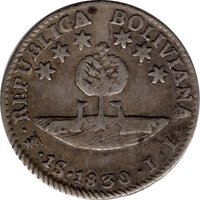
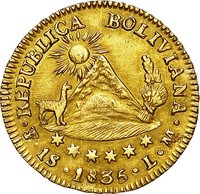
Reverse
Edge
Reeded
Categories
| Animal> Camel |
| Person> Military leader |
| Person> Politician |
| Plant> Tree |
| Symbol> Wreath |
Mintings
| Year | Mint Mark | Mintage | Quality | Collection |
|---|---|---|---|---|
| 1830 | OR | — | ||
| 1830 | PTS | — |
Historical background
In the aftermath of the Wars of Independence, Bolivia entered the 1830s with a fragmented and chaotic monetary system. The country lacked a unified national currency, leading to a complex circulation of diverse coins. The most prominent were Spanish colonial silver coins, such as pesos and reales from the Potosí mint, which remained in use due to their intrinsic silver value and public trust. Alongside these, coins from neighboring republics like Peru, and even counterstamped or cut foreign coins, circulated freely, creating a confusing and inefficient medium for commerce.
This monetary plurality was a direct reflection of Bolivia's economic fragility and the collapse of the colonial fiscal structure. The state treasury, depleted by war and ongoing internal political instability, had limited capacity to regulate currency or establish a central mint. Consequently, the value of transactions often relied on the weight and purity of the silver in the coins rather than their face value, a practice that facilitated trade but hindered economic planning and state-building efforts. The economy remained heavily dependent on silver mining, and the currency in circulation was essentially a direct extension of that mineral wealth.
Recognizing the need for monetary sovereignty and order, the government of President Andrés de Santa Cruz undertook a significant reform during this period. In 1831, a crucial decree was issued to establish a new national monetary system, leading to the minting of Bolivia's first distinct republican coins. These new coins, featuring national symbols, began to be produced at the revitalized Potosí mint, aiming to gradually replace the heterogeneous mix of old and foreign currencies and assert economic sovereignty for the young nation.
This monetary plurality was a direct reflection of Bolivia's economic fragility and the collapse of the colonial fiscal structure. The state treasury, depleted by war and ongoing internal political instability, had limited capacity to regulate currency or establish a central mint. Consequently, the value of transactions often relied on the weight and purity of the silver in the coins rather than their face value, a practice that facilitated trade but hindered economic planning and state-building efforts. The economy remained heavily dependent on silver mining, and the currency in circulation was essentially a direct extension of that mineral wealth.
Recognizing the need for monetary sovereignty and order, the government of President Andrés de Santa Cruz undertook a significant reform during this period. In 1831, a crucial decree was issued to establish a new national monetary system, leading to the minting of Bolivia's first distinct republican coins. These new coins, featuring national symbols, began to be produced at the revitalized Potosí mint, aiming to gradually replace the heterogeneous mix of old and foreign currencies and assert economic sovereignty for the young nation.
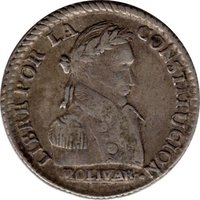
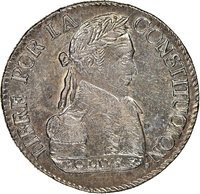
🌱 Fairly Common