

Obverse
Description:
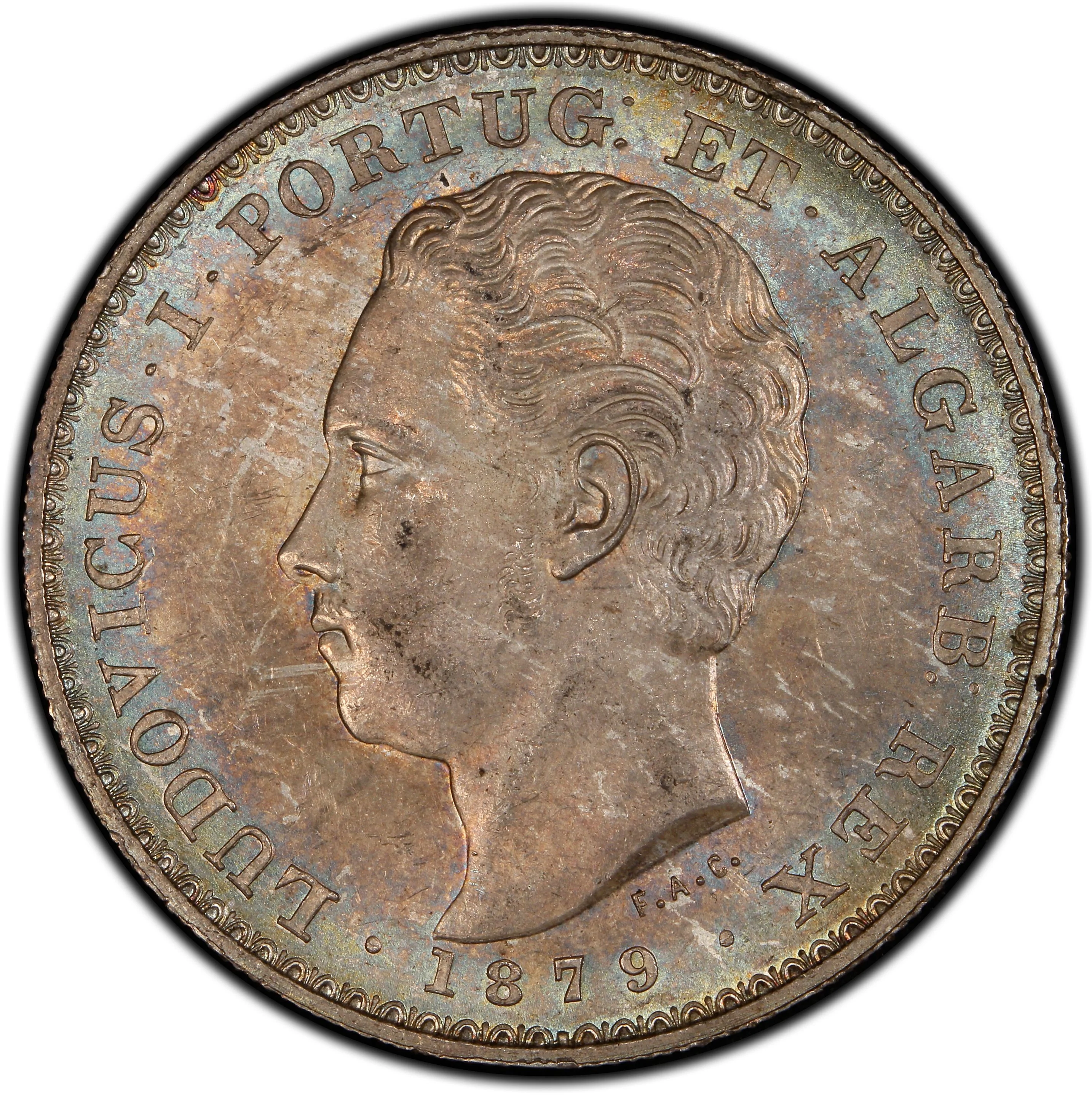
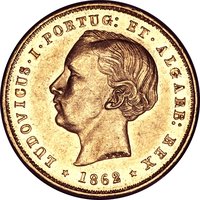
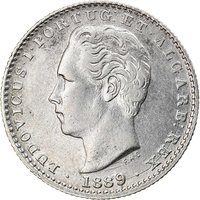
Portrait of King Luís I of Portugal.
Inscription:
LUDOVICUS·I·PORTUG: ET·ALGARB: REX
F.A.C.
· 1879 ·
F.A.C.
· 1879 ·
Translation:
Louis I of Portugal and the Algarve, King
By the Grace of God
1879
By the Grace of God
1879
Script: Latin
Languages: Portuguese, Latin
Engraver: Frederico Augusto de Campos
Reverse
Description:
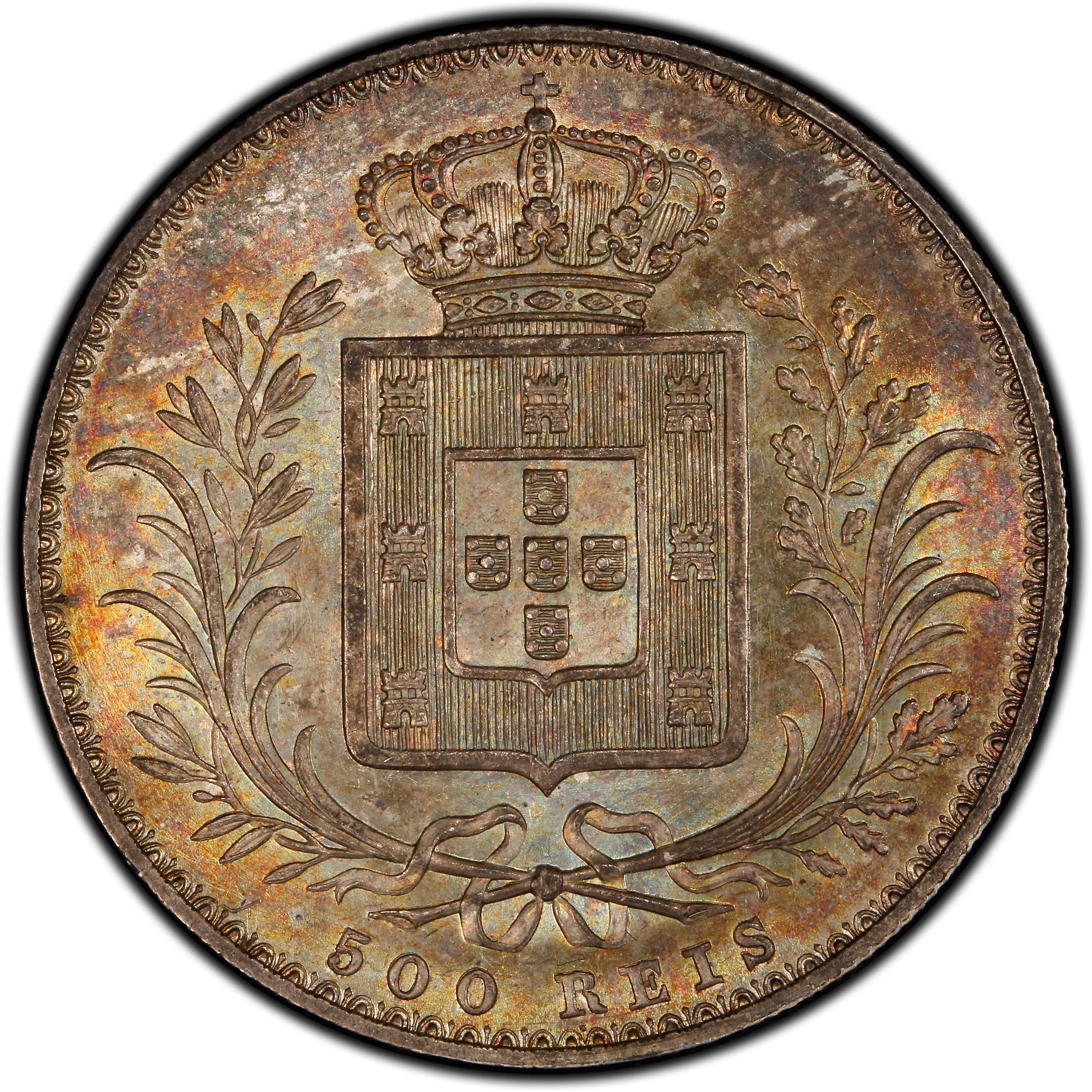
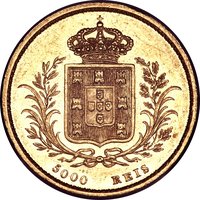
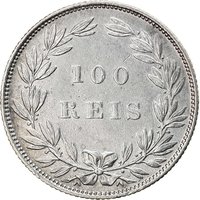
The Portuguese coat of arms crowned and wreathed.
Inscription:
500 REIS
Script: Latin
Engraver: Frederico Augusto de Campos
Edge
Reeded
Mints
| Name | Mark |
|---|---|
| Imprensa Nacional - Casa da Moeda | — |
Mintings
| Year | Mint Mark | Mintage | Quality | Collection |
|---|---|---|---|---|
| 1863 | — | 148,000 | ||
| 1864 | — | 341,000 | ||
| 1865 | — | 406,000 | ||
| 1866 | — | 378,000 | ||
| 1867 | — | 450,000 | ||
| 1868 | — | 388,000 | ||
| 1870 | — | 314,000 | ||
| 1871 | — | 228,000 | ||
| 1871 | — | — | Proof | |
| 1872 | — | 576,000 | ||
| 1875 | — | 140,000 | ||
| 1875 | — | — | Proof | |
| 1876 | — | 280,000 | ||
| 1877 | — | 50,000 | ||
| 1877 | — | — | Proof | |
| 1879 | — | 788,000 | ||
| 1879 | — | — | Proof | |
| 1886 | — | 300,000 | ||
| 1887 | — | 432,000 | ||
| 1888 | — | 2,740,000 | ||
| 1888 | — | — | Proof | |
| 1889 | — | — | Proof | |
| 1889 | — | 960,000 |
Historical background
In 1863, Portugal's currency situation was characterized by a complex and fragmented monetary system, reflecting the nation's economic challenges and colonial ambitions. The official currency was the Portuguese real (plural: réis), a decimal system established in the 1830s. However, the system was strained by chronic state deficits, heavy public debt, and the circulation of a wide variety of both domestic and foreign coins. Notably, gold coins were scarce in everyday transactions, with lower-value silver and copper coins forming the bulk of the circulating medium, alongside even privately issued tokens.
This period was also defined by Portugal's commitment to the Latin Monetary Union (LMU), which it would formally join in 1867. The 1860s were a preparatory phase, as the government worked to align its coinage with the Union's bimetallic standard, based on fixed ratios of gold and silver. A key step was the 1863 issuance of new, high-quality silver coins like the 1000 réis crown, minted to precise LMU specifications in weight and fineness. This move aimed to facilitate trade with more economically powerful European neighbors, particularly France, by creating interchangeable currency.
Despite these modernizing efforts, the underlying economy remained weak. The reliance on bimetallism became increasingly problematic as the global value of silver began its long decline, threatening the fixed ratio with gold. Furthermore, the proliferation of paper money, issued by both the government and private banks, often exceeded metallic reserves, leading to occasional distrust and instability. Thus, 1863 captures Portugal at a monetary crossroads—actively shaping a modern, European-standard currency system while grappling with the fiscal and structural weaknesses that would continue to challenge its economy.
This period was also defined by Portugal's commitment to the Latin Monetary Union (LMU), which it would formally join in 1867. The 1860s were a preparatory phase, as the government worked to align its coinage with the Union's bimetallic standard, based on fixed ratios of gold and silver. A key step was the 1863 issuance of new, high-quality silver coins like the 1000 réis crown, minted to precise LMU specifications in weight and fineness. This move aimed to facilitate trade with more economically powerful European neighbors, particularly France, by creating interchangeable currency.
Despite these modernizing efforts, the underlying economy remained weak. The reliance on bimetallism became increasingly problematic as the global value of silver began its long decline, threatening the fixed ratio with gold. Furthermore, the proliferation of paper money, issued by both the government and private banks, often exceeded metallic reserves, leading to occasional distrust and instability. Thus, 1863 captures Portugal at a monetary crossroads—actively shaping a modern, European-standard currency system while grappling with the fiscal and structural weaknesses that would continue to challenge its economy.
🌱 Common