

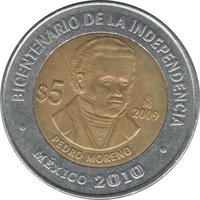
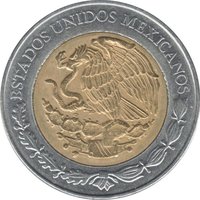
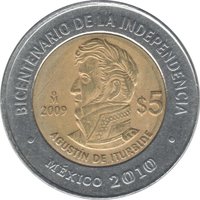
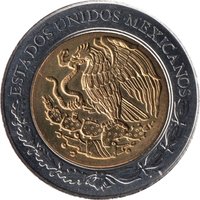
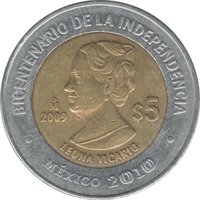
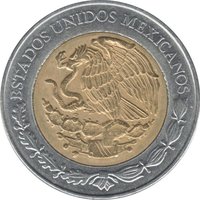
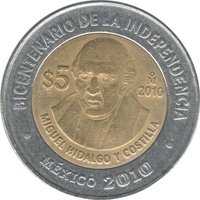
5 Pesos (Independence) – Mexico
Circulating commemorative coins
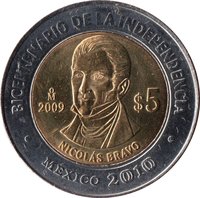
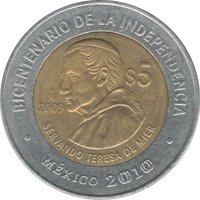
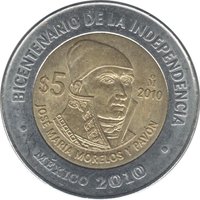
Commemoration: Independence bicentenary
Series: Bicentenary of Independence
Mexico
Context
Material
References
KM: #Click to copy to clipboard910
Numista: #19646
Value
Exchange value: 5 MXN = $0.29
Inflation-adjusted value: 10.06 MXN
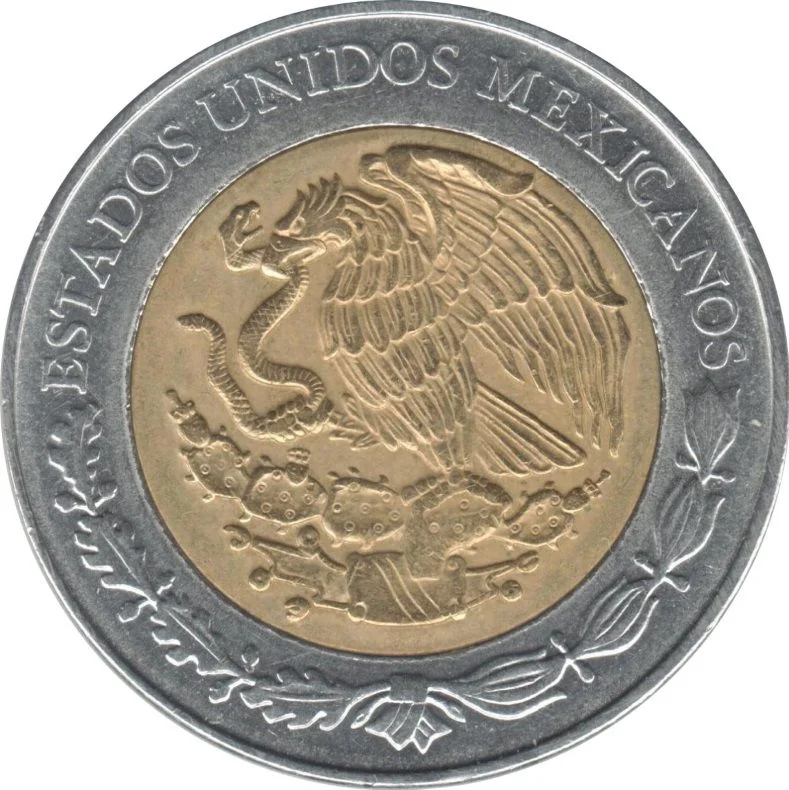
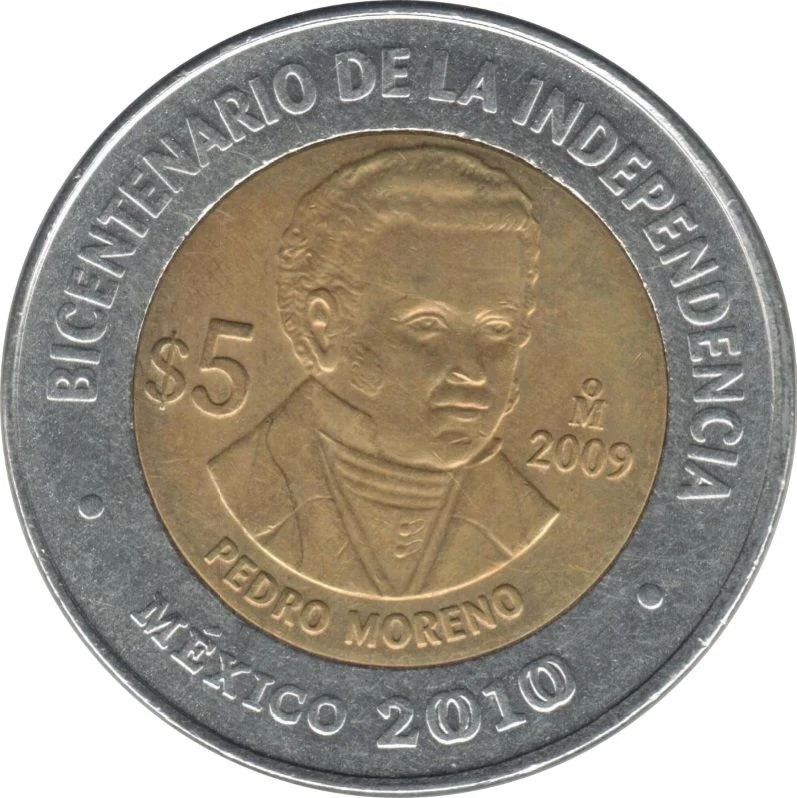
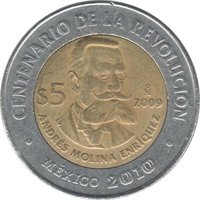
Obverse
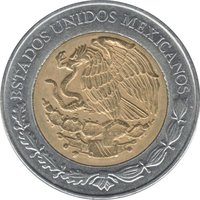
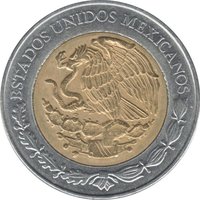
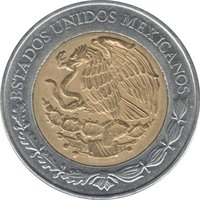
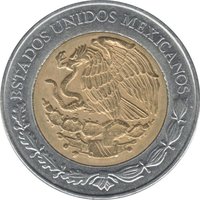
Reverse
Edge
Plain
Categories
| Event> Independence |
Mints
| Name | Mark |
|---|---|
| Mexican Mint | Mo |
Historical background
In 2009, Mexico's currency, the peso (MXN), faced severe pressure as the global financial crisis triggered a profound economic shock. The crisis caused a collapse in global trade and a sharp drop in oil prices, striking at two pillars of the Mexican economy: manufacturing exports and petroleum revenue, which accounted for a significant portion of government income. This external shock was compounded by a dramatic reduction in capital flows to emerging markets and a decline in remittances from Mexicans working abroad, leading to a sharp contraction in GDP and a growing current account deficit.
The peso's value plummeted dramatically, losing approximately 25% of its value against the US dollar in the first quarter of 2009 alone. This depreciation was exacerbated by a global "flight to safety," where investors sought the security of the US dollar, and by specific domestic anxieties. Notably, a swine flu (H1N1) outbreak in April 2009 further crippled tourism and domestic activity, adding to the peso's weakness. The central bank, Banco de México, intervened to stabilize the currency through a daily dollar auction program initiated in October 2008, selling billions of dollars from its reserves to provide liquidity and curb excessive volatility.
By the second half of 2009, the peso began a gradual recovery as global risk appetite slowly returned and the Mexican government secured a $47 billion Flexible Credit Line from the International Monetary Fund, which bolstered market confidence. Domestically, the central bank cut interest rates aggressively to stimulate the faltering economy, which also helped to ease some pressure on the currency. The 2009 episode highlighted the Mexican economy's vulnerability to external shocks and the peso's sensitivity to global financial sentiment, setting the stage for subsequent reforms aimed at strengthening economic buffers and reducing dependence on oil revenues.
The peso's value plummeted dramatically, losing approximately 25% of its value against the US dollar in the first quarter of 2009 alone. This depreciation was exacerbated by a global "flight to safety," where investors sought the security of the US dollar, and by specific domestic anxieties. Notably, a swine flu (H1N1) outbreak in April 2009 further crippled tourism and domestic activity, adding to the peso's weakness. The central bank, Banco de México, intervened to stabilize the currency through a daily dollar auction program initiated in October 2008, selling billions of dollars from its reserves to provide liquidity and curb excessive volatility.
By the second half of 2009, the peso began a gradual recovery as global risk appetite slowly returned and the Mexican government secured a $47 billion Flexible Credit Line from the International Monetary Fund, which bolstered market confidence. Domestically, the central bank cut interest rates aggressively to stimulate the faltering economy, which also helped to ease some pressure on the currency. The 2009 episode highlighted the Mexican economy's vulnerability to external shocks and the peso's sensitivity to global financial sentiment, setting the stage for subsequent reforms aimed at strengthening economic buffers and reducing dependence on oil revenues.
Series: Bicentenary of Independence
🌱 Common