

1 shilingi – Tanzania
Add to wishlist
Tanzania
Obverse
Description:
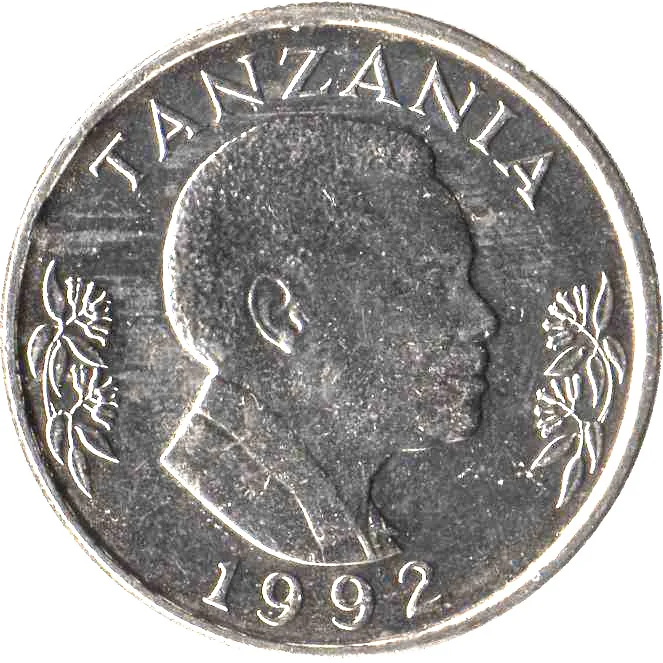
President Mwinyi facing right, flanked by flowers, production year below.
Inscription:
TANZANIA 1992
Script: Latin
Reverse
Description:
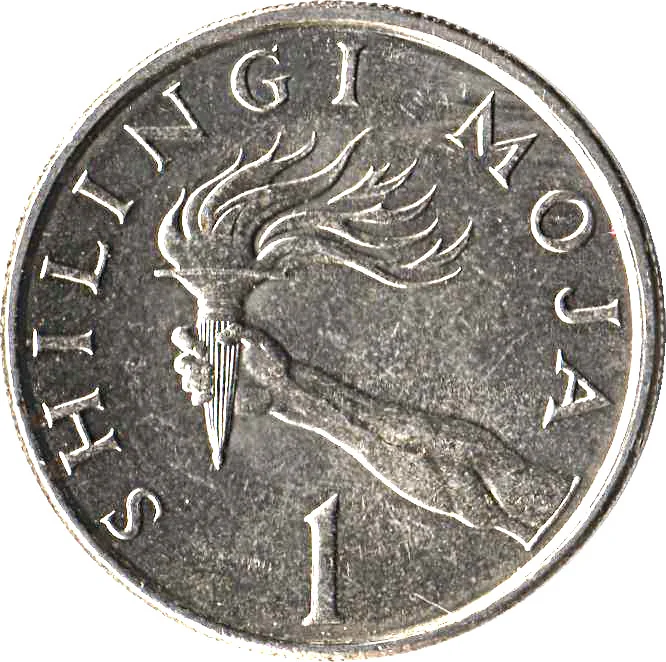
Torch in hand, value.
Inscription:
1 SHILINGI MOJA
Translation:
One Shilling
Script: Latin
Language: Swahili
Engraver: Christopher Ironside
Edge
Reeded
Categories
| Person> Politician |
| Symbol> Hand |
Mints
| Name | Mark |
|---|---|
| Royal Canadian Mint of Winnipeg | — |
| Royal Mint | — |
Mintings
| Year | Mint Mark | Mintage | Quality | Collection |
|---|---|---|---|---|
| 1987 | — | 5,000,000 | ||
| 1988 | — | 10,000,000 | ||
| 1989 | — | — | ||
| 1990 | — | — | ||
| 1991 | — | — | ||
| 1992 | — | — |
Historical background
In 1987, Tanzania was in the midst of a profound economic crisis, largely stemming from the failure of its post-independence Ujamaa (African socialist) policies. The state-controlled economy, characterized by inefficient parastatals, a collapse in agricultural export production, and severe foreign exchange shortages, had led to chronic deficits and high inflation. A parallel black market for foreign currency thrived, where the Tanzanian shilling traded at a fraction of its official, grossly overvalued rate, crippling formal trade and investment. This period represented the culmination of years of economic decline, prompting intense pressure from the International Monetary Fund (IMF) and World Bank for structural adjustment.
The government of President Ali Hassan Mwinyi, who had initiated a policy of economic liberalization (Uongozi wa Mageuzi), was engaged in difficult negotiations with the IMF throughout 1987. A key prerequisite for securing vital balance-of-payments support was a major currency devaluation and the unification of the exchange rate system. While a series of gradual devaluations had occurred earlier in the decade, the official rate remained artificially high. The situation was unsustainable, with the black-market premium exceeding 300%, meaning the currency needed a drastic, one-off correction to reflect its true market value.
Consequently, 1987 was a pivotal year of preparation for a fundamental shift. The government was laying the groundwork for the decisive economic reforms that would be implemented in the following years, most notably the significant devaluation and move toward a floating exchange rate in 1988. Therefore, the currency situation in 1987 was one of extreme distortion and scarcity, marking the final phase of a discredited system and setting the stage for the painful but necessary structural adjustments that would begin to integrate Tanzania into the global market economy.
The government of President Ali Hassan Mwinyi, who had initiated a policy of economic liberalization (Uongozi wa Mageuzi), was engaged in difficult negotiations with the IMF throughout 1987. A key prerequisite for securing vital balance-of-payments support was a major currency devaluation and the unification of the exchange rate system. While a series of gradual devaluations had occurred earlier in the decade, the official rate remained artificially high. The situation was unsustainable, with the black-market premium exceeding 300%, meaning the currency needed a drastic, one-off correction to reflect its true market value.
Consequently, 1987 was a pivotal year of preparation for a fundamental shift. The government was laying the groundwork for the decisive economic reforms that would be implemented in the following years, most notably the significant devaluation and move toward a floating exchange rate in 1988. Therefore, the currency situation in 1987 was one of extreme distortion and scarcity, marking the final phase of a discredited system and setting the stage for the painful but necessary structural adjustments that would begin to integrate Tanzania into the global market economy.
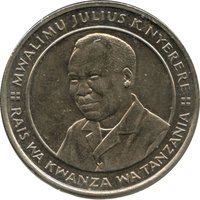
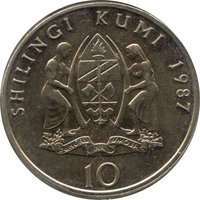
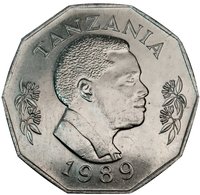
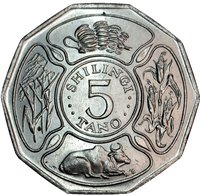
Series: 1987 Tanzania circulation coins
🌱 Very Common