

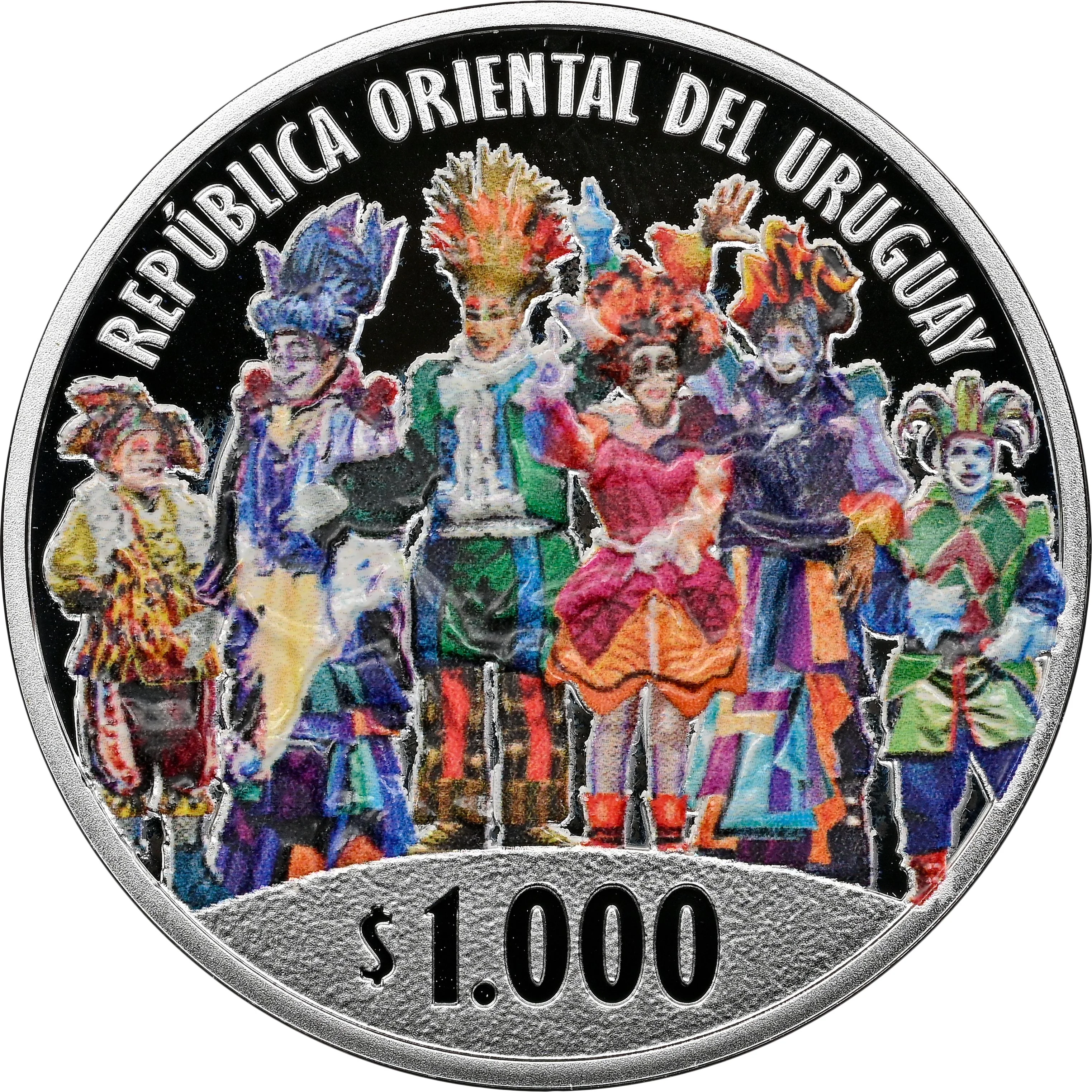
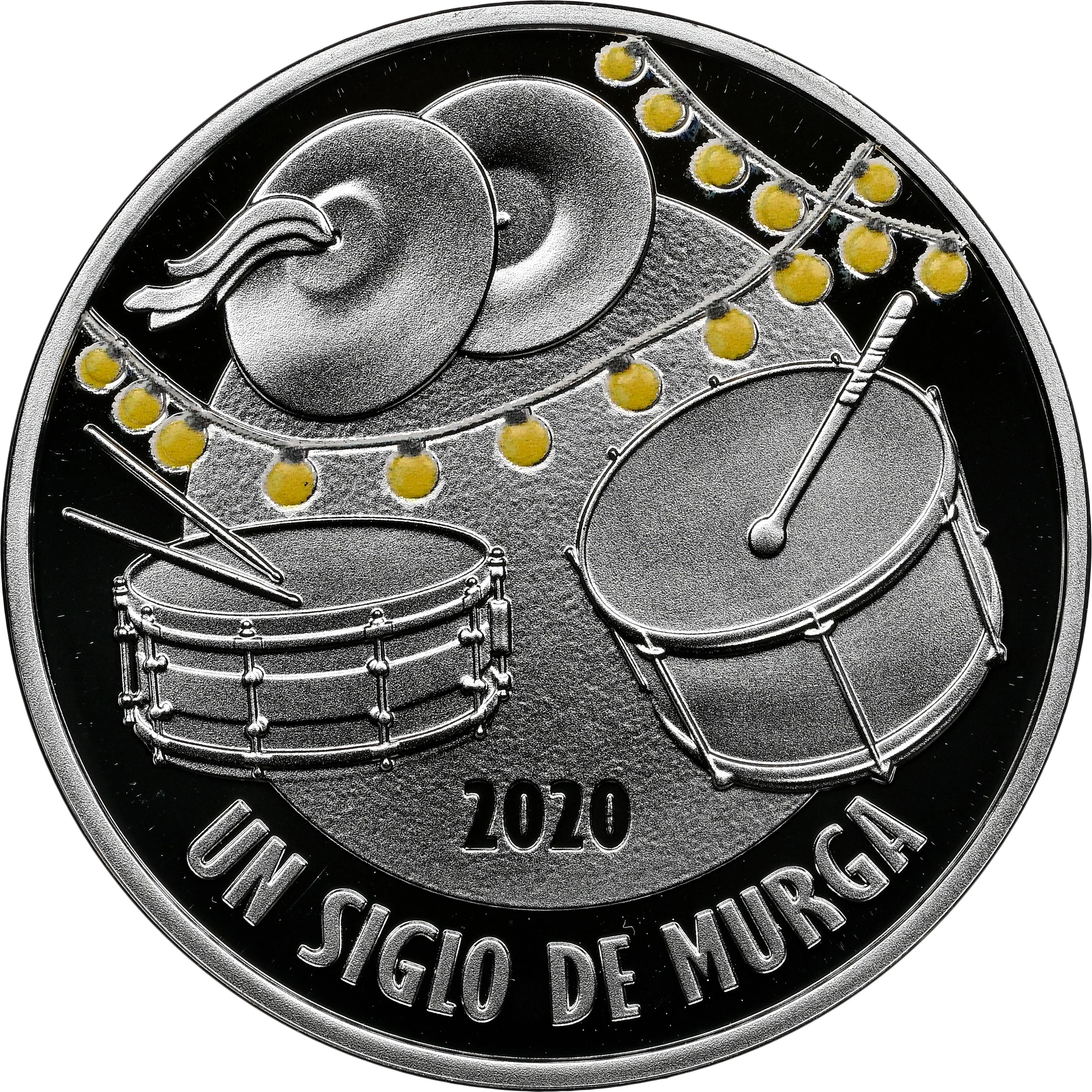
1000 pesos uruguayos (Murga) – Uruguay
Add to wishlist
Circulating commemorative coins
Commemoration: 100 years of Murga
Uruguay

Obverse
Reverse
Edge
Plain
Mints
| Name | Mark |
|---|---|
| Mint of Poland | — |
Mintings
| Year | Mint Mark | Mintage | Quality | Collection |
|---|---|---|---|---|
| 2020 | — | 1,500 |
Historical background
In 2020, Uruguay's currency situation was characterized by significant volatility and sustained depreciation of the Uruguayan peso (UYU) against the US dollar, driven primarily by the profound economic shock of the COVID-19 pandemic. The year began with the peso already under pressure from regional instability, but the global crisis accelerated capital flight to safe-haven assets, increasing dollar demand. The Central Bank of Uruguay (BCU) initially intervened in the foreign exchange market to smooth volatility, but ultimately adopted a flexible exchange rate policy, allowing the peso to depreciate as a buffer against the external shock. By year's end, the peso had depreciated approximately 20% against the dollar, reaching historic lows.
This depreciation presented a complex economic picture. On one hand, it provided a boost to the country's key export sectors—notably beef, soy, and dairy—by making their goods more competitive internationally, which was crucial for maintaining trade flows during a global downturn. On the other hand, it heightened inflationary pressures by increasing the cost of imports, complicating the BCU's monetary policy objectives. Furthermore, Uruguay's high level of dollar-denominated debt meant that the depreciation increased the local-currency burden of both public and private external liabilities, posing a risk to financial stability and fiscal accounts.
The government and the BCU responded with a multi-pronged approach focused on liquidity provision and market stability rather than defending a specific exchange rate peg. Key measures included significant interest rate cuts, the establishment of swap lines with other central banks, and the implementation of a large-scale credit guarantee program to support businesses. While these actions helped avert a deeper crisis, the currency depreciation of 2020 underscored Uruguay's vulnerability to global financial conditions and set the stage for ongoing challenges in managing inflation and debt sustainability in the subsequent recovery period.
This depreciation presented a complex economic picture. On one hand, it provided a boost to the country's key export sectors—notably beef, soy, and dairy—by making their goods more competitive internationally, which was crucial for maintaining trade flows during a global downturn. On the other hand, it heightened inflationary pressures by increasing the cost of imports, complicating the BCU's monetary policy objectives. Furthermore, Uruguay's high level of dollar-denominated debt meant that the depreciation increased the local-currency burden of both public and private external liabilities, posing a risk to financial stability and fiscal accounts.
The government and the BCU responded with a multi-pronged approach focused on liquidity provision and market stability rather than defending a specific exchange rate peg. Key measures included significant interest rate cuts, the establishment of swap lines with other central banks, and the implementation of a large-scale credit guarantee program to support businesses. While these actions helped avert a deeper crisis, the currency depreciation of 2020 underscored Uruguay's vulnerability to global financial conditions and set the stage for ongoing challenges in managing inflation and debt sustainability in the subsequent recovery period.

💎 Extremely Rare