

20 centimos – Mozambique
Add to wishlist
Mozambique
Context
Year: 1975
Issuer: Mozambique
Period:
(1975—1990)
Currency:
(1975—1980)
Demonetized: Yes
Total mintage: 8,050,000
Material
References
KM: #
Numista: #19623
Obverse
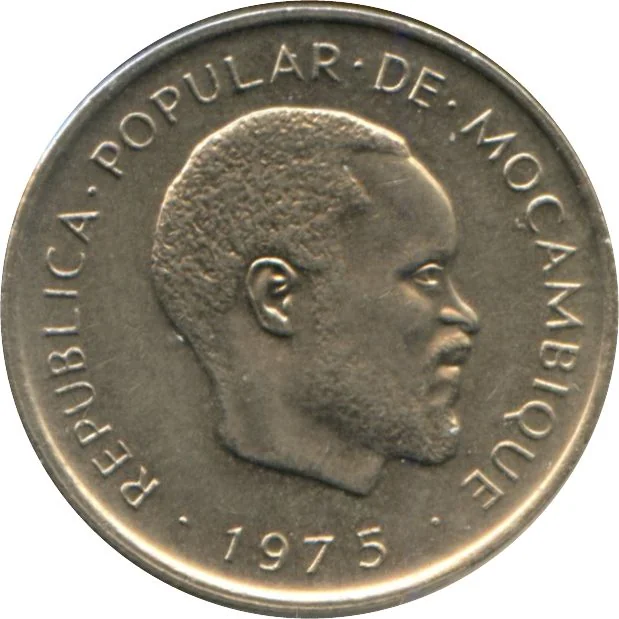
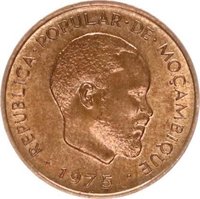
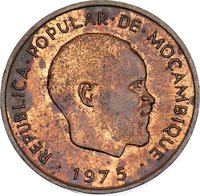
Description:
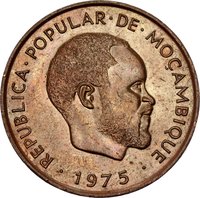
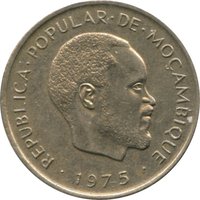
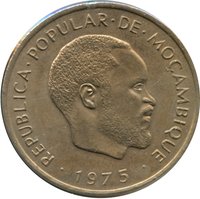
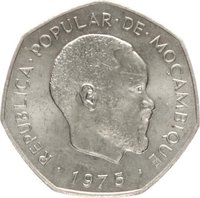
President Samora Machel.
Inscription:
REPUBLICA·POPULAR·DE·MOÇAMBIQUE
· 1975 ·
· 1975 ·
Translation:
PEOPLE'S REPUBLIC OF MOZAMBIQUE
1975
1975
Script: Latin
Language: Portuguese
Engraver: Geoffrey Colley
Reverse
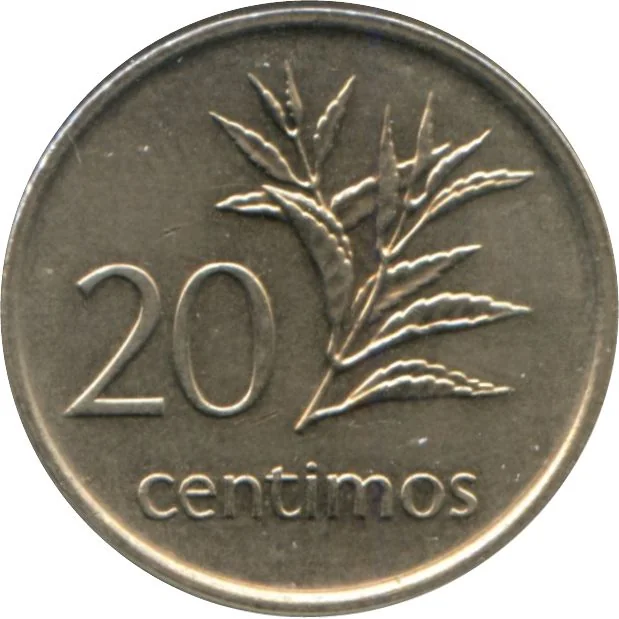
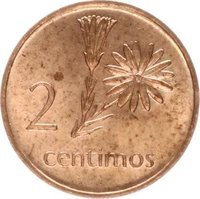
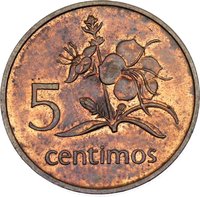
Description:
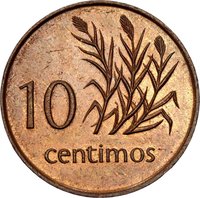
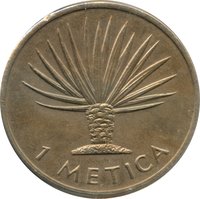
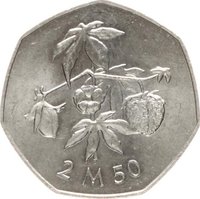
Valuable tea flower sprig.
Inscription:
20
centimos
centimos
Script: Latin
Engraver: Geoffrey Colley
Edge
Reeded
Mints
| Name | Mark |
|---|---|
| Royal Mint | — |
Mintings
| Year | Mint Mark | Mintage | Quality | Collection |
|---|---|---|---|---|
| 1975 | — | 8,050,000 |
Historical background
Following independence from Portugal in June 1975, Mozambique inherited a complex and challenging currency situation. The new FRELIMO government found itself in control of an economy still deeply integrated with Portugal's and reliant on the Portuguese escudo, which remained legal tender. This created an immediate problem of monetary sovereignty, as the nation lacked its own symbolic and functional currency to underpin its fledgling statehood and economic policies.
The urgent solution was the introduction of the Mozambican escudo in June 1975, set at par with its Portuguese predecessor. This was a transitional measure, essentially a renamed version of the colonial currency, intended to facilitate a swift break in the monetary union with Portugal. However, the practical challenges were immense. The country faced a severe shortage of coins and banknotes, requiring the overprinting of existing Portuguese currency with "Banco de Moçambique" stamps as a temporary stopgap while new notes were printed abroad.
This currency change occurred amidst a collapsing economy. The sudden exodus of Portuguese settlers and administrators crippled key sectors, and the new state had limited foreign reserves or institutional capacity to manage monetary policy. Consequently, while the creation of the Mozambican escudo was a necessary political act of sovereignty, it was launched into an environment of profound economic disruption, setting the stage for the severe inflation and currency devaluations that would follow in the coming years, culminating in the introduction of the metical in 1980.
The urgent solution was the introduction of the Mozambican escudo in June 1975, set at par with its Portuguese predecessor. This was a transitional measure, essentially a renamed version of the colonial currency, intended to facilitate a swift break in the monetary union with Portugal. However, the practical challenges were immense. The country faced a severe shortage of coins and banknotes, requiring the overprinting of existing Portuguese currency with "Banco de Moçambique" stamps as a temporary stopgap while new notes were printed abroad.
This currency change occurred amidst a collapsing economy. The sudden exodus of Portuguese settlers and administrators crippled key sectors, and the new state had limited foreign reserves or institutional capacity to manage monetary policy. Consequently, while the creation of the Mozambican escudo was a necessary political act of sovereignty, it was launched into an environment of profound economic disruption, setting the stage for the severe inflation and currency devaluations that would follow in the coming years, culminating in the introduction of the metical in 1980.
⭐ Rare