

½ Guilder – British Guiana
Guyana
Context
Year: 1836
Country: Guyana 
Issuer: British Guiana
Ruler: William IV
Currency:
(1796—1839)
Demonetized: Yes
Total mintage: 216,000
Material
References
KM: #Click to copy to clipboard24
Numista: #19575
Value
Bullion value: $9.00
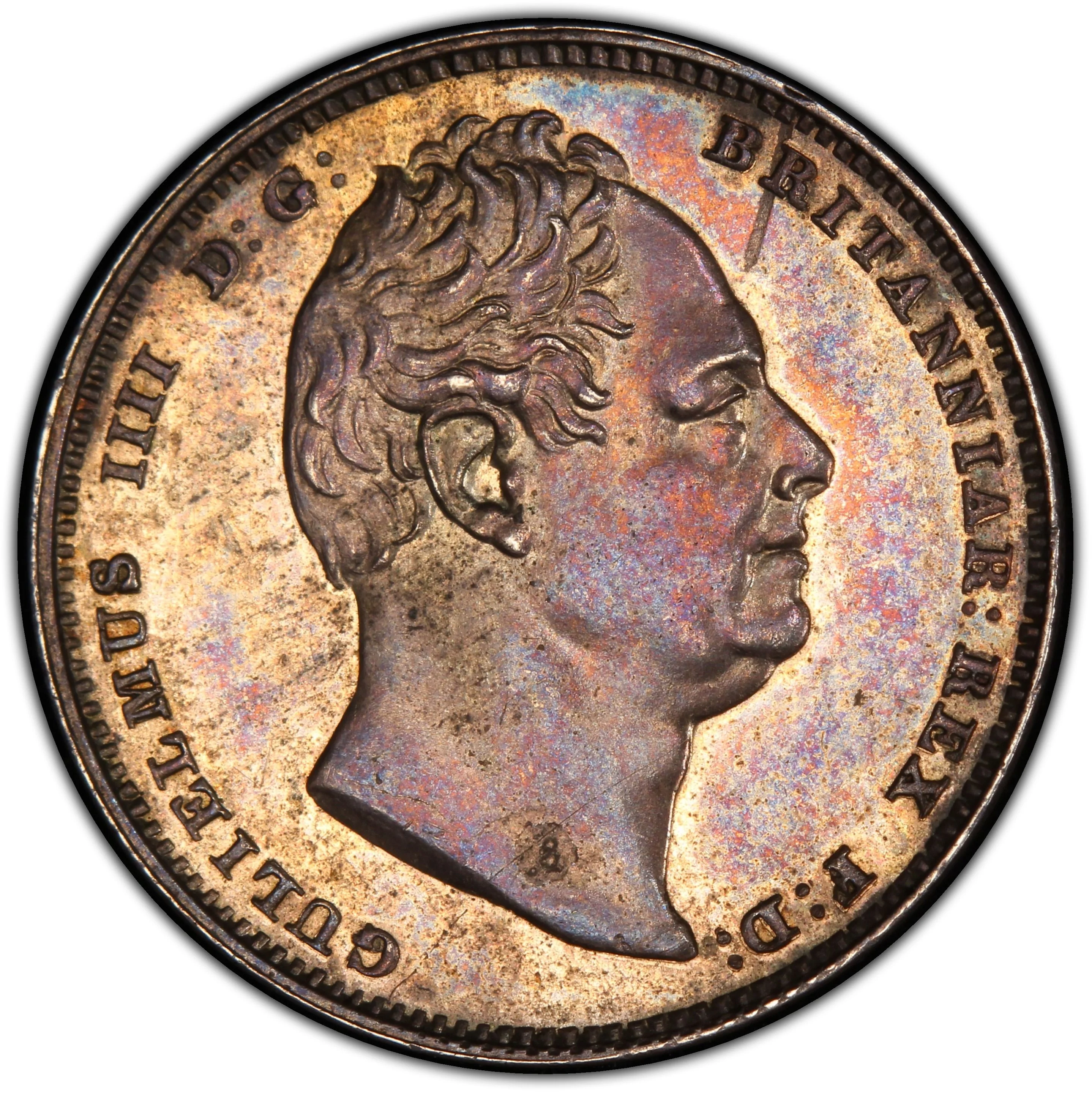
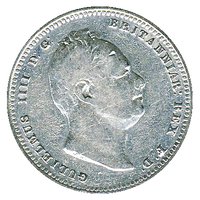
Obverse
Description:
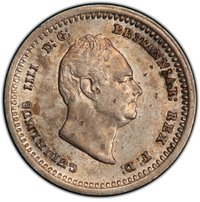
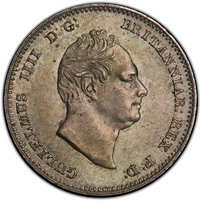
William IIII bust right
Inscription:
GULIELMUS IIII D:G: BRITANNIAR: REX F:D:
Translation:
William IV by the Grace of God King of the Britains Defender of the Faith
Script: Latin
Language: Latin
Engraver: William Wyon
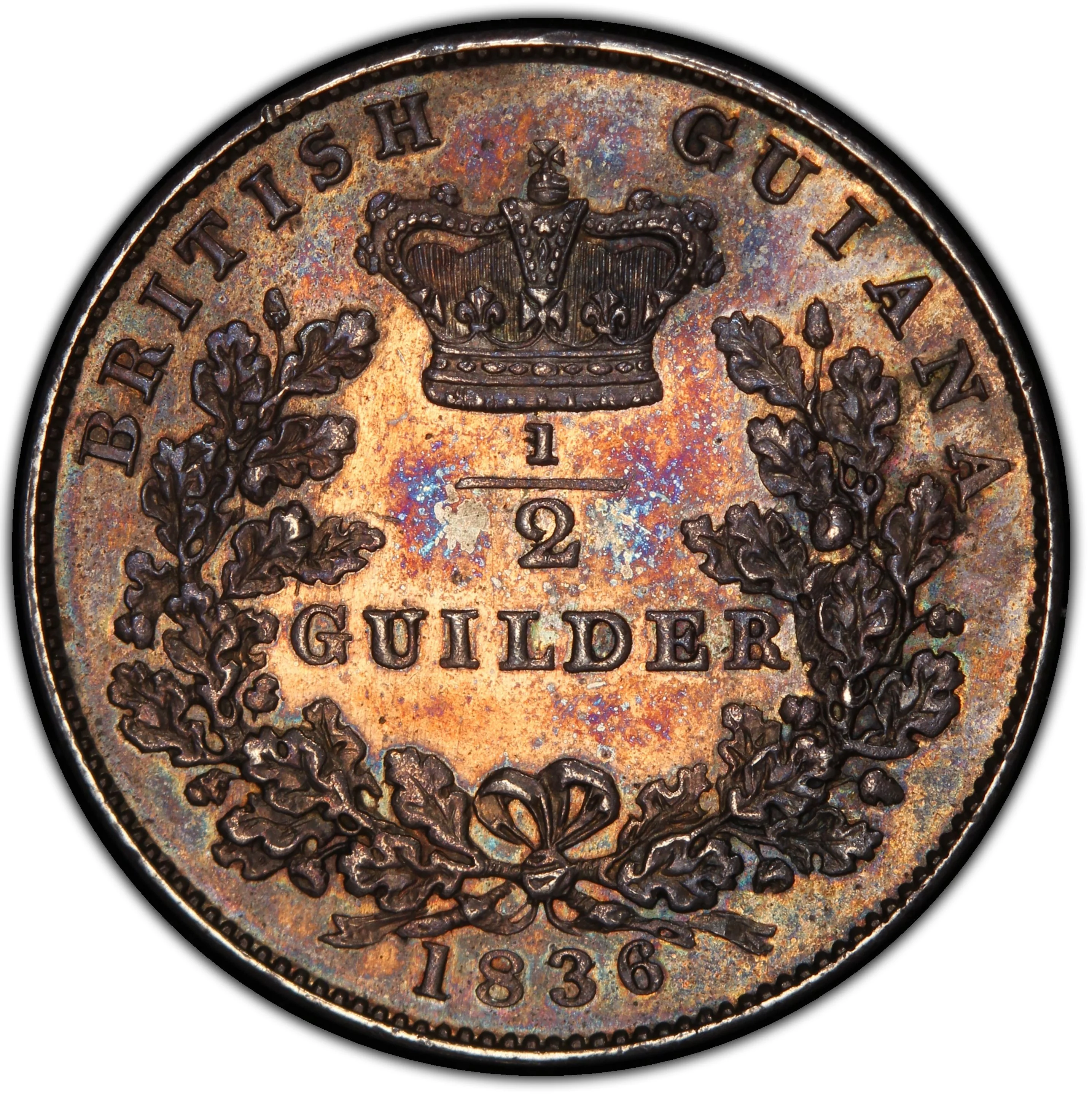
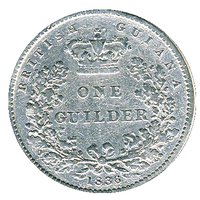
Reverse
Description:
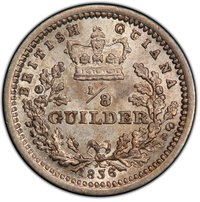
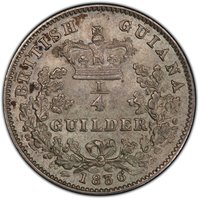
Crowned value encircled by wreath.
Inscription:
BRITISH GUIANA
1/2
GUILDER
1836
1/2
GUILDER
1836
Script: Latin
Engraver: Thomas Wyon the Younger
Edge
Mints
| Name | Mark |
|---|---|
| Royal Mint (Tower Hill) | — |
Mintings
| Year | Mint Mark | Mintage | Quality | Collection |
|---|---|---|---|---|
| 1836 | — | 216,000 | ||
| 1836 | — | — | Proof |
Historical background
In 1836, British Guiana was navigating a profound economic transition, deeply shaped by the impending abolition of slavery. The colony's currency system was chaotic and inadequate, characterized by a severe shortage of official coinage. The primary medium of exchange was a confusing array of foreign silver coins, predominantly Spanish dollars and their fractional parts (bits), alongside Portuguese, Brazilian, and Dutch coins. This patchwork system was unstable, hindered commerce, and complicated government accounting, as these coins circulated at fluctuating values set by local proclamation.
The core of the monetary problem was the lack of a standardized sterling currency tied to Britain. While accounts were kept in pounds, shillings, and pence, physical sterling coins were scarcely seen. Instead, the colony relied on a "currency" system where the Spanish dollar was officially valued at 4s 4d, creating an artificial exchange rate. This situation was exacerbated by the fact that planters, the dominant economic class, often paid enslaved workers and, later, apprentices with low-denomination "holey dollars" (punctured coins) and tokens from private issuers, further fragmenting the monetary landscape.
This dysfunctional currency environment was a major concern for the colonial government and British authorities, as it threatened economic stability at a critical juncture. The inefficiency of trade and wage payments acted as a brake on development just as the colony was moving toward a post-slavery labour market. Consequently, 1836 fell within a period of intense scrutiny and lobbying, which would culminate in the formal introduction of a British sterling coinage system to British Guiana in 1839, aiming to impose order and facilitate the new economic era.
The core of the monetary problem was the lack of a standardized sterling currency tied to Britain. While accounts were kept in pounds, shillings, and pence, physical sterling coins were scarcely seen. Instead, the colony relied on a "currency" system where the Spanish dollar was officially valued at 4s 4d, creating an artificial exchange rate. This situation was exacerbated by the fact that planters, the dominant economic class, often paid enslaved workers and, later, apprentices with low-denomination "holey dollars" (punctured coins) and tokens from private issuers, further fragmenting the monetary landscape.
This dysfunctional currency environment was a major concern for the colonial government and British authorities, as it threatened economic stability at a critical juncture. The inefficiency of trade and wage payments acted as a brake on development just as the colony was moving toward a post-slavery labour market. Consequently, 1836 fell within a period of intense scrutiny and lobbying, which would culminate in the formal introduction of a British sterling coinage system to British Guiana in 1839, aiming to impose order and facilitate the new economic era.
💎 Extremely Rare