

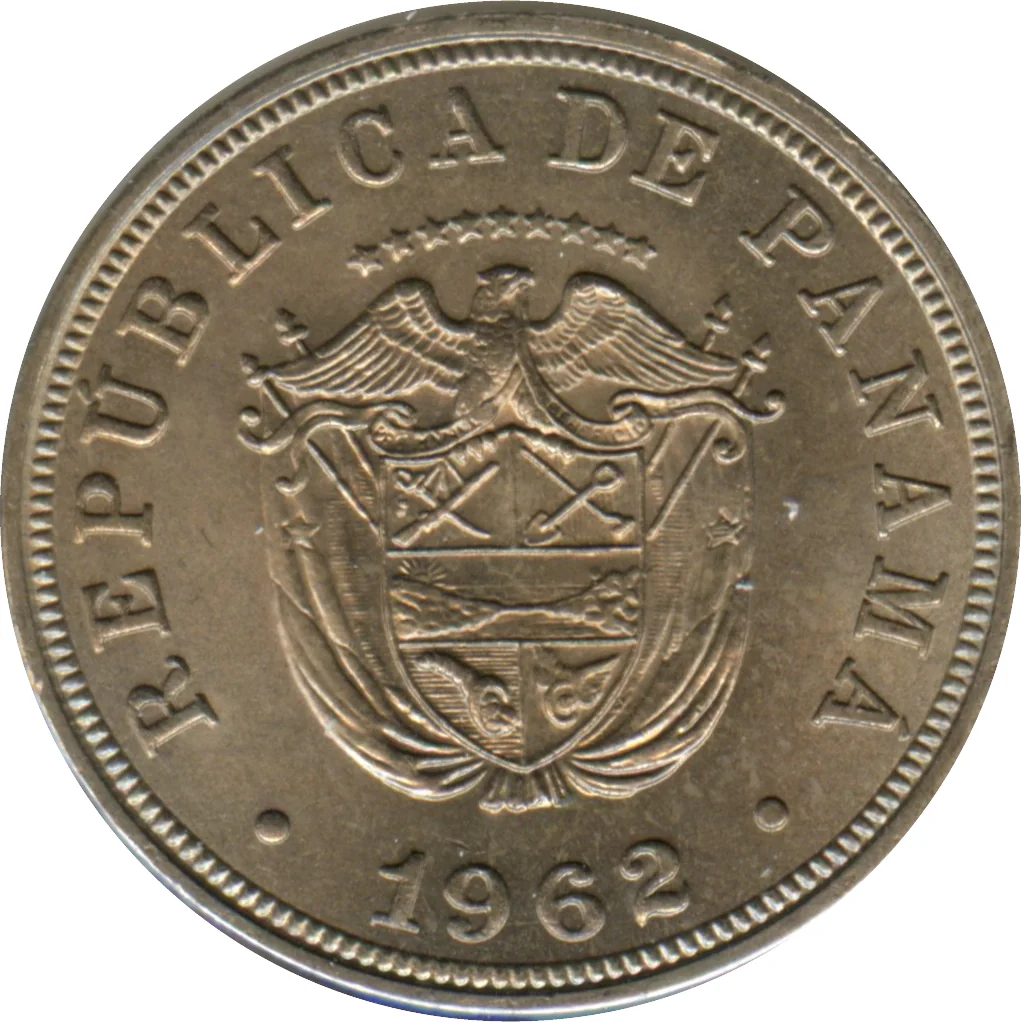
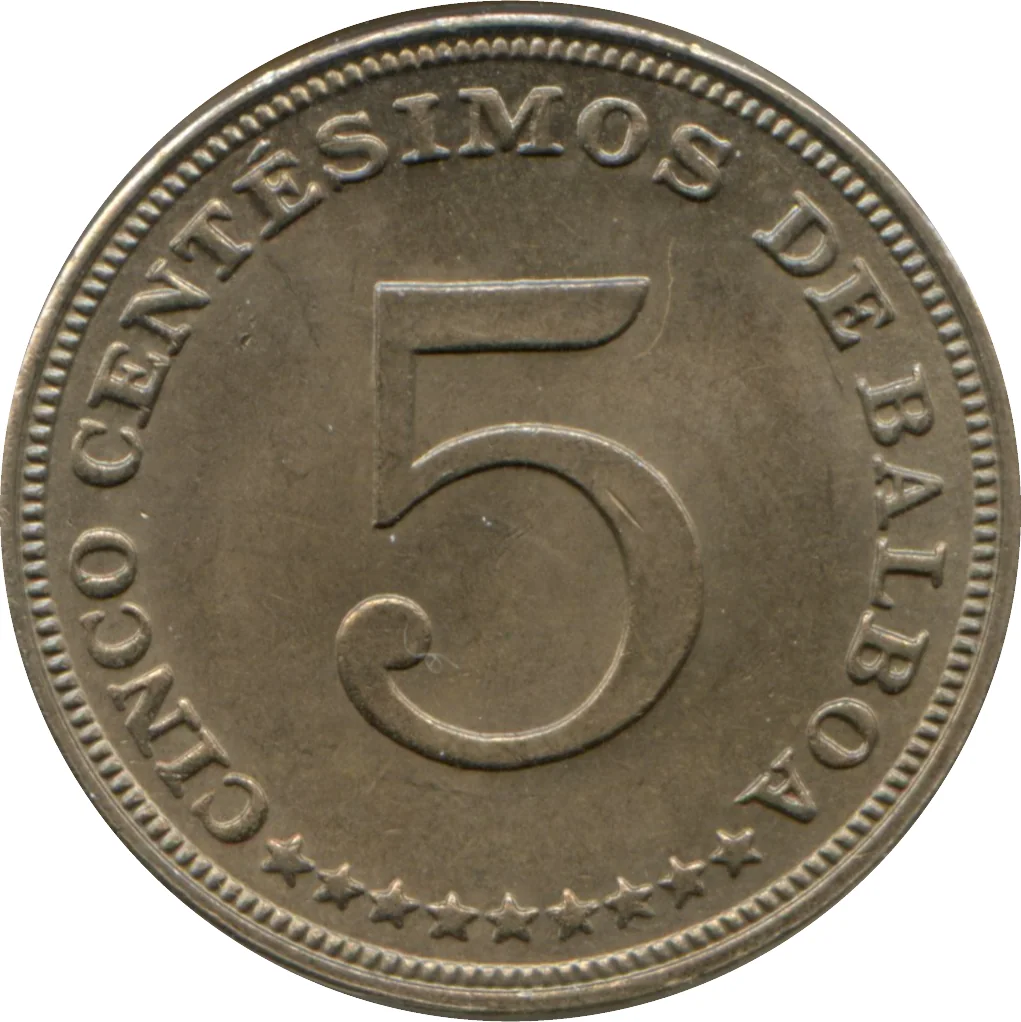
5 centesimos – Panama
Add to wishlist
Panama
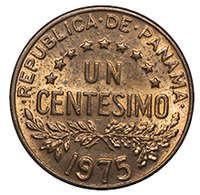
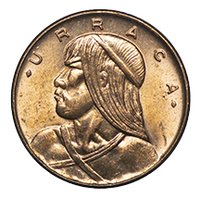
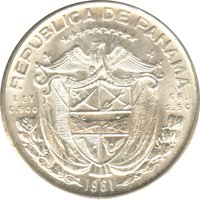
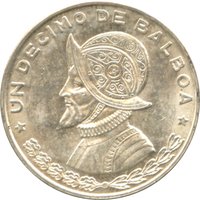
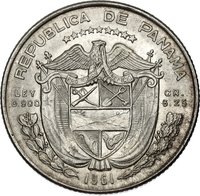
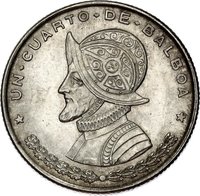
Obverse
Reverse
Edge
Plain
Categories
| Symbols> Coat of Arms |
Mints
| Name | Mark |
|---|---|
| Mexican Mint | — |
| Royal Canadian Mint of Winnipeg | — |
| Royal Mint (Tower Hill) | — |
| United States Mint of Denver | — |
| United States Mint of Philadelphia | — |
| United States Mint of San Francisco | — |
Mintings
| Year | Mint Mark | Mintage | Quality | Collection |
|---|---|---|---|---|
| 1961 | — | 1,000,000 | ||
| 1962 | — | 25 | Proof | |
| 1962 | — | 2,625,000 | ||
| 1966 | — | 4,900,000 | ||
| 1966 | — | 13,000 | Proof | |
| 1967 | — | 2,600,000 | ||
| 1967 | — | 12,701 | Proof | |
| 1968 | — | 6,000,000 | ||
| 1968 | — | 23,000 | Proof | |
| 1969 | — | 14,000 | Proof | |
| 1970 | — | 9,528 | Proof | |
| 1970 | — | 5,000,000 | ||
| 1971 | — | 10,696 | Proof | |
| 1973 | — | 5,000,000 | ||
| 1973 | — | 13,332 | Proof | |
| 1974 | — | 17,000 | Proof | |
| 1975 | — | 17,521 | Proof | |
| 1975 | — | 5,000,038 | ||
| 1982 | — | 8,000,000 | ||
| 1983 | — | 7,500,000 | ||
| 1993 | — | 6,000,000 | ||
| 1993 | — | — | Proof |
Historical background
In 1961, Panama’s currency situation was defined by a unique and stable dual-currency system anchored by the US dollar. Since its independence in 1903, Panama used the US dollar as its official paper currency, while also minting its own fractional coinage, the balboa, which was pegged at par (1:1) with the dollar. This arrangement provided monetary stability and facilitated trade, particularly with the United States, which operated the Panama Canal Zone. There was no central bank; currency issuance was managed by the National Bank of Panama, and the country held no independent monetary policy, effectively importing US Federal Reserve decisions.
The system functioned smoothly for everyday transactions, with Panamanian coins circulating alongside US coins. However, this dollarization meant Panama could not devalue its currency to gain trade advantages or act as a lender of last resort during banking crises. The economy’s health was therefore directly tied to US economic performance and dollar management. In 1961, this was not a pressing concern, as the global Bretton Woods system kept the dollar strong and stable. Panama’s primary economic focus was on Canal-related revenues and services, with the currency system seen as a cornerstone of that reliability.
Politically, the currency arrangement symbolized Panama’s close, yet complex, relationship with the United States. While it provided stability, it also reflected a degree of economic dependency. By 1961, there were no significant movements to alter this system; it was widely accepted as a pragmatic foundation for commerce. The debate over full monetary sovereignty would emerge more strongly in subsequent decades, but in the early 1960s, the dollar-balboa regime was a settled and largely uncontroversial aspect of Panama’s financial landscape.
The system functioned smoothly for everyday transactions, with Panamanian coins circulating alongside US coins. However, this dollarization meant Panama could not devalue its currency to gain trade advantages or act as a lender of last resort during banking crises. The economy’s health was therefore directly tied to US economic performance and dollar management. In 1961, this was not a pressing concern, as the global Bretton Woods system kept the dollar strong and stable. Panama’s primary economic focus was on Canal-related revenues and services, with the currency system seen as a cornerstone of that reliability.
Politically, the currency arrangement symbolized Panama’s close, yet complex, relationship with the United States. While it provided stability, it also reflected a degree of economic dependency. By 1961, there were no significant movements to alter this system; it was widely accepted as a pragmatic foundation for commerce. The debate over full monetary sovereignty would emerge more strongly in subsequent decades, but in the early 1960s, the dollar-balboa regime was a settled and largely uncontroversial aspect of Panama’s financial landscape.
Series: 1961 Panama circulation coins
🌱 Very Common