

1 tallero – Italian Eritrea
Add to wishlist
Eritrea
Context
Year: 1918
Country: Eritrea
Issuer: Italian Eritrea
Ruler: Victor Emmanuel III
Currency:
(1890—1921)
Demonetized: Yes
Total mintage: 510,000
Material
References
KM: #
Numista: #19516
Value
Bullion value: $57.04
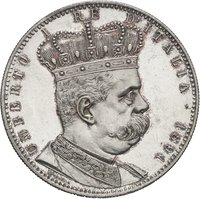
Obverse
Description:
Bust of Maria Theresa facing right, possibly with "A • MOTTI" below.
Inscription:
❀ REGNUM ITALICUM ❀ 1918
A • MOTTI
A • MOTTI
Translation:
Kingdom of Italy 1918
A. Motti
A. Motti
Script: Latin
Engraver: Attilio Silvio Motti
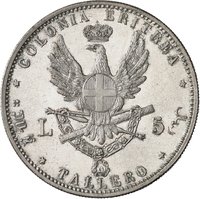
Reverse
Description:
Left-facing crowned eagle with chest shield.
Inscription:
AD • NEGOT • ERYTHR COMMOD • ARG • SIGN •
R
R
Translation:
In the year of the negotiators of Erythrae, the silver coin of Commodus.
Script: Latin
Language: Latin
Engraver: Attilio Silvio Motti
Mints
| Name | Mark |
|---|---|
| Rome | R |
Mintings
| Year | Mint Mark | Mintage | Quality | Collection |
|---|---|---|---|---|
| 1918 | R | 510,000 |
Historical background
In 1918, Italian Eritrea’s currency situation was characterized by a complex duality, reflecting its status as a colonial possession amidst global upheaval. The official currency was the Italian lira, introduced after Italy’s unification and firmly established following the colony's founding in 1890. However, the practical reality in the markets of Asmara, Massawa, and other centers saw the widespread parallel circulation of the Maria Theresa thaler (MTT), a large silver coin minted in Austria but revered throughout the Red Sea region for its consistent weight and silver content. This venerable coin remained the preferred medium for significant transactions, long-distance trade, and even hoarding wealth among the local population, undermining Italy's attempts to impose a monolithic monetary system.
The First World War profoundly impacted this arrangement, creating severe economic strain. Italy’s commitment to the conflict led to inflationary pressures on the metropolitan lira, a phenomenon that reverberated in the colony. More critically, the war disrupted shipping and international finance, causing acute shortages of physical currency, especially the small-denomination coins vital for everyday commerce. This scarcity crippled local trade and exacerbated tensions within the colonial economy. Authorities struggled to import sufficient quantities of Italian coinage, while the flow of Maria Theresa thalers also became less predictable.
Consequently, the colonial administration faced a crisis of liquidity and authority. While the lira remained the official legal tender for government payments and salaries, its practical utility was limited by shortage and distrust. The enduring dominance of the Maria Theresa thaler in 1918 underscored the limits of Italy's economic assimilation and highlighted the colony's deep integration into regional, rather than solely imperial, trade networks. This unstable monetary duality would persist until a more aggressive policy of currency unification was implemented in the early 1920s, ultimately demonetizing the thaler.
The First World War profoundly impacted this arrangement, creating severe economic strain. Italy’s commitment to the conflict led to inflationary pressures on the metropolitan lira, a phenomenon that reverberated in the colony. More critically, the war disrupted shipping and international finance, causing acute shortages of physical currency, especially the small-denomination coins vital for everyday commerce. This scarcity crippled local trade and exacerbated tensions within the colonial economy. Authorities struggled to import sufficient quantities of Italian coinage, while the flow of Maria Theresa thalers also became less predictable.
Consequently, the colonial administration faced a crisis of liquidity and authority. While the lira remained the official legal tender for government payments and salaries, its practical utility was limited by shortage and distrust. The enduring dominance of the Maria Theresa thaler in 1918 underscored the limits of Italy's economic assimilation and highlighted the colony's deep integration into regional, rather than solely imperial, trade networks. This unstable monetary duality would persist until a more aggressive policy of currency unification was implemented in the early 1920s, ultimately demonetizing the thaler.
🌟 Uncommon