

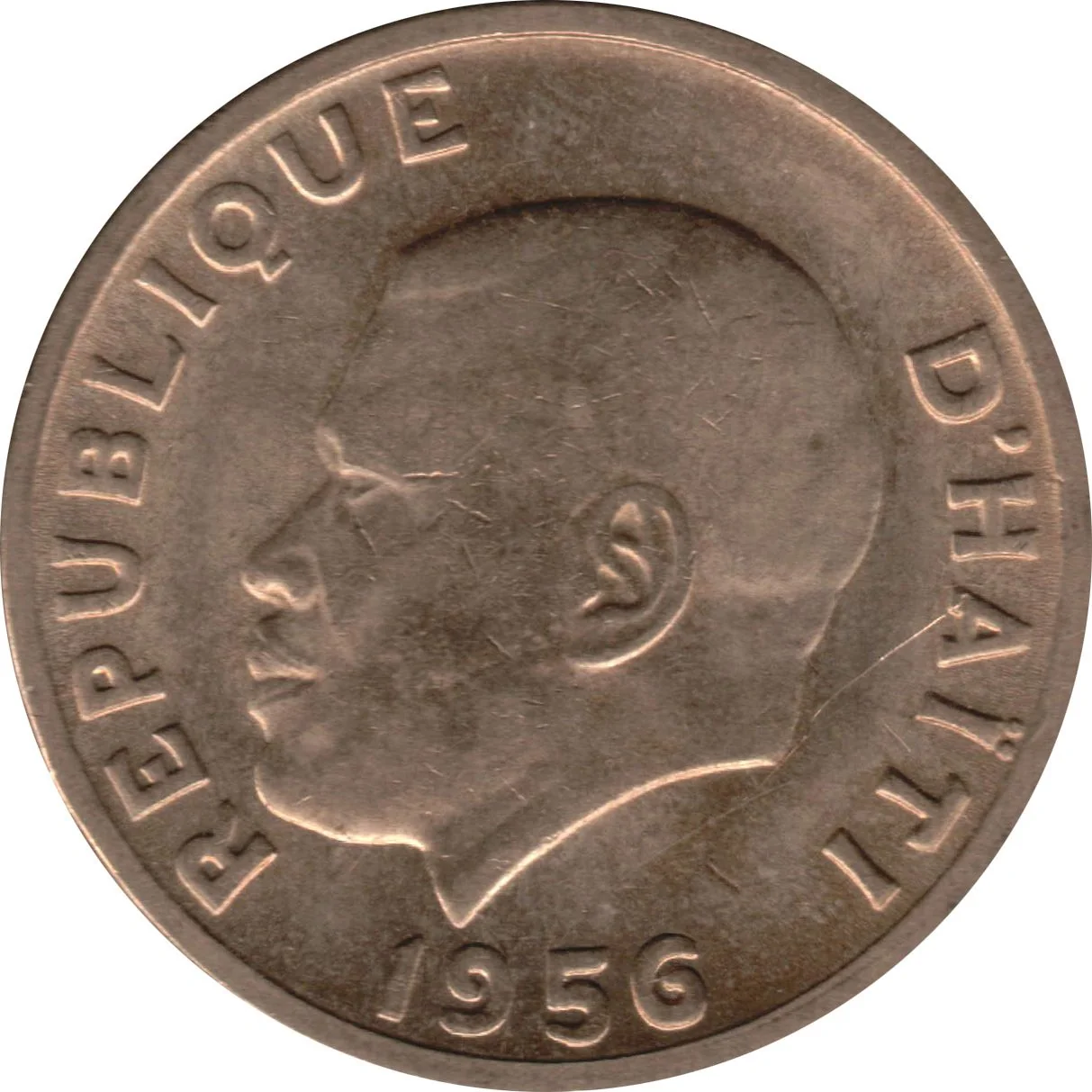
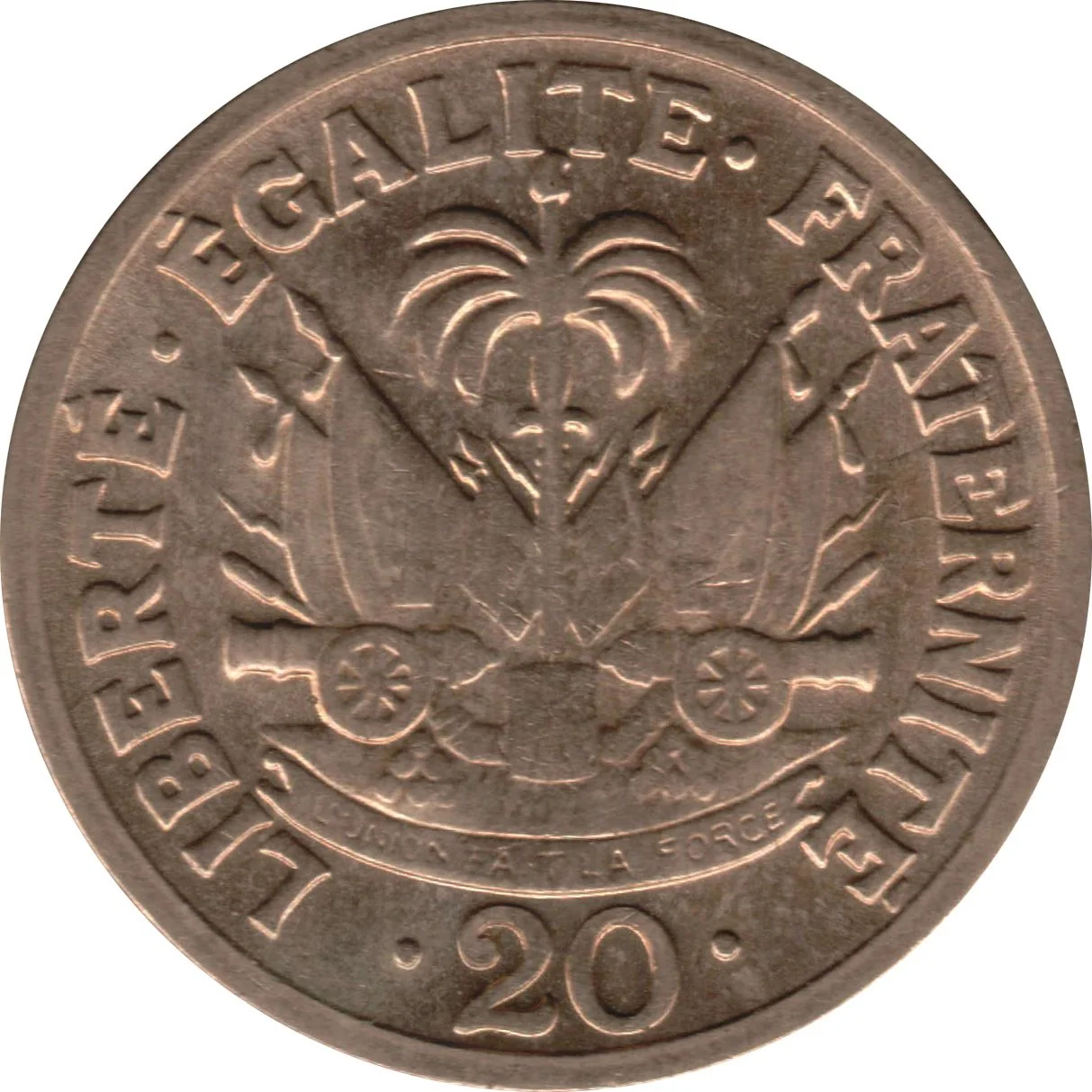
20 centimes – Haiti
Add to wishlist
Haiti
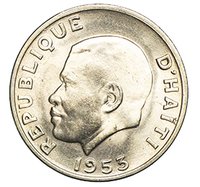
Obverse
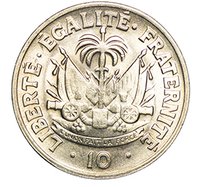
Reverse
Edge
Plain
Categories
| Symbols> Coat of Arms |
| Person> Politician |
Mints
| Name | Mark |
|---|---|
| United States Mint of Philadelphia | — |
Mintings
| Year | Mint Mark | Mintage | Quality | Collection |
|---|---|---|---|---|
| 1956 | — | 2,500,000 |
Historical background
In 1956, Haiti's currency, the gourde, operated under a fixed exchange rate system pegged to the United States dollar at a rate of 5 gourdes to 1 USD. This peg, established in 1912, provided a degree of monetary stability but was fundamentally undermined by the country's chronic economic and political turmoil. The economy was overwhelmingly agrarian and export-dependent on commodities like coffee, while the government, under President Paul Magloire, faced severe fiscal deficits. These deficits were often financed by borrowing from the Banque Nationale de la République d’Haïti (BNRH), the nation's central bank, leading to inflationary pressures that strained the fixed parity.
The political crisis of 1956 directly exacerbated the currency situation. President Magloire's attempt to extend his term sparked widespread protests and strikes, paralyzing the administration and economic activity. As government revenues collapsed and uncertainty soared, confidence in the gourde eroded. This triggered capital flight and a growing black market for foreign exchange, where the U.S. dollar traded at a significant premium over the official rate. The BNRH's foreign reserves, necessary to maintain the peg, came under severe pressure as the bank attempted to defend the official exchange rate amidst the crisis.
By the end of 1956, Magloire was forced into exile, leaving a power vacuum and an economy in distress. The currency regime, while officially still pegged, was functionally failing. The black market premium highlighted the disconnect between the official rate and market reality, reflecting a lack of confidence in both the currency and the state. This financial instability set the stage for the deeper economic struggles and inflationary spirals that would plague Haiti in the subsequent decades under the Duvalier regime, which would soon take power.
The political crisis of 1956 directly exacerbated the currency situation. President Magloire's attempt to extend his term sparked widespread protests and strikes, paralyzing the administration and economic activity. As government revenues collapsed and uncertainty soared, confidence in the gourde eroded. This triggered capital flight and a growing black market for foreign exchange, where the U.S. dollar traded at a significant premium over the official rate. The BNRH's foreign reserves, necessary to maintain the peg, came under severe pressure as the bank attempted to defend the official exchange rate amidst the crisis.
By the end of 1956, Magloire was forced into exile, leaving a power vacuum and an economy in distress. The currency regime, while officially still pegged, was functionally failing. The black market premium highlighted the disconnect between the official rate and market reality, reflecting a lack of confidence in both the currency and the state. This financial instability set the stage for the deeper economic struggles and inflationary spirals that would plague Haiti in the subsequent decades under the Duvalier regime, which would soon take power.
🌱 Fairly Common