

falus – Iran
Add to wishlist
Iran
Context
Year: 1831
Islamic (Hijri) Year:: 1246
Issuer: Iran
Ruler: Fath-Ali Shah
Currency:
(1501—1798)
Demonetization: 1834
Material
Diameter: 20 mm
Weight: 6.92 g
Shape: Irregular round
Composition: Copper
Magnetic: No
Alignment: Coin alignment
flip
References
Numista: #194910
Obverse
Description:
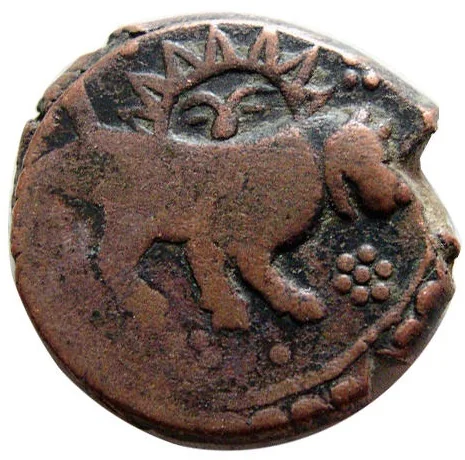
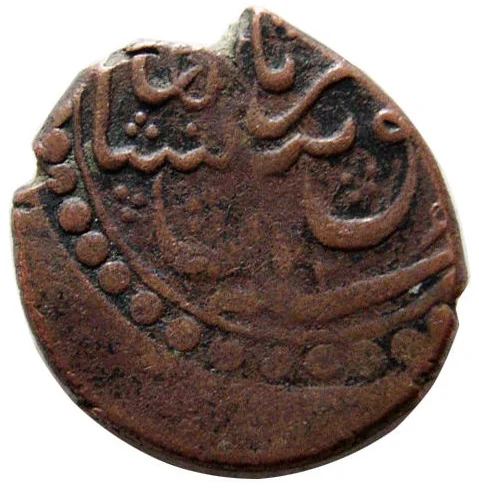
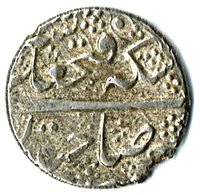
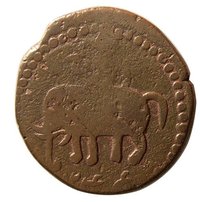
Leo facing the Sun.
Reverse
Edge
Plain
Mintings
| Year | Mint Mark | Mintage | Quality | Collection |
|---|---|---|---|---|
| 1831 | — | — |
Historical background
In 1831, Iran’s currency system was in a state of profound disarray, a legacy of earlier 19th-century crises. The country operated on a bimetallic system of silver qirāns and gold tomans, but the coinage was heavily debased and lacked uniformity. Decades of weak central authority, costly wars with Russia, and extravagant court expenditures had drained the treasury, leading successive Qajar shahs, particularly Fatḥ-ʿAlī Shāh (r. 1797–1834), to resort to currency devaluation. This meant striking coins with significantly lower silver content than their face value, eroding public trust and causing severe inflation that crippled the domestic economy.
The situation was exacerbated by a fragmented monetary geography. Various provincial governors and powerful figures often minted their own coins, leading to a bewildering variety of denominations and standards that differed from city to city. Furthermore, a massive influx of foreign currencies, particularly Russian rubles and British Indian rupees, circulated alongside domestic coinage, further complicating trade and exchange. This monetary anarchy stifled commerce, as merchants had to constantly navigate exchange rates and assay coin purity, creating a significant barrier to both internal and external trade.
Recognizing the economic and political toll of this chaos, the Qajar state attempted a major reform in 1831 under Crown Prince ʿAbbās Mīrzā in Tabriz. He introduced a new silver coin, the ʿabbāsi, intended to have a stable weight and purity to restore confidence. However, this reform was limited in scope and ultimately unsuccessful in the long term. The fundamental issues of state deficit, lack of centralized control over mints, and economic pressures persisted, meaning that the currency instability of 1831 was not an isolated crisis but a chronic condition that would plague Iran for much of the Qajar era.
The situation was exacerbated by a fragmented monetary geography. Various provincial governors and powerful figures often minted their own coins, leading to a bewildering variety of denominations and standards that differed from city to city. Furthermore, a massive influx of foreign currencies, particularly Russian rubles and British Indian rupees, circulated alongside domestic coinage, further complicating trade and exchange. This monetary anarchy stifled commerce, as merchants had to constantly navigate exchange rates and assay coin purity, creating a significant barrier to both internal and external trade.
Recognizing the economic and political toll of this chaos, the Qajar state attempted a major reform in 1831 under Crown Prince ʿAbbās Mīrzā in Tabriz. He introduced a new silver coin, the ʿabbāsi, intended to have a stable weight and purity to restore confidence. However, this reform was limited in scope and ultimately unsuccessful in the long term. The fundamental issues of state deficit, lack of centralized control over mints, and economic pressures persisted, meaning that the currency instability of 1831 was not an isolated crisis but a chronic condition that would plague Iran for much of the Qajar era.
✨ Legendary