

1000 dinars (Fat'h Ali reign) – Iran
Add to wishlist
Circulating commemorative coins
Commemoration: 30th anniversary of Fat'h Ali reign
Iran
Context
Year: 1829
Islamic (Hijri) Year:: 1245
Issuer: Iran
Ruler: Fath-Ali Shah
Currency:
(1825—1932)
Demonetization: 1834
Material
Diameter: 22 mm
Weight: 6.92 g
Silver Weight:: 6.92 g
Shape: Irregular round
Composition: Silver
Magnetic: No
Alignment: Coin alignment
flip
References
KM: #
Numista: #194905
Value
Bullion value: $17.67
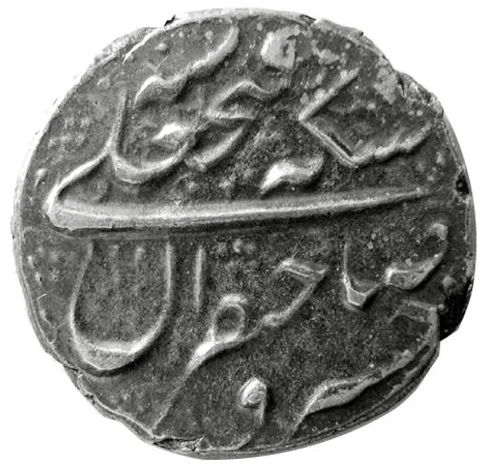
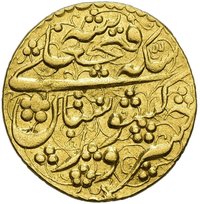
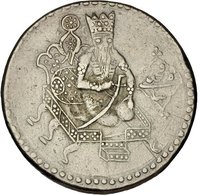
Obverse
Inscription:
سکه فتحعلی شه خسرو صاحبقران
Translation:
Coin of Fath-Ali Shah, Khusrau, Sahib-Qiran.
Language: Persian
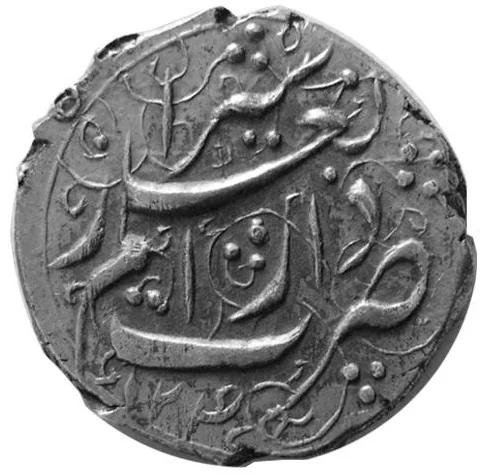
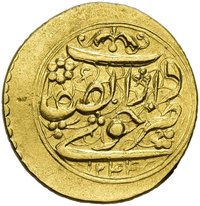
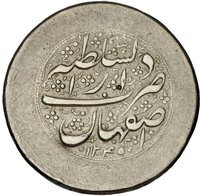
Reverse
Inscription:
ضرب دارالعــلم شیراز
۱۲۴٥
۱۲۴٥
Translation:
Struck at Dar al-'Ilm Shiraz
1245
1245
Language: Persian
Edge
Plain
Mints
| Name | Mark |
|---|---|
| Shiraz | — |
Mintings
| Year | Mint Mark | Mintage | Quality | Collection |
|---|---|---|---|---|
| 1829 | — | — |
Historical background
In 1829, Iran’s currency system was in a state of profound disarray, a legacy of earlier 19th-century crises. The primary unit was the silver qiran (also spelled kran), but its value and physical integrity had been severely compromised. Decades of war, territorial losses (notably to Russia following the treaties of Gulistan in 1813 and Turkmenchay in 1828), and crushing war indemnities imposed by Russia had drained the state’s silver reserves. This led to the chronic debasement of coinage, where the silver content of newly minted qirans was steadily reduced, causing a sharp divergence between their face value and intrinsic worth.
The monetary chaos was exacerbated by a complete lack of standardized, modern banking and a proliferation of various foreign and obsolete coins in circulation. Alongside the debased silver qiran, the gold toman (worth 10 qirans) was used for large transactions, and copper shahis for small daily purchases. Furthermore, European trade coins, particularly the Russian silver ruble and the British gold Mohur, circulated widely, often preferred for their reliable metal content. This created a complex and unstable multi-currency environment where exchange rates fluctuated wildly, harming both domestic trade and foreign commerce.
The situation in 1829 was directly and acutely shaped by the recent Treaty of Turkmenchay (1828). The massive indemnity of 20 million silver rubles owed to Russia forced the Qajar state, under Fath-Ali Shah, to engage in desperate financial measures. These included further debasement of the coinage, increased taxation, and the melting of treasury silver to make payments. Consequently, inflation soared, public confidence in the currency collapsed, and economic hardship became widespread. Thus, the currency situation of 1829 was not merely one of complexity but of active crisis, symbolizing a weakened state struggling under the financial and political burdens of military defeat and imperial pressure.
The monetary chaos was exacerbated by a complete lack of standardized, modern banking and a proliferation of various foreign and obsolete coins in circulation. Alongside the debased silver qiran, the gold toman (worth 10 qirans) was used for large transactions, and copper shahis for small daily purchases. Furthermore, European trade coins, particularly the Russian silver ruble and the British gold Mohur, circulated widely, often preferred for their reliable metal content. This created a complex and unstable multi-currency environment where exchange rates fluctuated wildly, harming both domestic trade and foreign commerce.
The situation in 1829 was directly and acutely shaped by the recent Treaty of Turkmenchay (1828). The massive indemnity of 20 million silver rubles owed to Russia forced the Qajar state, under Fath-Ali Shah, to engage in desperate financial measures. These included further debasement of the coinage, increased taxation, and the melting of treasury silver to make payments. Consequently, inflation soared, public confidence in the currency collapsed, and economic hardship became widespread. Thus, the currency situation of 1829 was not merely one of complexity but of active crisis, symbolizing a weakened state struggling under the financial and political burdens of military defeat and imperial pressure.
✨ Legendary