

Obverse
Description:
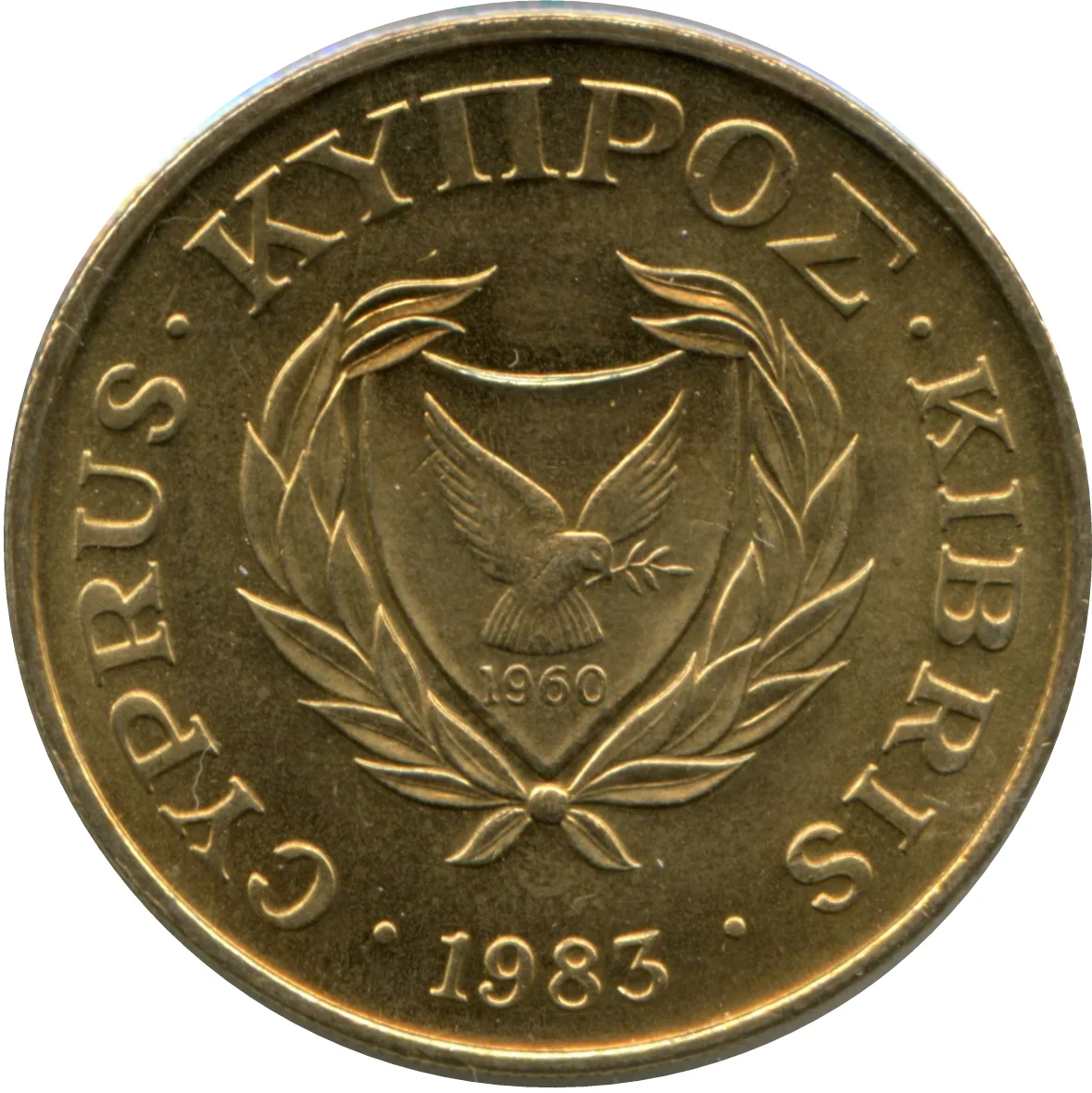
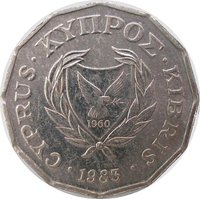
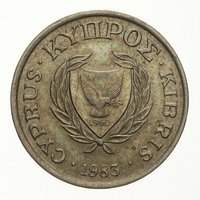
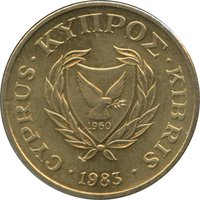
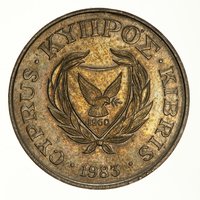
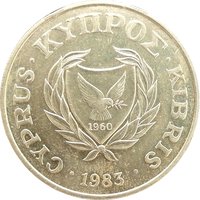
Cyprus's coat of arms features a dove with an olive twig over the year 1960, encircled by laurels and the country's name in Greek, Turkish, and English.
Inscription:
CYPRUS·ΚΥΠPΟΣ·KIBRIS·1983
1960
1960
Translation:
CYPRUS CYPRUS CYPRUS 1983
1960
1960
Engraver: Clara Georgiou
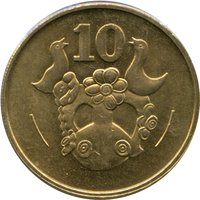
Reverse
Description:
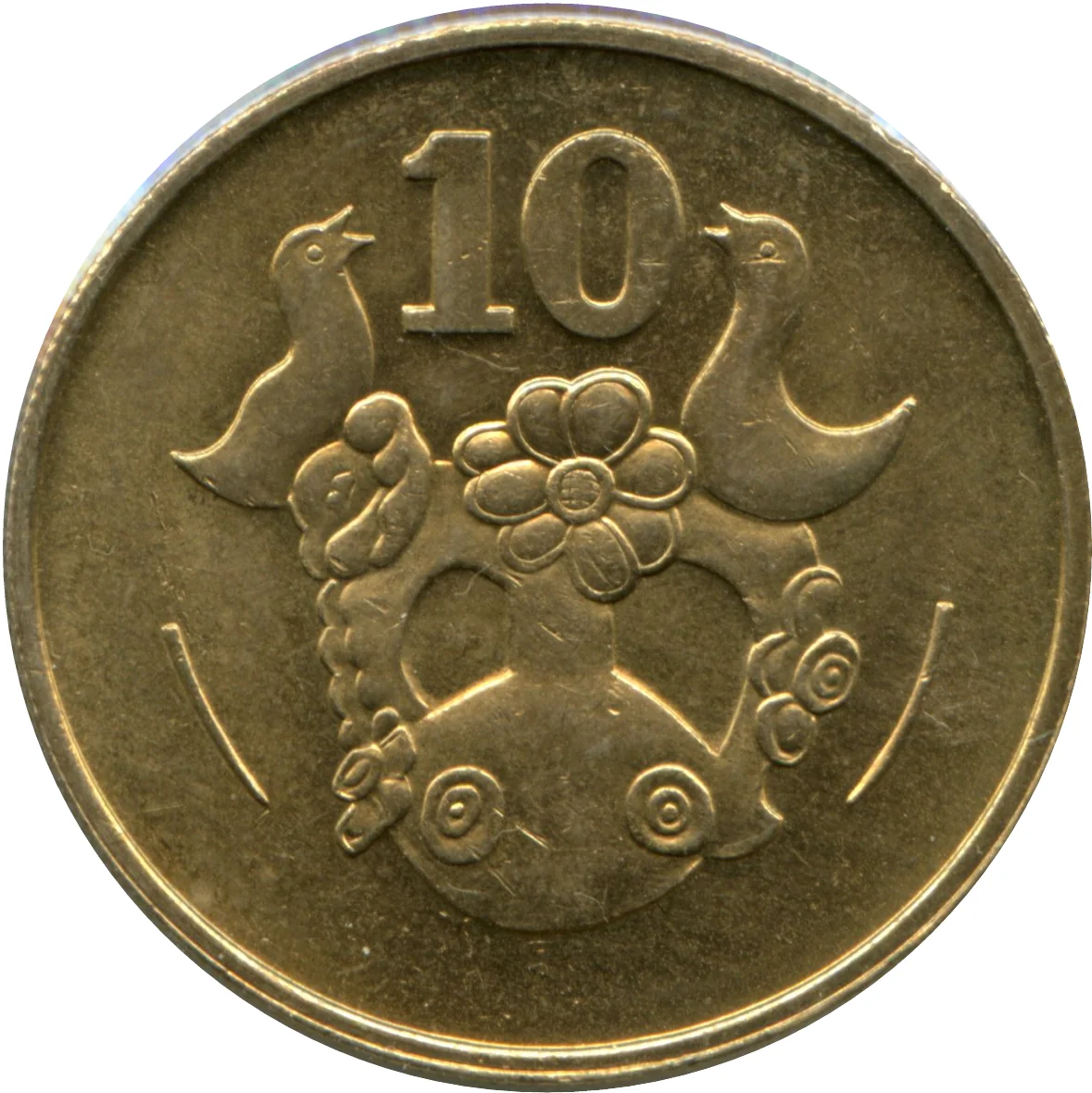
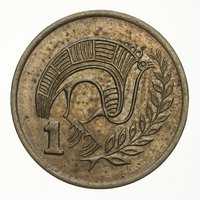
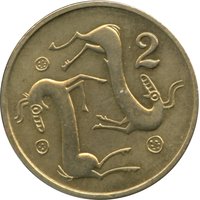
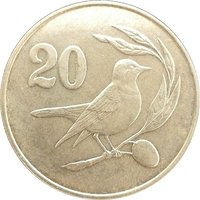
Phini village clay vase, adorned with birds and flowers with a numeral price.
Inscription:
10
Script: Latin
Edge
Reeded
Categories
| Animal> Bird |
| Object> Container or tableware |
| Symbols> Coat of Arms |
| Plants> Flower |
Mints
| Name | Mark |
|---|---|
| Royal Mint | — |
Mintings
| Year | Mint Mark | Mintage | Quality | Collection |
|---|---|---|---|---|
| 1983 | — | 10,000,000 | ||
| 1983 | — | — | BU | |
| 1983 | — | 6,250 | Proof |
Historical background
Following the Turkish invasion of 1974 and the subsequent de facto partition of the island, the currency situation in Cyprus by 1983 was one of formal unity masking profound political division. The Republic of Cyprus, internationally recognized and controlling the southern two-thirds of the island, continued to use the Cypriot pound (C£) as its sole legal tender. This currency, pegged to a basket of currencies and managed by the Central Bank of Cyprus in Nicosia, remained stable and was integral to the Greek Cypriot economy, which was beginning to recover and shift towards services and tourism.
In the north, the situation was radically different. After the self-declaration of the Turkish Republic of Northern Cyprus (TRNC) in November 1983, which was recognized only by Turkey, the area operated with a dual-currency system dominated by the Turkish lira. The Cypriot pound still circulated but was increasingly sidelined. Economic isolation, reliance on Turkish aid, and high inflation imported from Turkey created severe instability. This effectively cleaved the island into two separate monetary zones: a stable, internationally integrated south and an isolated, inflation-prone north.
Consequently, 1983 marked a point of no return in the island's monetary fragmentation. The political act of unilateral independence in the north cemented the economic divide that had been widening since 1974. While the Republic of Cyprus maintained a single official currency for the whole island de jure, the de facto reality was a bifurcated system, with the north progressively moving towards full monetary dependence on Turkey, a process that would culminate in the formal adoption of the Turkish lira in the following years.
In the north, the situation was radically different. After the self-declaration of the Turkish Republic of Northern Cyprus (TRNC) in November 1983, which was recognized only by Turkey, the area operated with a dual-currency system dominated by the Turkish lira. The Cypriot pound still circulated but was increasingly sidelined. Economic isolation, reliance on Turkish aid, and high inflation imported from Turkey created severe instability. This effectively cleaved the island into two separate monetary zones: a stable, internationally integrated south and an isolated, inflation-prone north.
Consequently, 1983 marked a point of no return in the island's monetary fragmentation. The political act of unilateral independence in the north cemented the economic divide that had been widening since 1974. While the Republic of Cyprus maintained a single official currency for the whole island de jure, the de facto reality was a bifurcated system, with the north progressively moving towards full monetary dependence on Turkey, a process that would culminate in the formal adoption of the Turkish lira in the following years.
Series: 1983 Cyprus circulation coins
🌱 Very Common