

1 Dollar – Australia
Non-circulating coins
Commemoration: International Polar Year 2007-2008
Series: International Polar Year
Australia
Context

Material
References
KM: #Click to copy to clipboard1653
Numista: #19409
Value
Exchange value: 1 AUD = $0.71
Inflation-adjusted value: 1.62 AUD
Obverse
Description:
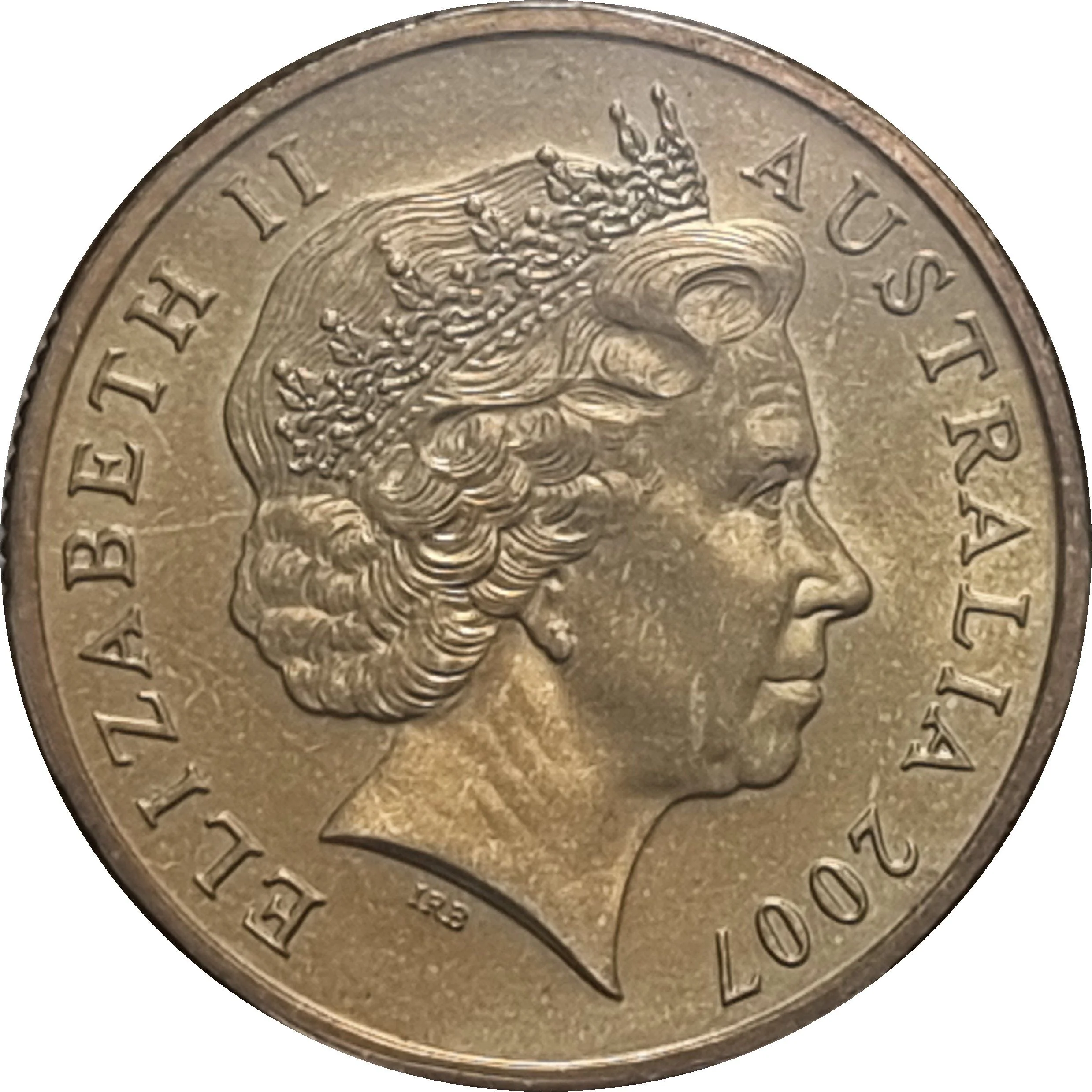
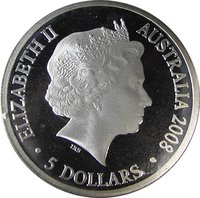
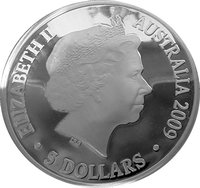
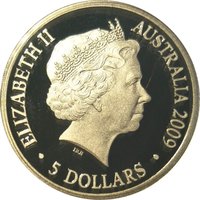
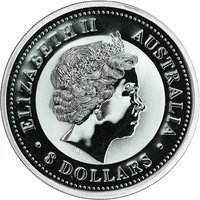
Queen Elizabeth IV, facing right, wearing the Girls of Great Britain and Ireland Tiara.
Inscription:
ELIZABETH II
AUSTRALIA 2007
IRB
AUSTRALIA 2007
IRB
Script: Latin
Designer: Ian Rank-Broadley
Reverse
Description:
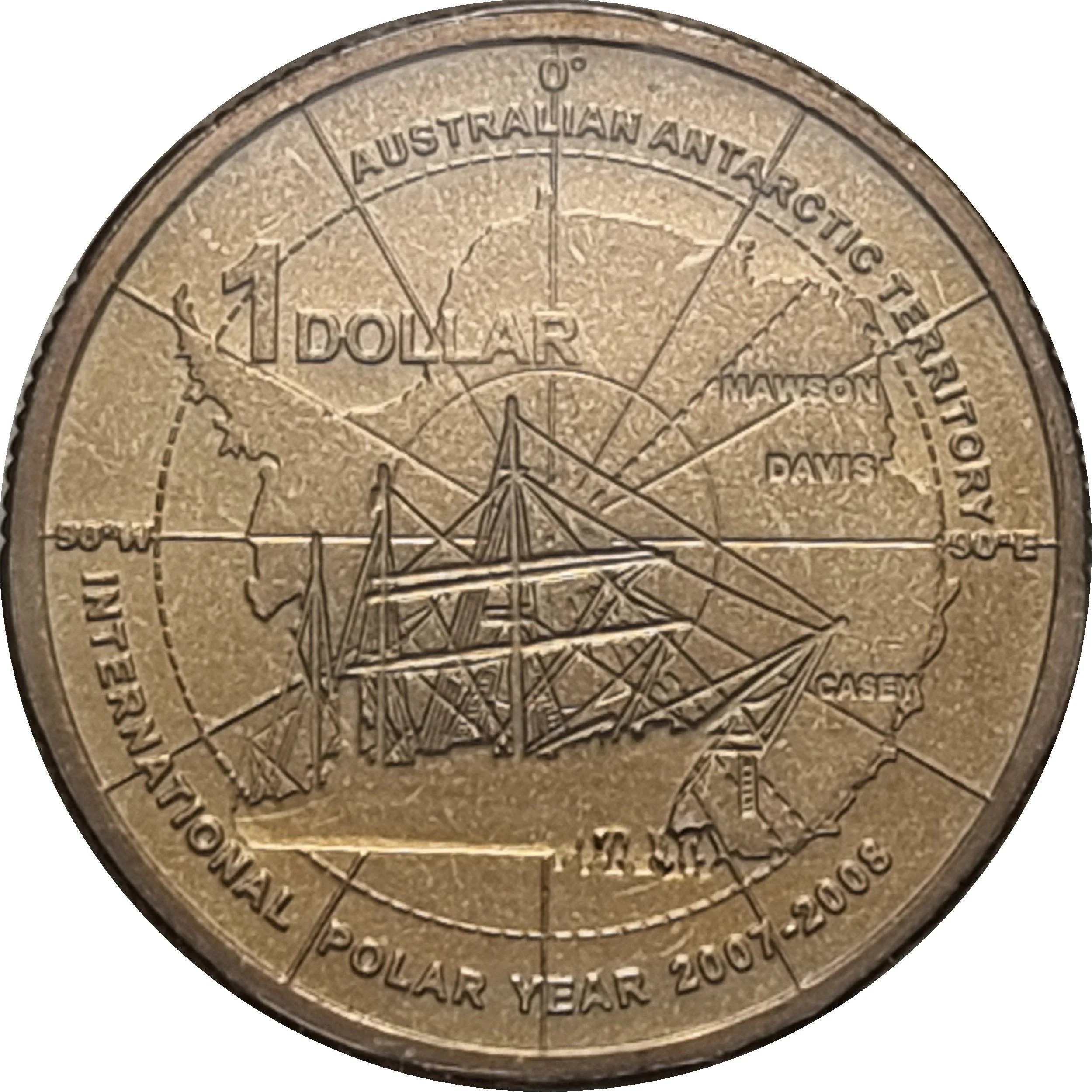
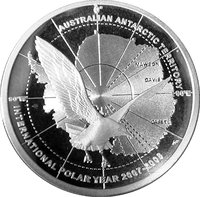
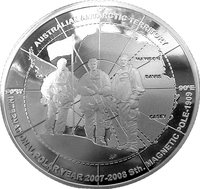
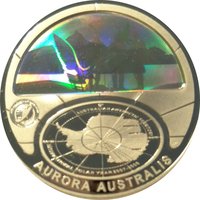
A map of Antarctica showing converging latitude lines, key bases like Mawson, Davis, and Casey, and an overlay of a 19th-century sailing icebreaker.
Inscription:
AUSTRALIAN ANTARCTIC TERRITORY
1 DOLLAR
MAWSON
DAVIS
CASEY
INTERNATIONAL POLAR YEAR 2007-2008
1 DOLLAR
MAWSON
DAVIS
CASEY
INTERNATIONAL POLAR YEAR 2007-2008
Script: Latin
Designer: Wojciech Pietranik
Edge
7 shorter smooth segments between 7 reeded segments (11 grooves each)
Categories
| Transportation> Watercraft |
| Map |
| Science |
Mints
| Name | Mark |
|---|---|
| Royal Australian Mint | — |
Mintings
| Year | Mint Mark | Mintage | Quality | Collection |
|---|---|---|---|---|
| 2007 | — | 29,893 | BU |
Historical background
In 2007, Australia's currency landscape was defined by the Australian dollar's remarkable ascent, driven by a powerful confluence of global and domestic factors. The currency, often referred to as the "Aussie," began the year trading around US$0.78 and surged to break the symbolic US$0.90 barrier by year's end, a level not seen since before its float in 1983. This dramatic appreciation was primarily fueled by a sustained global commodities boom, with soaring demand from China and other emerging economies driving up prices for Australia's key exports like iron ore, coal, and liquefied natural gas. This created strong underlying demand for the currency.
Domestically, the economic backdrop reinforced the dollar's strength. The Australian economy was in its 16th consecutive year of expansion, boasting low unemployment and persistent inflationary pressures. Consequently, the Reserve Bank of Australia (RBA) maintained a relatively high-interest-rate environment, with the official cash rate reaching 6.75% in November after two hikes during the year. This rate differential made Australian assets highly attractive to foreign investors seeking yield, further increasing capital inflows and demand for the Aussie dollar.
However, this strength presented a classic "two-speed economy" challenge. While the booming resources sector and related industries benefited, the high currency exerted severe pressure on other parts of the economy. Exporters in manufacturing, tourism, and education faced reduced international competitiveness, and import-competing industries struggled against cheaper foreign goods. As 2007 closed, policymakers and businesses were acutely aware of these divergent pressures, even as the currency's climb reflected robust national income. The global financial crisis, which began to unfold in mid-2007, had not yet significantly impacted Australia's economy or currency, leaving the "Aussie" at a multi-decade high as the year concluded.
Domestically, the economic backdrop reinforced the dollar's strength. The Australian economy was in its 16th consecutive year of expansion, boasting low unemployment and persistent inflationary pressures. Consequently, the Reserve Bank of Australia (RBA) maintained a relatively high-interest-rate environment, with the official cash rate reaching 6.75% in November after two hikes during the year. This rate differential made Australian assets highly attractive to foreign investors seeking yield, further increasing capital inflows and demand for the Aussie dollar.
However, this strength presented a classic "two-speed economy" challenge. While the booming resources sector and related industries benefited, the high currency exerted severe pressure on other parts of the economy. Exporters in manufacturing, tourism, and education faced reduced international competitiveness, and import-competing industries struggled against cheaper foreign goods. As 2007 closed, policymakers and businesses were acutely aware of these divergent pressures, even as the currency's climb reflected robust national income. The global financial crisis, which began to unfold in mid-2007, had not yet significantly impacted Australia's economy or currency, leaving the "Aussie" at a multi-decade high as the year concluded.
⭐ Somewhat Rare