

5 Dollars – Jamaica
Circulating commemorative coins
Commemoration: Birth of Norman W. Manley
Series: Norman W. Manley Centennial
Jamaica
Context
Material
References
KM: #Click to copy to clipboard157
Numista: #10164
Value
Exchange value: 5 JMD
Obverse
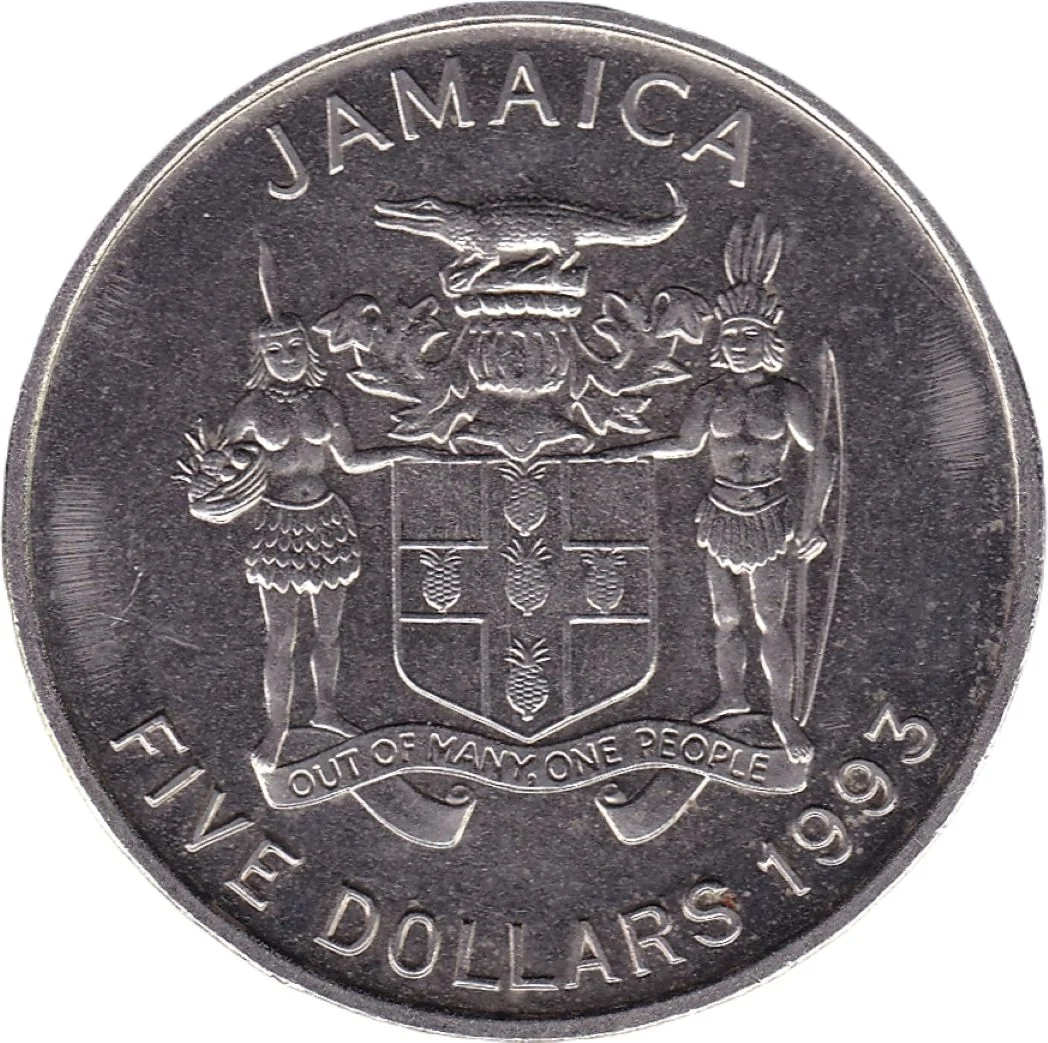
Reverse
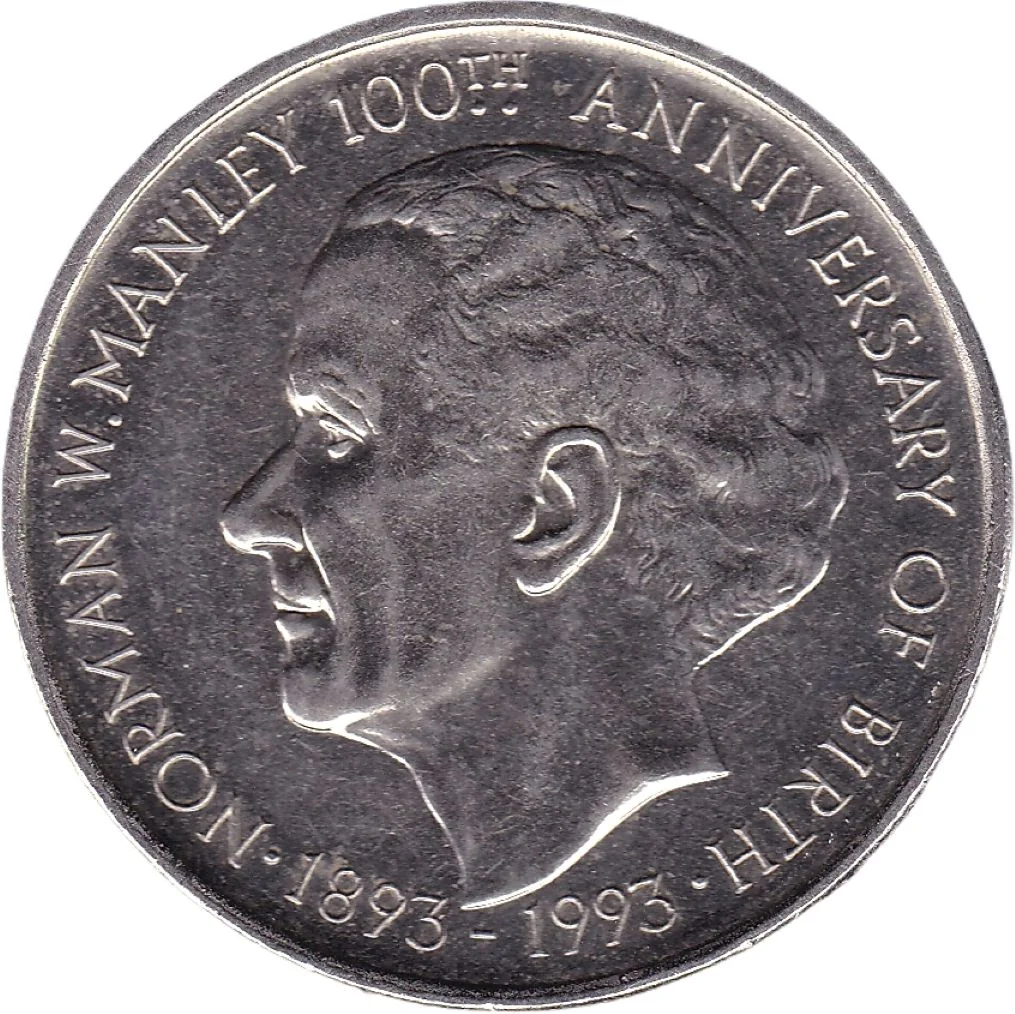
Description:
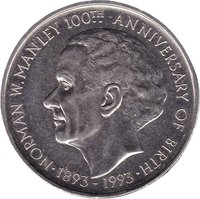
Norman W. Manley facing left.
Inscription:
NORMAN W.MANLEY 100TH ANNIVERSARY OF BIRTH
·1893-1993·
·1893-1993·
Script: Latin
Edge
Reeded
Categories
| Symbols> Coat of Arms |
| Event> Birth anniversary |
| Person> Politician |
Mintings
| Year | Mint Mark | Mintage | Quality | Collection |
|---|---|---|---|---|
| 1993 | — | — |
Historical background
In 1993, Jamaica was in the midst of a prolonged and severe economic crisis, with its currency situation at the heart of the turmoil. The Jamaican dollar, which had been pegged to the U.S. dollar for decades, was under immense pressure following a series of financial liberalization policies in the early 1990s. These reforms, encouraged by international financial institutions, removed exchange controls but exposed fundamental weaknesses, including a large current account deficit, dwindling foreign reserves, and low productivity. The government's attempt to maintain an overvalued fixed exchange rate became unsustainable, leading to a thriving black market where the currency traded at a significant discount.
The situation culminated in a pivotal policy shift. In late 1992, the Patterson administration, facing exhausted reserves and mounting pressure, initiated a move towards a floating exchange rate system. This transition was fully realized in 1993, marking the end of the fixed peg. The Jamaican dollar was devalued dramatically, losing over 30% of its value against the U.S. dollar within the year. This painful adjustment was a condition for crucial financial support from the International Monetary Fund (IMF), which provided a standby agreement to stabilize the economy.
The immediate consequences of the 1993 devaluation were severe inflation, increased cost of imports, and significant hardship for the population. However, it was viewed as a necessary correction to restore external balance and rebuild foreign reserves. The move established a market-determined exchange rate regime that, despite subsequent volatility, remains the framework for Jamaica's currency policy today, representing a defining moment in the country's long and difficult journey toward macroeconomic stabilization.
The situation culminated in a pivotal policy shift. In late 1992, the Patterson administration, facing exhausted reserves and mounting pressure, initiated a move towards a floating exchange rate system. This transition was fully realized in 1993, marking the end of the fixed peg. The Jamaican dollar was devalued dramatically, losing over 30% of its value against the U.S. dollar within the year. This painful adjustment was a condition for crucial financial support from the International Monetary Fund (IMF), which provided a standby agreement to stabilize the economy.
The immediate consequences of the 1993 devaluation were severe inflation, increased cost of imports, and significant hardship for the population. However, it was viewed as a necessary correction to restore external balance and rebuild foreign reserves. The move established a market-determined exchange rate regime that, despite subsequent volatility, remains the framework for Jamaica's currency policy today, representing a defining moment in the country's long and difficult journey toward macroeconomic stabilization.

🌱 Fairly Common