

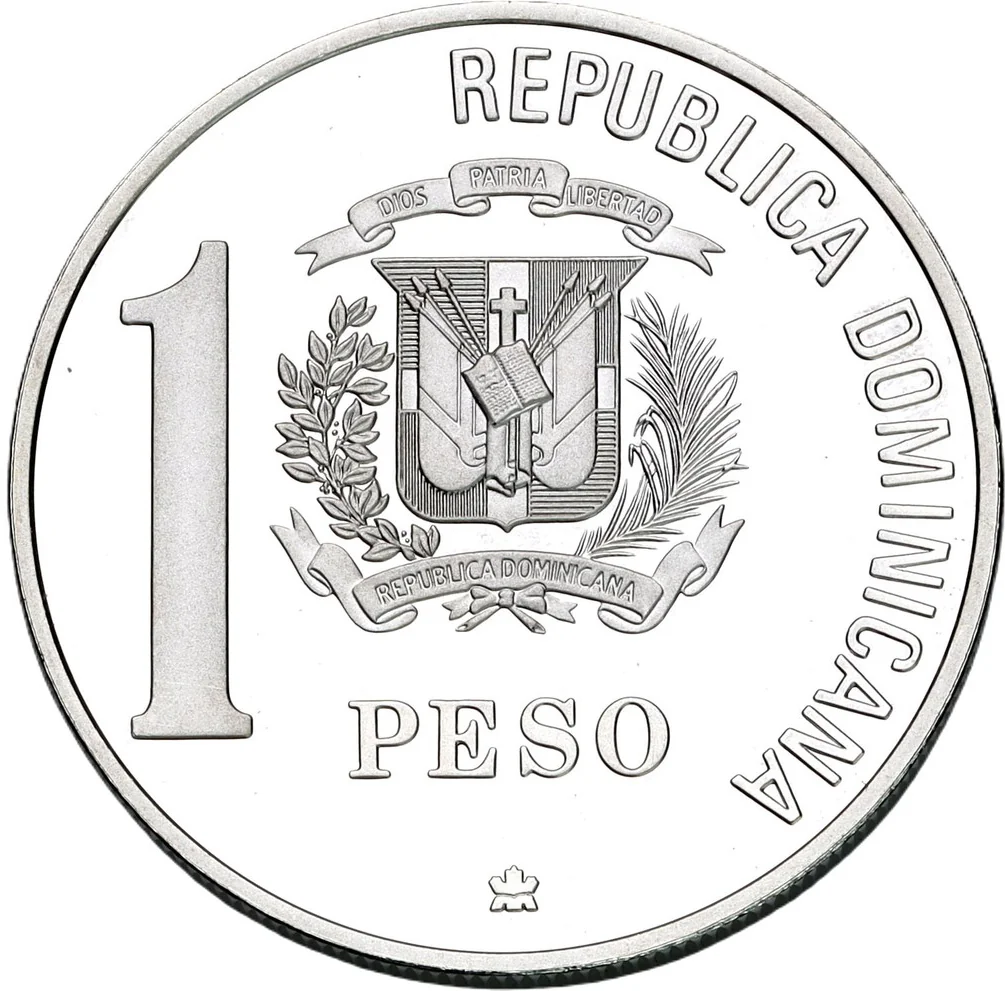
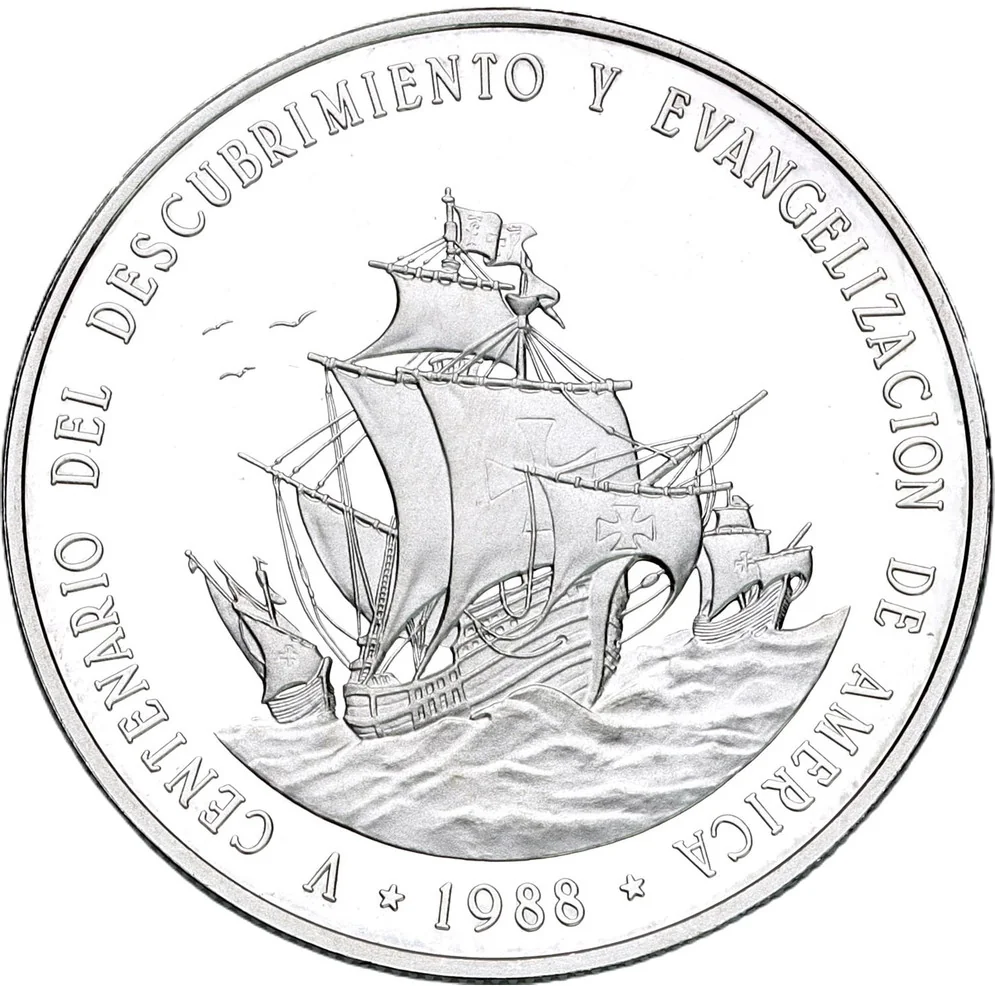
1 Peso – Dominican Republic
Non-circulating coins
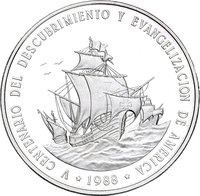
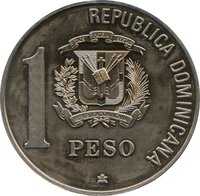
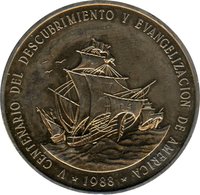
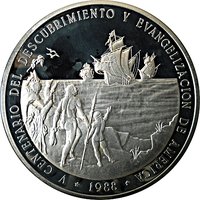
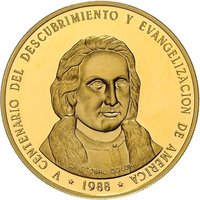
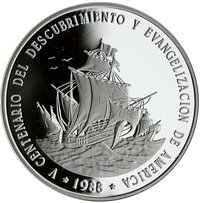
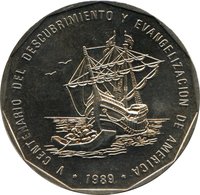
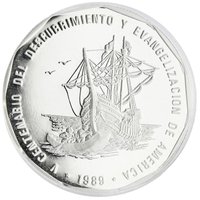
Commemoration: Sailing of the Santa Maria, Pinta and Niña
Dominican Republic
Context
Year: 1988
Issuer: Dominican Republic 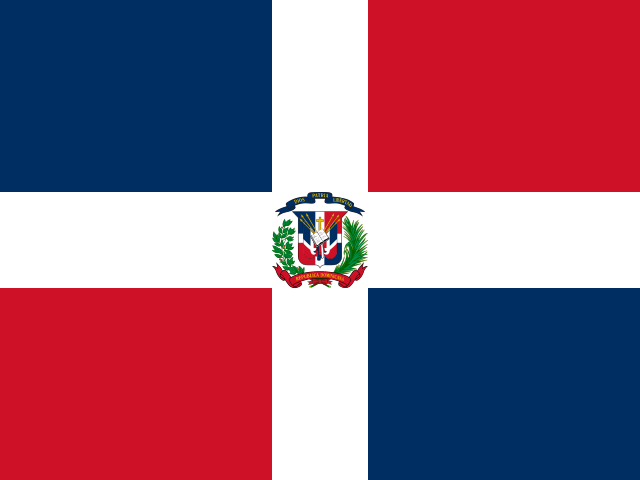
Period:
(since 1966)
Currency:
(since 1937)
Total mintage: 10,000
Material
References
KM: #Click to copy to clipboard66a
Numista: #192445
Value
Exchange value: 1 DOP
Bullion value: $61.14
Obverse
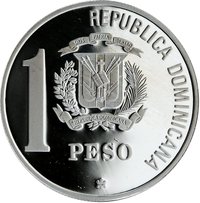
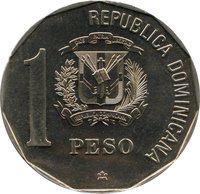
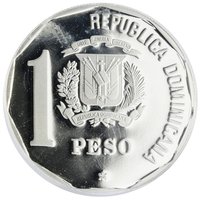
Reverse
Edge
Reeded
Categories
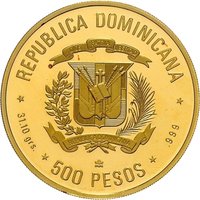
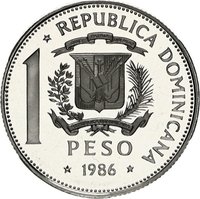
| Symbols> Coat of Arms |
| Transportation> Watercraft |
Mintings
| Year | Mint Mark | Mintage | Quality | Collection |
|---|---|---|---|---|
| 1988 | — | 10,000 | Proof |
Historical background
In 1988, the Dominican Republic was in the throes of a severe economic crisis, with its currency, the Dominican Peso (RD$), under intense pressure. The decade had been marked by high external debt, falling prices for key exports like sugar, coffee, and cocoa, and rampant government spending, leading to chronic fiscal and trade deficits. To finance these imbalances, the Central Bank heavily expanded the money supply, fueling inflation that soared to over 50% annually by the late 1980s. This hyperinflationary environment destroyed public confidence in the peso, leading to a thriving black market where the dollar traded at a significant premium to the official, overvalued exchange rate.
The government of President Joaquín Balaguer, who returned to power in 1986, maintained a complex system of multiple exchange rates. An official fixed rate was used for essential imports like food and medicine, while a more depreciated "preferential" rate applied to other transactions. In practice, this system was unsustainable and created major distortions, encouraging capital flight and corruption as individuals and businesses sought access to cheaper dollars. The vast gap between the official and black-market rates meant the peso was fundamentally misaligned, crippling legitimate trade and investment.
This currency instability was a core symptom of the broader structural problems plaguing the economy. The situation forced the government to seek assistance from the International Monetary Fund (IMF). In 1988, negotiations were underway for a stabilization program, which would inevitably require a painful devaluation of the peso, unification of the exchange rates, and sharp austerity measures. Thus, the currency situation of 1988 represented the culmination of years of economic mismanagement, setting the stage for a wrenching but necessary structural adjustment in the years immediately following.
The government of President Joaquín Balaguer, who returned to power in 1986, maintained a complex system of multiple exchange rates. An official fixed rate was used for essential imports like food and medicine, while a more depreciated "preferential" rate applied to other transactions. In practice, this system was unsustainable and created major distortions, encouraging capital flight and corruption as individuals and businesses sought access to cheaper dollars. The vast gap between the official and black-market rates meant the peso was fundamentally misaligned, crippling legitimate trade and investment.
This currency instability was a core symptom of the broader structural problems plaguing the economy. The situation forced the government to seek assistance from the International Monetary Fund (IMF). In 1988, negotiations were underway for a stabilization program, which would inevitably require a painful devaluation of the peso, unification of the exchange rates, and sharp austerity measures. Thus, the currency situation of 1988 represented the culmination of years of economic mismanagement, setting the stage for a wrenching but necessary structural adjustment in the years immediately following.
✨ Legendary