

1 Anna – India - British
India
Context
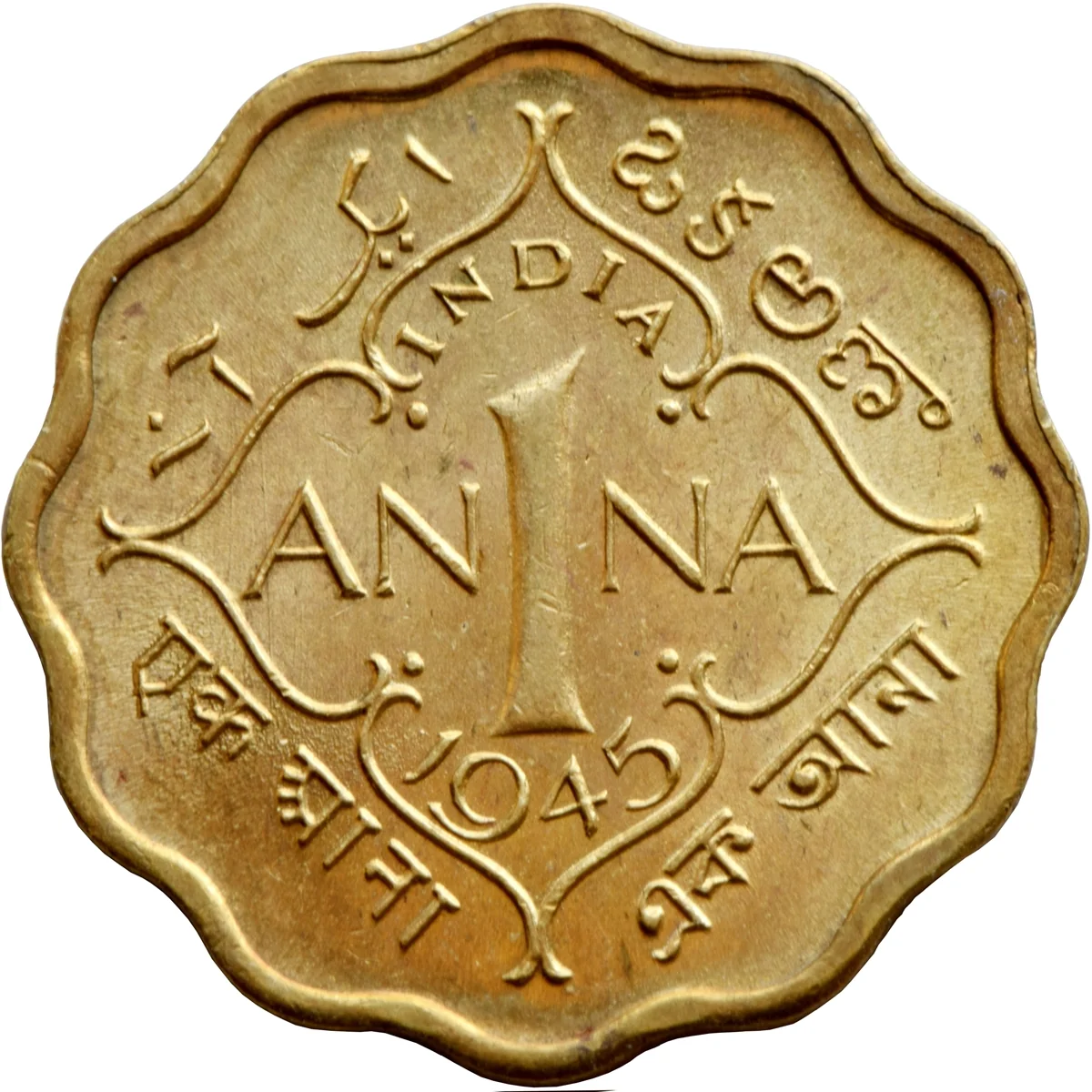
Year: 1945
Country: India 
Issuer: India - British
Ruler: George VI
Currency:
(1770—1947)
Demonetized: Yes
Total mintage: 339,588,000
Material
Diameter: 21 mm
Weight: 3.8 g
Thickness: 1.53 mm
Shape: Scalloped
Composition: Nickel brass
Magnetic: No
Technique: Milled
Alignment: Medal alignment
flip
References
KM: #Click to copy to clipboard539
Numista: #10784
Obverse
Description:
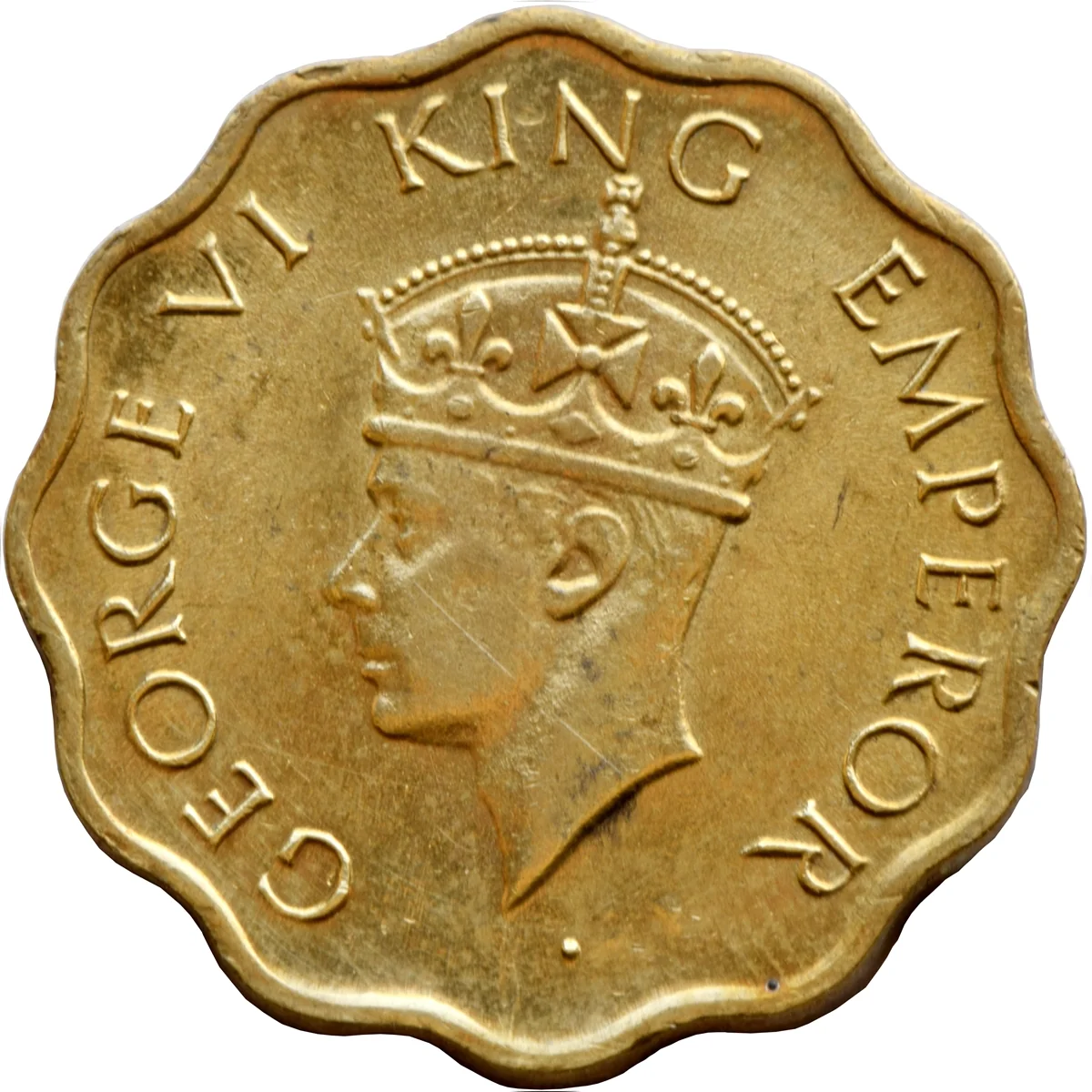
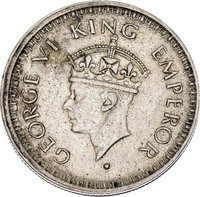
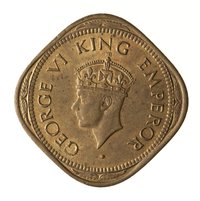
King George VI crowned, left. English legend surrounds.
Inscription:
GEORGE VI KING EMPEROR
Translation:
GEORGE VI KING EMPEROR
Language: English
Engraver: Percy Metcalfe
Reverse
Edge
Plain
Mints
| Name | Mark |
|---|---|
| Kolkata / Calcutta / Murshidabad | — |
| Mumbai / Bombay | • |
Mintings
| Year | Mint Mark | Mintage | Quality | Collection |
|---|---|---|---|---|
| 1945 | — | 278,360,000 | ||
| 1945 | — | — | Proof | |
| 1945 | • | 61,228,000 |
Historical background
In 1945, India's currency situation was a complex legacy of British colonial rule, fundamentally tied to the Sterling system. The Indian rupee was not a freely convertible currency but was pegged to the British pound sterling at a fixed rate of 1 shilling 6 pence (Rs. 13.33 = £1). This "Sterling Exchange Standard" meant India's foreign reserves were held not in gold but primarily in sterling balances in London. These balances had swollen to over £1.3 billion by the end of World War II, representing massive debt owed by Britain to India for wartime supplies, services, and troops. While this created a large credit, it was largely illiquid and its management was controlled by the British Treasury.
The war economy had created severe domestic inflationary pressures within India. Significant currency expansion to finance the war effort, coupled with supply shortages and famine, had severely eroded the rupee's purchasing power. This internal economic distress contrasted sharply with the enormous external sterling credit. Furthermore, the colonial monetary authority, with the Reserve Bank of India (established in 1935) operating under constraints, prioritized maintaining the sterling peg and supporting Britain's postwar reconstruction over addressing India's immediate economic needs. The system was designed to serve imperial interests, ensuring India remained within Britain's economic orbit.
This contradictory position—of being a large creditor nation suffering from domestic poverty and monetary instability—set the stage for a major postwar economic confrontation. Indian nationalist leaders and economists began fiercely debating the future of the sterling balances and the need for monetary autonomy. The year 1945 thus marked a critical juncture, with the existing currency system becoming a symbol of colonial dependency. The impending independence in 1947 would soon force a reckoning with this structure, leading to intense negotiations over the release of the sterling balances and the eventual establishment of a monetary policy suited to a sovereign nation.
The war economy had created severe domestic inflationary pressures within India. Significant currency expansion to finance the war effort, coupled with supply shortages and famine, had severely eroded the rupee's purchasing power. This internal economic distress contrasted sharply with the enormous external sterling credit. Furthermore, the colonial monetary authority, with the Reserve Bank of India (established in 1935) operating under constraints, prioritized maintaining the sterling peg and supporting Britain's postwar reconstruction over addressing India's immediate economic needs. The system was designed to serve imperial interests, ensuring India remained within Britain's economic orbit.
This contradictory position—of being a large creditor nation suffering from domestic poverty and monetary instability—set the stage for a major postwar economic confrontation. Indian nationalist leaders and economists began fiercely debating the future of the sterling balances and the need for monetary autonomy. The year 1945 thus marked a critical juncture, with the existing currency system becoming a symbol of colonial dependency. The impending independence in 1947 would soon force a reckoning with this structure, leading to intense negotiations over the release of the sterling balances and the eventual establishment of a monetary policy suited to a sovereign nation.
🌱 Common