

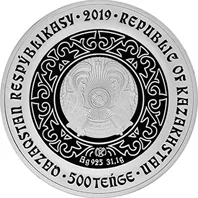

500 tenge – Kazakhstan
Add to wishlist
Kazakhstan
Context
Material
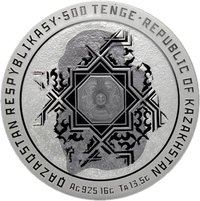
Diameter: 38.61 mm
Weight: 31.1 g
Silver Weight:: 28.77 g
Thickness: 2.75 mm
Shape: Round
Composition: 92.5% Silver
Standard: Silver ounce
Magnetic: No
Technique: Milled
Alignment: Medal alignment
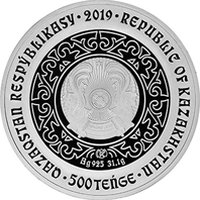
flip

References
KM: #
Numista: #191607
Value
Exchange value: 500 KZT
Bullion value: $69.96
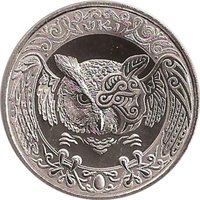
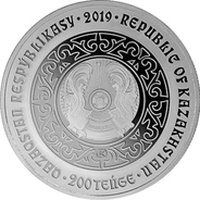
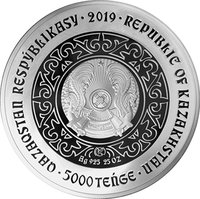
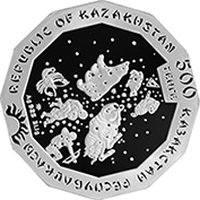
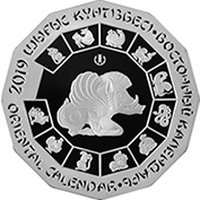
Obverse
Reverse
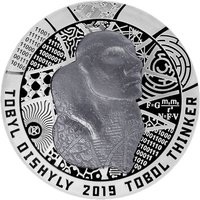
Description:
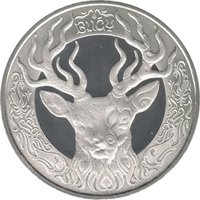
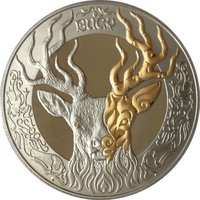
Majestic nocturnal hunter.
Edge
Reeded
Mints
| Name | Mark |
|---|---|
| Kazakhstan Mint | (KMC) |
Mintings
| Year | Mint Mark | Mintage | Quality | Collection |
|---|---|---|---|---|
| 2019 | KMC | 3,000 | Proof |
Historical background
In 2019, Kazakhstan's currency, the tenge (KZT), experienced a period of relative stability and managed depreciation, a significant shift from the volatility that followed its initial free float in 2015. This stability was largely orchestrated by the National Bank of Kazakhstan (NBK), which maintained a policy of a managed float with inflation targeting as its primary objective. With annual inflation hovering around 5-6%, the NBK focused on controlling price growth rather than defending a specific exchange rate, allowing the tenge to gradually weaken against a strengthening US dollar in line with broader emerging market trends and the movements of its major trading partners' currencies, particularly the Russian ruble.
The year's economic backdrop was defined by moderate growth, supported by steady oil production under the OPEC+ agreement and increased government social spending. However, the tenge remained sensitive to external factors, primarily global oil prices and geopolitical sentiments. A key domestic development was the completion of the "Nurly Zhol" economic policy and the announcement of new social welfare initiatives, which influenced monetary policy decisions. The NBK intermittently intervened in the foreign exchange market to smooth out excessive volatility, but overall, it allowed market forces to play a greater role, building up its foreign currency reserves in the process.
By the end of 2019, the tenge had depreciated by approximately 7% against the US dollar, a movement considered manageable and reflective of economic fundamentals. This period was characterized as one of cautious calibration, where authorities balanced the goals of maintaining export competitiveness (benefiting from a weaker tenge) against the risks of imported inflation and potential public discontent over currency weakness. The relative calm of 2019 provided a foundation of stability, which was soon tested by the global economic shock of the COVID-19 pandemic in early 2020.
The year's economic backdrop was defined by moderate growth, supported by steady oil production under the OPEC+ agreement and increased government social spending. However, the tenge remained sensitive to external factors, primarily global oil prices and geopolitical sentiments. A key domestic development was the completion of the "Nurly Zhol" economic policy and the announcement of new social welfare initiatives, which influenced monetary policy decisions. The NBK intermittently intervened in the foreign exchange market to smooth out excessive volatility, but overall, it allowed market forces to play a greater role, building up its foreign currency reserves in the process.
By the end of 2019, the tenge had depreciated by approximately 7% against the US dollar, a movement considered manageable and reflective of economic fundamentals. This period was characterized as one of cautious calibration, where authorities balanced the goals of maintaining export competitiveness (benefiting from a weaker tenge) against the risks of imported inflation and potential public discontent over currency weakness. The relative calm of 2019 provided a foundation of stability, which was soon tested by the global economic shock of the COVID-19 pandemic in early 2020.
Series: Cult animals as totems of nomads



✨ Legendary